
The standard advice for couples buying a bed has been “go as big as your room will fit,” and unlike most standard advice, this one holds up under examination. The mechanics of why larger beds support better couples’ sleep are reasonably well understood, even if the marketing for king-size and super king beds tends to oversell the romance and underplay the engineering. Once you know what’s actually going on, the buying decision becomes clearer.
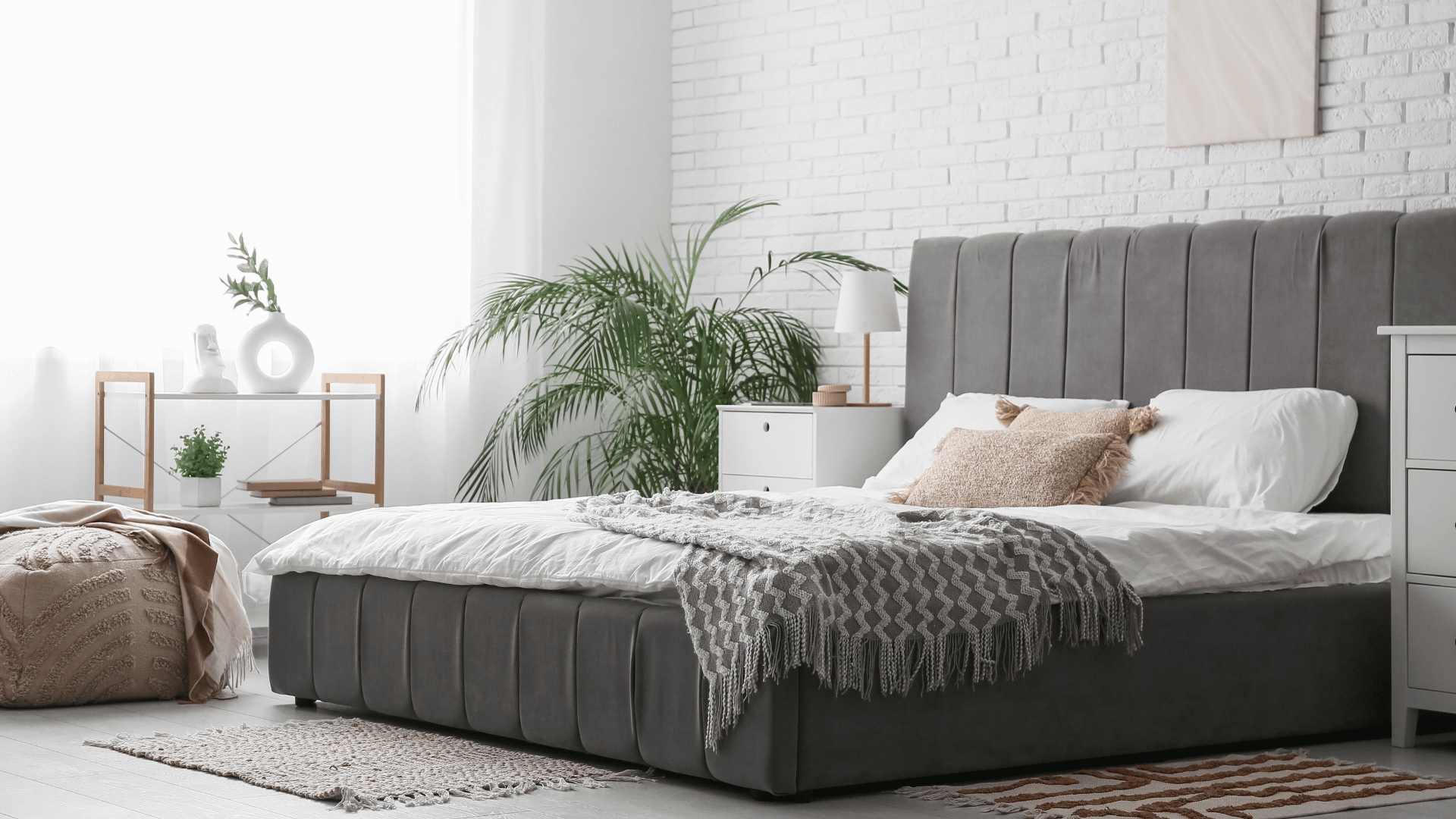
What Two Bodies Share When They Share A Bed
When two people sleep in the same bed, they share more than just the mattress surface. They share heat, motion, sound, and pressure changes across the bed. Every position change one person makes propagates as motion through the mattress. Body heat from one sleeper contributes to the thermal microclimate around the other. The mattress compresses under combined weight in patterns that affect both sleepers’ positions.
These shared variables work fine when both sleepers are well-matched in size, temperature, schedule, and movement. They produce friction when they’re not. A larger sleeper compresses the mattress more, which can pull a smaller partner toward the middle. A hot sleeper warms the bed for both. A restless sleeper transmits motion to the still one. A late-to-bed partner disturbs the early-to-bed one with every transition.
Larger beds reduce the intensity of all of these shared variables. There’s more mattress between sleepers to absorb motion, more lateral distance to mitigate thermal sharing, more space for each person to occupy without overlapping into their partner’s zone. The shared sleep environment becomes less shared, which often makes it work better.
The Motion Isolation Mechanism
Motion isolation, how much movement on one side of the bed is felt on the other, depends partly on mattress design and partly on the geometry of the bed. A mattress engineered with motion isolation in mind (typically pocketed-coil hybrids or quality memory foam) confines disturbance closer to its source. A king-size or super king mattress, even with the same construction quality, gives motion more room to dissipate before it reaches the other sleeper.
The combination of good mattress engineering and larger surface area is roughly multiplicative. A motion-isolating mattress on a king-size frame produces less partner disturbance than a similar mattress on a double, which produces less than a basic mattress on a double. Couples wanting the best motion isolation get the most benefit from upgrading both dimensions.
This matters because partner disturbance is one of the most consistent predictors of unsatisfying couples’ sleep. Studies of couples’ sleep using actigraphy (movement monitoring) show that they wake each other up dozens of times per night, often without remembering. The cumulative effect on sleep architecture is real, and reducing it produces measurably better rest.
The Heat And Microclimate Problem
Two bodies generate roughly twice the heat of one body, but the mattress and bedding above them is sized for two-person use without doubling capacity. The result is that shared beds tend to run hotter than solo beds, particularly under heavy duvets and on mattresses that don’t ventilate well.
A larger bed helps because each sleeper has more lateral space, which means less direct thermal sharing with the partner and more access to cooler edges of the bed. A king or super king lets each person sleep in a microclimate that’s slightly less dominated by their partner’s body heat than a tighter double would create.
This matters more for couples with mismatched thermal preferences. A partner who runs hot and a partner who runs cold sharing a tight double bed are fighting over the same thermal zone. The same couple on a king or super king bed have enough separation that each person’s microclimate is somewhat their own, which makes the difference more manageable.
The lateral space also enables the use of two separate duvets, which is the most direct solution to thermal mismatch. Two duvets work best on beds wide enough for each person to have their own duvet at appropriate size without significant overlap, which usually means king-size at minimum.
The Mattress Engineering For Two
Mattresses sold at king and super king sizes are often engineered slightly differently than the same nominal product at double size. They’re designed for higher combined loads, more variable weight distribution across the surface, and the specific demands of two-person use.
Edge support is usually better, because two people sleeping near opposite edges depend on the mattress holding those edges firm rather than collapsing under load. Motion transfer is usually engineered more carefully, because the disturbance problem is bigger. Comfort layers are sometimes deeper, to accommodate the wider range of weights and pressure patterns two sleepers create.
This means that simply going larger isn’t just about getting more surface area; it’s often about getting a mattress that’s been thought about for the couples-use case in ways smaller mattresses haven’t. Comfortable sleeping setups for couples of larger sizes often have these engineering differences built in, reflecting that the design problem at king-size isn’t the same problem as at single or double.
The Personal Routine Difference
Beyond the engineering, larger beds enable behaviours that smaller beds don’t. Each partner can have a proper personal zone with bedside table, charging point, books, and personal items, without crowding into the partner’s zone. Position changes during the night don’t require negotiation around the other person’s body. Sitting up to read or use a device doesn’t disturb the partner trying to sleep.
These small daily benefits accumulate. A couple on a tight bed develops compensating habits, going to bed at the same time to avoid disturbance, sleeping in compatible positions, accepting partner-imposed constraints on movement, that limit each person’s natural sleep behaviour. A couple on a larger bed retains more individual flexibility, which often improves both partners’ sleep quality independently.
The Schedule Mismatch Problem
Couples with significantly different sleep schedules face a particular challenge: one person needs to enter or leave the bed while the other is asleep, and the transition can wake the sleeping partner. This is one of the most common reasons couples cite for poor sleep quality, and one of the most reliably improved by sizing up.
On a tight bed, the entering or leaving partner has to navigate close to the sleeping one. The mattress compresses, the covers shift, the bedside light disturbs. On a larger bed, all of these effects are mitigated. The motion is further from the sleeping partner. The bedding rearrangement is more local. The light source is further away.
For night-shift workers, parents of young children who attend to night wakings, or couples with significantly different chronotypes, the sleep-quality improvement from going larger can be substantial. The bed becomes more accommodating of life’s actual asymmetries, rather than forcing both partners onto the same schedule.
The Cost Of Not Upgrading
Couples on undersized beds sometimes don’t realise how much their shared sleep is degrading individual sleep quality. The disturbances are small and frequent; they’re hard to notice in any given night and easy to attribute to other causes. But over years, the cumulative effect of consistently suboptimal couples’ sleep is meaningful.
People who upgrade often describe the improvement as bigger than they’d expected, sometimes calling it the single most useful sleep-related purchase they’ve made. This isn’t universal, the upgrade doesn’t help everyone equally, but it’s common enough that it should be taken seriously as a real benefit rather than dismissed as marketing.
How To Decide
The honest deciding factors are: do you wake your partner regularly with your movements, or does your partner wake you? Do you have mismatched schedules, sleep behaviours, or thermal preferences? Does your bedroom comfortably accommodate a larger bed? Can you afford to upgrade the mattress and bedding properly at the larger size?
If most or all of these factors point toward sizing up, the upgrade is likely worth it. If they don’t, staying with the smaller bed and addressing the actual sources of sleep disruption is usually the better path. The bed is the foundation; making sure it’s the right foundation for your specific couple’s needs is what produces sleep that genuinely improves rather than just costing more money.