Indigenous fashion is gaining visibility across global fashion, but this list uses a deliberately broad and transparent framework. It separates Indigenous-owned and Indigenous-led businesses from non-Indigenous brands that collaborate with Indigenous or traditional communities, and from influencers whose role is representation or advocacy. A brand is not treated as Indigenous-owned merely because it references Indigenous design. Turnover is listed only when public data is available; otherwise it is marked not publicly disclosed rather than estimated.
Assessment criteria
- Community size/details: Ownership, nation/community affiliation, artisan network or public audience size where a current figure is available.
- Sustainability Index: Fashionabc editorial 1-5 score based on documented circularity/material practices, local or low-volume production, Indigenous/community ownership and cultural/economic benefit. It is not a third-party ESG rating.
- Focus: The specific reason each brand, startup, designer or influencer is relevant to Indigenous and sustainable fashion.
Indigenous-owned / led brands & designers
Source: Indigenous Fashion – MI Moda Indígena
1. MI Moda Indígena
Country / region: Brazil
Community: Munduruku-led; founded by Seanne Oliveira and Rebeca Ferreira and developed as an Indigenous fashion training and production platform in Manaus.
Sustainability Index: 5/5
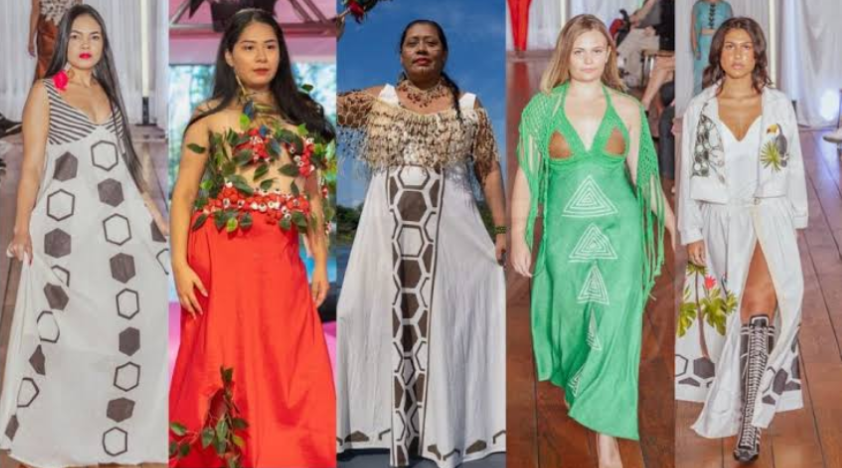
Focus: Indigenous fashion education, Amazonian design, ancestral materials and professional development. The initiative combines collections and runway activity with training that helps Indigenous creatives build fashion skills while keeping cultural authorship visible.
MI Moda Indigena is set to bring Amazonian Indigenous fashion to New York Fashion Week as part of the Best of Fashion Awards on 11 September. Produced by Rafael dos Santos and Fashion Director Gislaine Balzano, the presentation will feature Amazonian Indigenous design alongside an AI-integrated fashion production developed in partnership with fashionabc and Dinis Guarda.
The collection incorporates materials from the Amazon, including seeds, plants and fish scales. Beyond the New York presentation, MI Moda Indigena also runs a wider training programme supporting designers working within their own Indigenous communities.
- Official website: https://www.mimodaindigena.com/
2. Sioduhi Studio
Country / region: Brazil
Community: Founded by Sioduhi Waikhun, a Pira-tapuya designer from the Alto Rio Negro region.
Sustainability Index: 5/5
Focus: Contemporary Indigenous fashion shaped by Amazonian fibres, family knowledge and Indigenous futurism. The label is notable for working with native materials and Indigenous makers while framing design as cultural and territorial continuity rather than borrowed aesthetic.
- Source profile: https://www.vogue.com/article/vb100-spotlight-on-sioduhi-waikhn-designer-and-founder-of-sioduhi-studio
3. Mauricio Duarte
Country / region: Brazil
Community: Kaixana designer from Amazonas.
Sustainability Index: 5/5
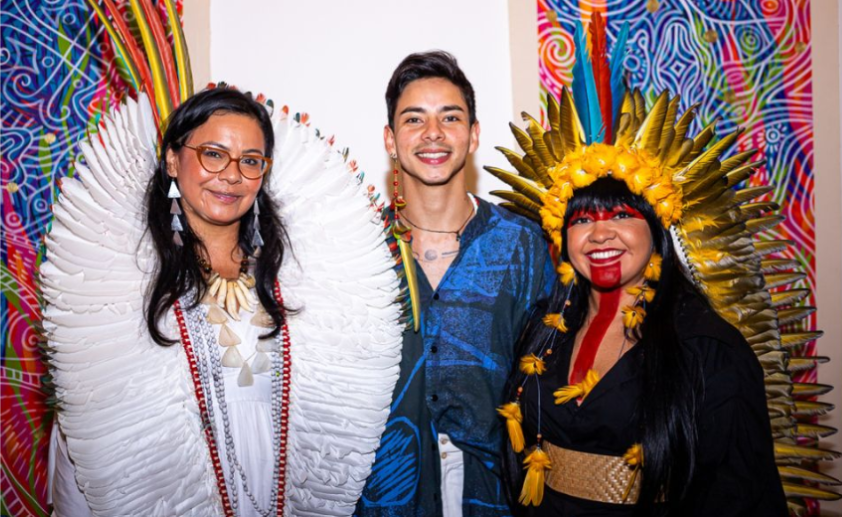
Focus: A contemporary Amazonian label bringing Indigenous identity, regional craftsmanship and natural materials into high-fashion contexts. Duarte’s work has appeared at Sao Paulo Fashion Week and is closely connected to Amazonian makers and cultural references.
- Verification/source profile: https://fas-amazonia.org/pela-primeira-vez-designer-amazonense-leva-ancestralidade-indigena-para-o-sao-paulo-fashion-week/
Source: https://tribalbusinessnews.com/sections/entrepreneurism/ 14522-native-owned-clothing-brand-weaves-community-service-with-its-founder-s-personal-journey-to-reclaim-her-indigenous-identity
4. 4KINSHIP
Country / region: United States
Community: Founded by Diné designer Amy Denet Deal; works with Native artists and community projects on Navajo Nation.
Sustainability Index: 5/5
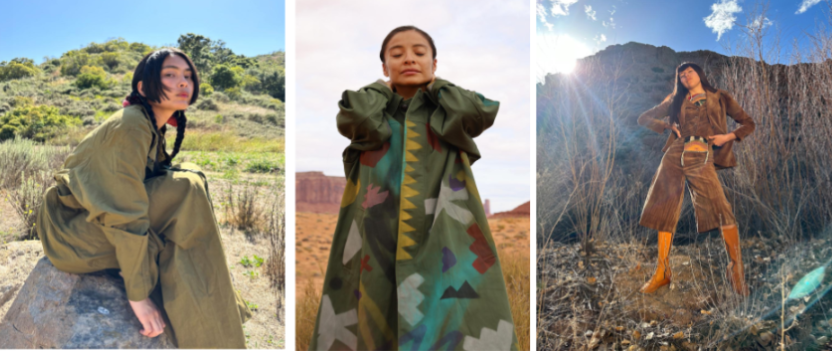
Focus: Circular fashion is central to 4KINSHIP’s model: vintage garments, reclaimed textiles, deadstock and one-of-a-kind reconstruction sit alongside Indigenous artist collaborations. The company also channels visibility and resources into community initiatives, making social impact part of the brand rather than a side campaign.
- Official website: https://www.4kinship.com/
5. Ginew
Country / region: United States
Community: Founded by Amanda Bruegl and Erik Brodt; Oneida, Stockbridge-Munsee/Mohican and Ojibwe heritage.
Sustainability Index: 4.5/5
Focus: Native-owned denim and outerwear built around durability, family narratives and small-batch production. Ginew uses materials such as organic cotton, selvedge denim and wool and collaborates with Indigenous artisans, positioning longevity as a practical alternative to fast fashion.
- Official website: https://ginewusa.com/
Source: https://www.vogue.com/slideshow/bethany-yellowtail-indigenous-designer-collection
6. B.Yellowtail
Country / region: United States
Community: Founded by Northern Cheyenne and Apsaalooke designer Bethany Yellowtail.
Sustainability Index: 4/5
Focus: A contemporary Indigenous apparel and accessories label that also operates a collective marketplace for Native and First Nations makers. Its relevance is both creative and economic: Indigenous designers and artisans retain visible authorship within a commercial fashion platform.
- Official website: https://byellowtail.com/
Source: https://www.facebook.com/eighthgeneration/
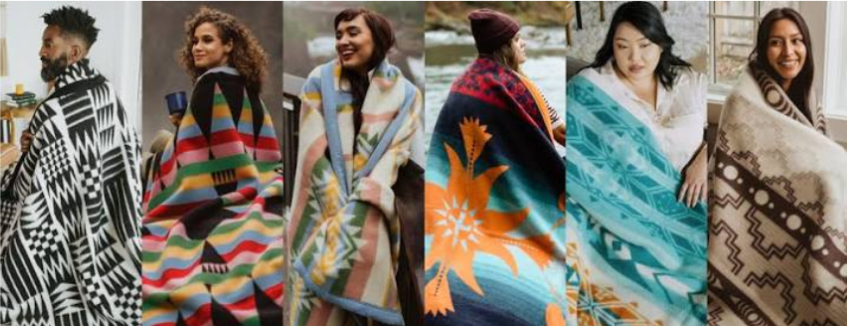
7. Eighth Generation
Country / region: United States
Community: Owned by the Snoqualmie Tribe; founded by Native artist Louie Gong.
Sustainability Index: 4.5/5
Focus: A Native-owned design company created as an ethical alternative to mass-produced ‘Native-inspired’ goods. It licenses and commissions work directly from Indigenous artists, helping move value and recognition toward Native creators rather than appropriated design supply chains.
Official website: https://eighthgeneration.com/
8. Urban Native Era
Country / region: United States
Community: Founded by Lipan Apache designer Joey Montoya.
Sustainability Index: 4/5
Focus: Indigenous streetwear combining contemporary silhouettes, political visibility and Native identity. The brand has also discussed responsible manufacturing and packaging, while its strongest contribution is making Indigenous presence visible in everyday urban clothing rather than limiting it to ceremonial contexts.
- Official website: https://urbannativeera.com/
9. OXDX Clothing
Country / region: United States
Community: Founded by Diné designer Jared Yazzie.
Sustainability Index: 3.5/5
Focus: A long-running Indigenous streetwear label using graphics, language and satire to challenge stereotypes and reclaim Native representation. Its sustainability case is stronger culturally than environmentally, so it scores lower than brands with documented circular or material strategies.
- Official website: https://www.oxdxclothing.com/
10. Mobilize
Country / region: Canada
Community: Cree-led Indigenous streetwear brand founded by Dusty LeGrande.
Sustainability Index: 3.5/5
Focus: Mobilize uses contemporary streetwear to communicate Cree identity, language and Indigenous history. It is relevant to sustainable Indigenous fashion primarily through cultural continuity and Indigenous ownership rather than a heavily documented environmental-material programme.
- Verification/source profile: https://www.vogue.com/vogueworld/article/indigenous-streetwear-brands-oxdx-oka-section-35-mobilize
11. Section 35
Country / region: Canada
Community: Founded by Justin Louis of Samson Cree Nation.
Sustainability Index: 3.5/5
Focus: Contemporary Cree streetwear whose name references Section 35 of Canada’s Constitution Act and its recognition of Aboriginal and treaty rights. The label turns political and cultural identity into wearable design while keeping Indigenous authorship at the centre.
- Official website: https://sectionthirtyfive.com/
Source: https://www.vogue.com/vogueworld/article/orenda-tribe-amy-yeung-indigenous-vintage-fashion
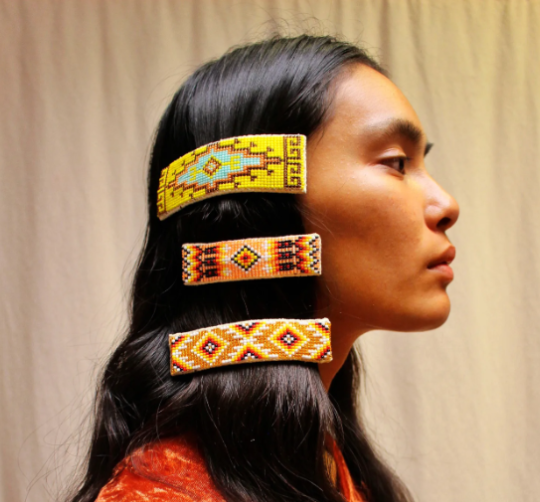
12. Orenda Tribe
Country / region: United States
Community: Founded by Diné designer Amy Yeung.
Sustainability Index: 5/5
Focus: A circular fashion studio known for reworking vintage and existing garments by hand, often alongside Indigenous makers. Its upcycling model is one of the clearest environmental fits in this list because reuse is built into the product itself rather than added through offsets or marketing.
- Official website: https://orendatribe.com/
13. Primer Rebelde de America
Country / region: Americas
Community: Indigenous-history-focused label created by Victor Vegas and Liana Waller.
Sustainability Index: 3/5
Focus: A streetwear project that uses clothing to surface histories of Indigenous resistance across the Americas. Its relevance is primarily cultural and educational, with limited public evidence for a detailed environmental sustainability programme.
- Verification/source profile: https://www.vogue.com/article/primer-rebelde-de-america-indigenous-streetwear-brand
14. ACONAV
Country / region: United States
Community: Founded by Acoma Pueblo designer Loren Aragon.
Sustainability Index: 3.5/5
Focus: Luxury womenswear translating Acoma visual language and cultural narratives into contemporary silhouettes. ACONAV is included for Indigenous ownership, representation and controlled cultural authorship; public environmental metrics are comparatively limited.
- Official website: https://aconav.com/
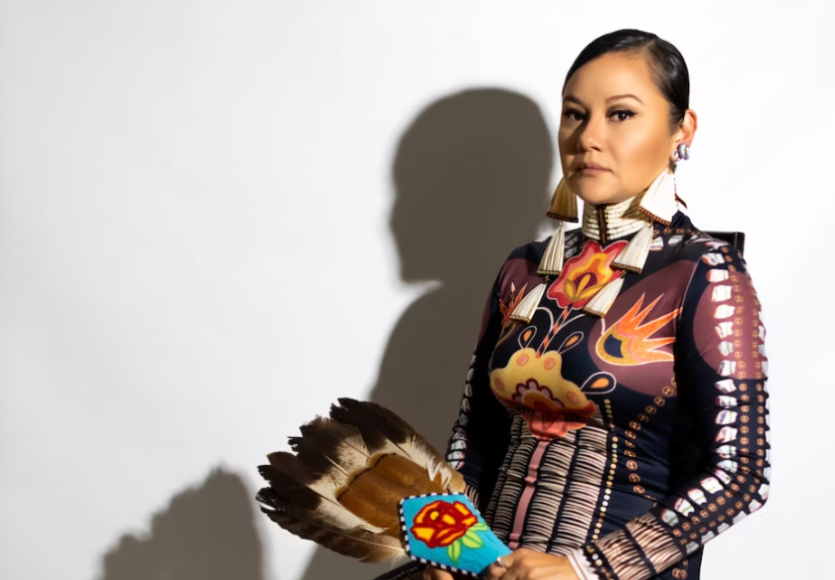
15. Jamie Okuma
Source: https://nativemaxmagazine.com/jamie-okuma-joins-the-council-of-fashion-designers-of-america/
Country / region: United States
Community: Shoshone-Bannock and Wailaki designer with Okinawan heritage.
Sustainability Index: 4/5
Focus: An acclaimed luxury designer whose work spans couture, beadwork, accessories and wearable art. Small-scale craft, highly durable objects and direct Indigenous authorship make the practice relevant to slow and culturally sustainable fashion.
Official website: https://www.jamieokuma.com/
16. Anne Mulaire
Country / region: Canada
Community: Founded by Anishinaabe/French-Metis designer Andreanne Mulaire Dandeneau.
Sustainability Index: 5/5
Focus: A particularly strong sustainability case: the label uses lower-impact fibres, local production, repair, resale and waste-reduction systems. Its Indigenous design perspective is paired with practical circularity, making it one of the most complete examples in this list.
Official website: https://annemulaire.ca/
Source: https://www.indigenousbc.com/listings/ay-lelum/
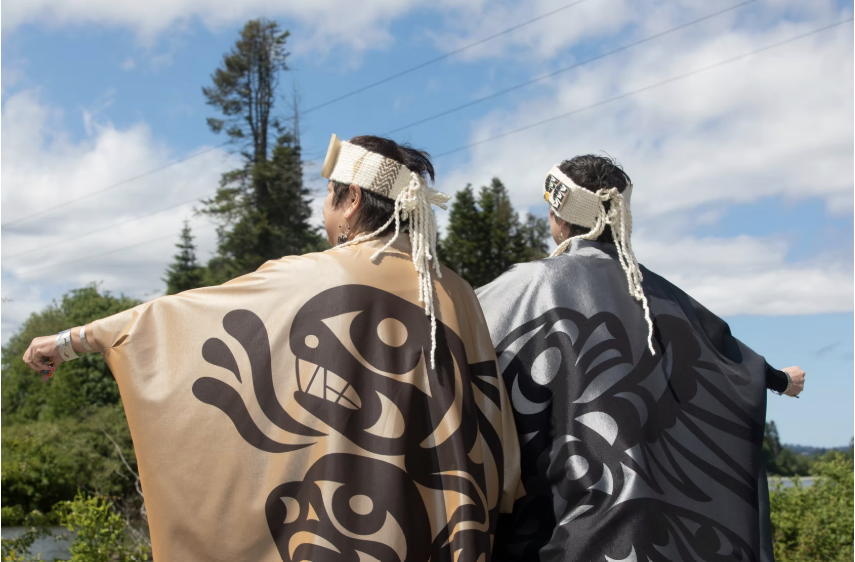
17. Ay Lelum – The Good House of Design
Country / region: Canada
Community: Founded by sisters Aunalee and Sophia Good of Snuneymuxw First Nation.
Sustainability Index: 5/5
Focus: A Coast Salish design house producing wearable art while following cultural protocols and collaborating with family and community knowledge keepers. Local production and environmentally conscious fabric choices reinforce the brand’s slow-fashion positioning.
Official website: https://www.aylelum.com/
18. Ocean Kiana
Country / region: Canada
Community: Founded by Ojibwe designer Ocean Cherneski of Netmizaaggamig Nishnaabeg.
Sustainability Index: 4.5/5
Focus: A slow-fashion label producing limited collections shaped by Ojibwe design and contemporary wearability. Its small-batch approach and explicit connection between cultural values and slower production make it a strong fit for the list.
Official social profile: https://www.instagram.com/oceankiana/
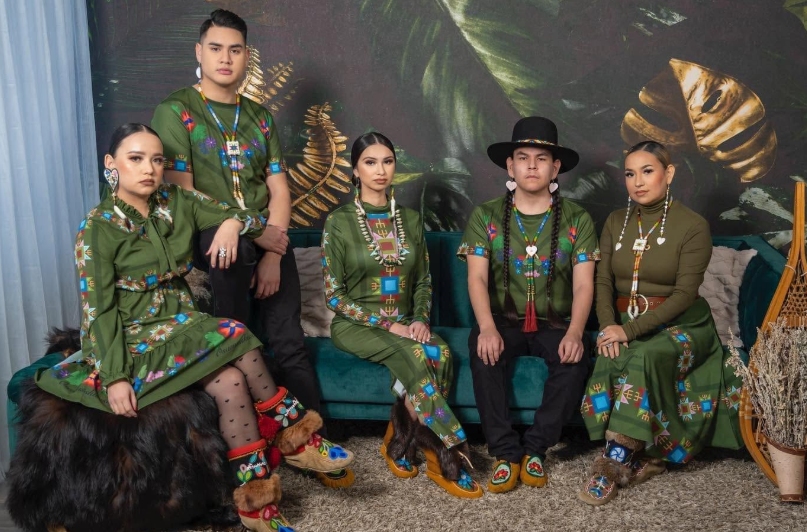
Source: https://www.facebook.com/osamuskwasis/photos/805112820422910/
19. Osamuskwasis
Country / region: Canada
Community: Founded by Dene Cree / Tsuu T’ina designer Osamuskwasis Roan.
Sustainability Index: 4/5
Focus: A fashion and regalia practice bringing beadwork, ribbon skirts and contemporary Indigenous design into editorial and runway spaces. The sustainability strength lies in handcraft, cultural continuity and made-with-intention production rather than published environmental metrics.
- Official social profile: https://www.instagram.com/osamuskwasis/
20. Kanyu
Country / region: Canada
Community: Founded by Rebecca Baker-Grenier; Kwakiutl, Dzawada’enuxw and Squamish heritage.
Sustainability Index: 4/5
Focus: A sculptural fashion practice blending contemporary forms with ancestral storytelling. Kanyu has appeared on Indigenous and international fashion platforms, expanding the visibility of First Nations-led luxury design.
- Official social profile: https://www.instagram.com/kanyubyrebeccabakergrenier/
21. Taalrumiq
Country / region: Canada
Community: Created by Inuvialuit and Gwich’in artist/designer Christina King.
Sustainability Index: 4/5
Focus: Taalrumiq combines northern sewing traditions, contemporary couture and cultural education. The work frequently draws on Arctic materials and techniques, with sustainability expressed through inherited making knowledge and low-volume handcrafted production.
- Verification/source profile: https://indigenousfashionarts.com/practice-area/textiles/
22. Hinaani Design
Country / region: Canada
Community: Inuit design collective rooted in Nunavut’s Kivalliq region.
Sustainability Index: 4/5
Focus: A contemporary Inuit apparel label that uses Inuktut language, northern identity and traditional visual culture across clothing and accessories. Its strongest contribution is culturally rooted design and locally meaningful representation.
- Official website: https://hinaani.ca/
23. Lesley Hampton
Country / region: Canada
Community: Anishinaabe designer and creative director.
Sustainability Index: 4/5
Focus: A luxury and occasionwear label known for Indigenous representation, size inclusivity and body-positive casting. Hampton has helped move First Nations fashion into mainstream Canadian fashion while maintaining Indigenous creative leadership.
- Official website: https://lesleyhampton.com/
24. Warren Steven Scott
Country / region: Canada
Community: Nlaka’pamux designer and artist.
Sustainability Index: 3.5/5
Focus: A multidisciplinary practice spanning jewellery, fashion and art, known for bold contemporary forms grounded in Salish identity. The inclusion is driven by Indigenous authorship and durable, art-object-like accessories rather than detailed public sustainability reporting.
Official website: https://warrenstevenscott.com/
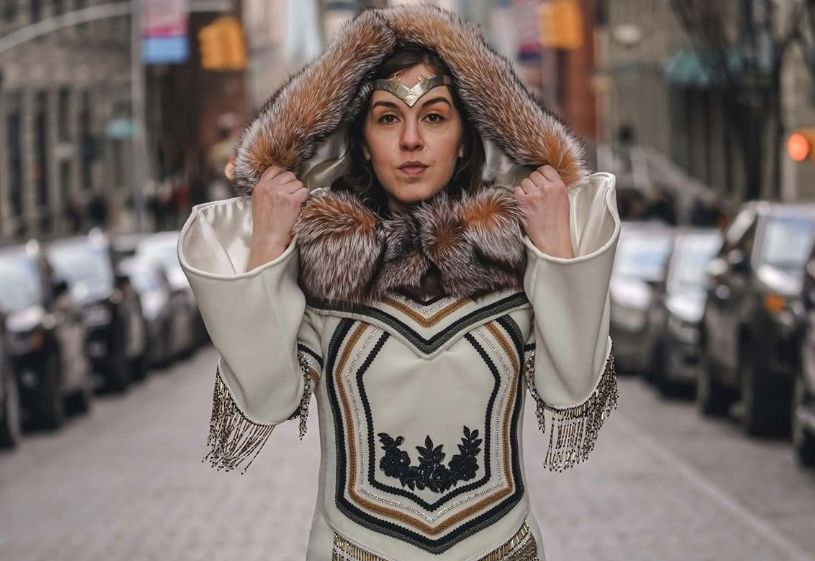
Source: https://www.facebook.com/VictoriasArcticFashion/
25. Victoria’s Arctic Fashion
Country / region: Canada
Community: Founded by Inuit designer Victoria Kakuktinniq.
Sustainability Index: 4/5
Focus: An Inuit fashion label combining northern design traditions with contemporary outerwear and formalwear. The business demonstrates how Arctic cultural knowledge can support a modern commercial fashion identity without separating design from community heritage.
- Official website: https://victoriasarcticfashion.com/
26. D’Arcy Moses
Country / region: Canada
Community: Dene designer from the Northwest Territories.
Sustainability Index: 4/5
Focus: A long-standing northern Indigenous fashion practice blending Dene aesthetics, fur, leather and couture construction. The work is relevant to slow fashion through craftsmanship, durability and culturally specific material knowledge.
- Official website: https://darcymoses.com/
Source: https://www.albertanativenews.com/make-this-and-they-will-remember-tishna-marlowes-dene-couture-carries-generations-of-survival/
27. Dene Couture by Tishna Marlowe
Country / region: Canada
Community: Founded by Tishna Marlowe of Lutsel K’e Dene First Nation.
Sustainability Index: 4/5
Focus: Dene couture that translates inherited sewing and design practices into contemporary garments. It is a useful example of fashion as cultural continuity, where value comes from community knowledge and handwork rather than mass-scale production.
Verification/source profile: https://indigenousfashionarts.com/ifa/artists/
28. Aaniin
Country / region: Canada
Community: Founded by Chelsee Pettit of Aamjiwnaang First Nation.
Sustainability Index: 3.5/5
Focus: An Indigenous apparel and retail platform using language and contemporary clothing to increase everyday Indigenous visibility. It also provides a commercial channel for other Indigenous-owned businesses, strengthening the ecosystem beyond a single label.
- Official website: https://aaniin.shop/
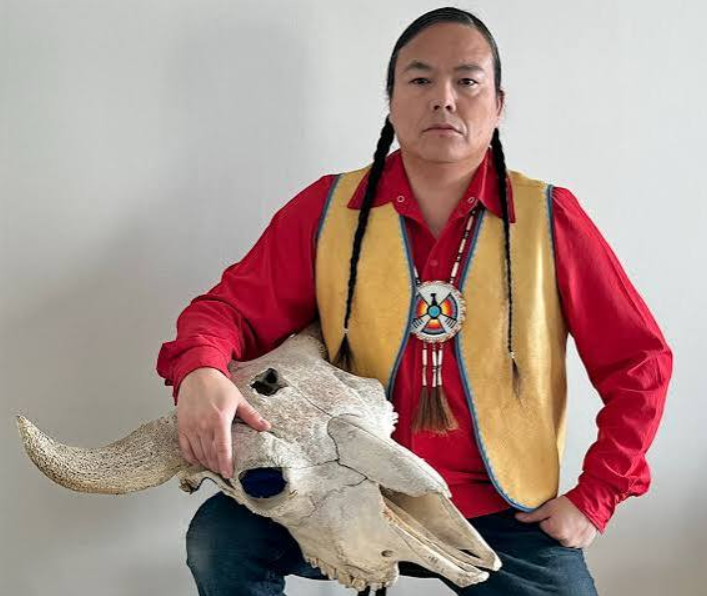
Source: https://indigenousfashionarts.com/profiles/acahkos-designs/
29. Acahkos Designs
Country / region: Canada
Community: Founded by Rhonda Johnson of Treaty 8 Bigstone Cree Nation.
Sustainability Index: 5/5
Focus: A strong upcycling-led Indigenous fashion practice. Public profiles specifically highlight the use of reclaimed materials and environmental consciousness, linking land-based values with practical waste reduction.
- Verification/source profile: https://indigenousfashionarts.com/profiles/acahkos-designs/
30. Arctic Luxe
Country / region: United States / Alaska
Community: Founded by Inupiat designer Bobby Lynn Qalutaksraq Brower.
Sustainability Index: 4/5
Focus: Arctic Indigenous fashion grounded in Inupiat identity and northern material culture. Its relevance comes from culturally specific design and low-volume making, although detailed environmental metrics are not widely published.
- Verification/source profile: https://indigenousfashionarts.com/ifa/artists/
31. Indi City
Country / region: Canada
Community: Cree-Metis-founded jewellery and accessories company.
Sustainability Index: 4/5
Focus: A contemporary Indigenous jewellery label that puts Cree-Metis design and storytelling into a scalable fashion-accessories format. The work supports Indigenous creative ownership while keeping cultural narratives attached to the makers.
- Official website: https://indicity.ca/
32. Born In The North
Country / region: Canada
Community: Founded by Mi’kmaq twin brothers Chris and Greg Mitchell.
Sustainability Index: 3.5/5
Focus: A Mi’kmaq apparel and art practice combining graphic design, humour, language and contemporary Indigenous identity. Its sustainability value is primarily cultural and small-scale, with limited public environmental reporting.
- Official website: https://borninthenorth.com/
33. Totem Design House
Country / region: Canada
Community: Founded by Haida/Cree artist Erin Brillon.
Sustainability Index: 5/5
Focus: An Indigenous design business with a particularly clear eco-conscious positioning. It combines Haida and Cree visual traditions with products designed to support cultural continuity and environmental responsibility.
- Official website: https://totemdesignhouse.com/
34. Pacha Indigenous Art Collection
Country / region: Canada / Ecuador
Community: Kichwa family-owned Indigenous art and textile business.
Sustainability Index: 4/5
Focus: A Kichwa-led practice spanning clothing, textiles and craft. It is relevant for maintaining Indigenous design authorship and connecting traditional making with contemporary markets.
- Verification/source profile: https://indigenousfashionarts.com/practice-area/textiles/
35. MAWO
Country / region: Argentina
Community: Wichi textile and fashion initiative.
Sustainability Index: 4.5/5
Focus: A Wichi-led textile practice that links Indigenous craft, community production and fashion. Its significance lies in preserving material knowledge and creating market pathways without stripping the work of its community identity.
- Verification/source profile: https://indigenousfashionarts.com/practice-area/textiles/
36. Andes Warmi
Country / region: Ecuador
Community: Kichwa women-led weaving and craft initiative.
Sustainability Index: 4.5/5
Focus: An Indigenous textile project centred on Kichwa weaving, cultural exchange and artisan livelihoods. The slow, hand-based production model and community ownership make it relevant to both cultural and environmental sustainability.
- Verification/source profile: https://indigenousfashionarts.com/practice-area/craft/
First Nations Australian fashion
Source: https://www.westrivarts.com.au/westernriverinaarts/2021/6/15/lillardia-briggs-houston-june-artist-of-the-month
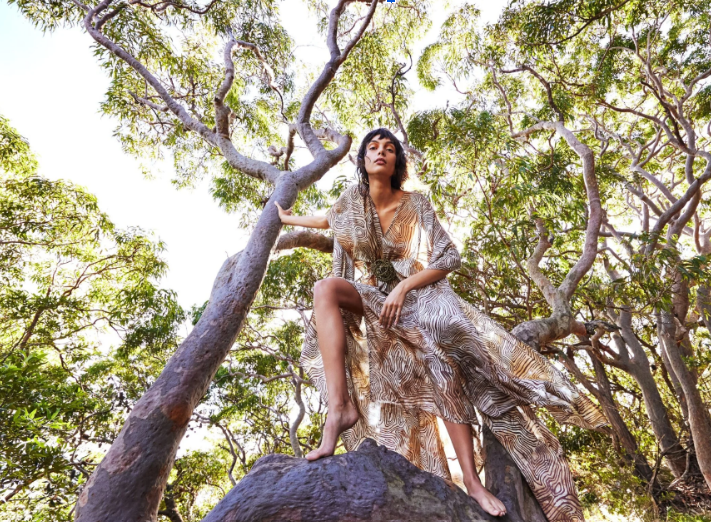
37. Lillardia Briggs-Houston
Country / region: Australia
Community: Wiradjuri, Gangulu and Yorta Yorta designer working on unceded Wiradjuri Country.
Sustainability Index: 5/5
Focus: An ethical slow-fashion practice using natural fibres and Southeast Aboriginal cultural techniques including bush dyeing, weaving and carving. Pieces are made by hand, making the production model materially aligned with slow fashion as well as Indigenous self-determination.
- Official website: https://www.lillardia.com/
https://www.vogue.com/article/grace-lillian-lee-weaving
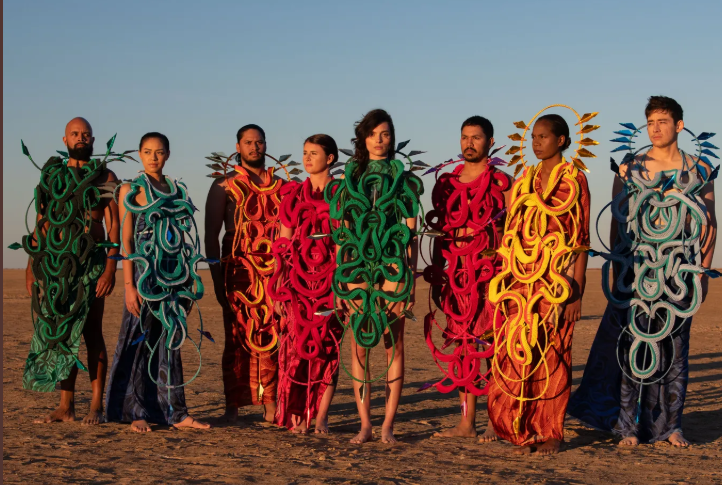
38. Grace Lillian Lee
Country / region: Australia
Community: First Nations Australian designer, mentor and artist based in Cairns.
Sustainability Index: 4.5/5
Focus: Best known for intricate woven fashion and sculptural work, Lee also mentors emerging First Nations designers and collaborates with communities. Her practice expands Indigenous fashion through both creative output and capacity-building.
- Official website: https://gracelillianlee.com/
39. MAARA Collective
Country / region: Australia
Community: Founded by Yuwaalaraay designer Julie Shaw.
Sustainability Index: 4.5/5
Focus: A resortwear and lifestyle label built around collaboration with Indigenous artists and artisans. The model foregrounds attribution and artist participation, making cultural intellectual property part of the commercial relationship rather than anonymous inspiration.
- Official website: https://shop.maaracollective.com/
40. Haus of Dizzy
Country / region: Australia
Community: Founded by Wiradjuri designer Kristy Dickinson.
Sustainability Index: 3.5/5
Focus: A high-visibility First Nations jewellery brand known for bold colour, political messaging and Indigenous pride. Sustainability reporting is less detailed than some peers, but Indigenous ownership and cultural visibility are central to the business.
- Official website: https://hausofdizzy.com/
41. Gammin Threads
Country / region: Australia
Community: Founded by Tahnee Edwards, with Yorta Yorta, Taungurung, Boonwurrung and Mutti Mutti heritage.
Sustainability Index: 3.5/5
Focus: A First Nations streetwear label using slogans, graphics and language to foreground Blak pride, Indigenous women and political identity. It is strongest as a cultural-sustainability and representation case rather than a materials-led one.
- Official website: https://gamminthreads.com/
42. Kirrikin
Country / region: Australia
Community: Founded by Wonnarua woman Amanda Healy.
Sustainability Index: 4.5/5
Focus: A luxury textile and accessories company licensing artworks from First Nations artists for fashion products. The model creates a clearer economic link between cultural artwork and commercial fashion and has been positioned around ethical and sustainable production.
- Official website: https://kirrikin.com/
43. NORTH
Country / region: Australia
Community: Not-for-profit fashion initiative working with remote Indigenous art centres in the Northern Territory.
Sustainability Index: 5/5
Focus: NORTH connects remote Indigenous artworks with clothing and textile products while directing income toward participating art centres and artists. It is particularly relevant as a social-enterprise model where fashion functions as infrastructure for sustained community income.
- Official website: https://northhome.org/
https://australianfashionweek.org/designer/ngali/
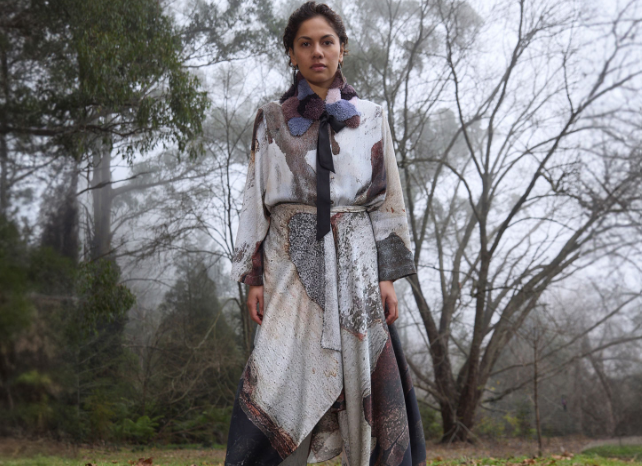
44. Ngali
Country / region: Australia
Community: Founded by Wiradjuri designer Denni Francisco.
Sustainability Index: 5/5
Focus: A premium First Nations label built around collaboration, Country and Aboriginal art. Ngali has used responsible production and artist partnerships to show how Indigenous intellectual property and contemporary luxury can coexist within a more accountable model.
- Official website: https://ngali.com.au/
45. Clothing The Gaps
Country / region: Australia
Community: First Nations-owned social enterprise linked to Indigenous health and education programmes.
Sustainability Index: 4.5/5
Focus: An apparel brand using slogans and accessible streetwear as a platform for Indigenous advocacy. Its profits support Indigenous health and education initiatives, giving the commercial model a direct social-impact dimension.
- Official website: https://clothingthegaps.com.au/
46. Bush Magic Metal
Country / region: Australia
Community: Founded by Lydia Baker, a Mununjali and Butchulla silversmith.
Sustainability Index: 4/5
Focus: Handmade jewellery inspired by Country, ancestors and Australian materials such as opal and sterling silver. Small-scale production and maker-led authorship support a slower model than mass jewellery manufacturing.
- Official website: https://www.bushmagicmetal.com/
47. Liandra
Country / region: Australia
Community: Founded by Yolngu designer Liandra Gaykamangu.
Sustainability Index: 5/5
Focus: An Indigenous swim and resortwear brand with unusually clear environmental practices, including fabrics made with regenerated plastics and compostable components/packaging. Yolngu storytelling remains embedded in its prints and brand identity.
- Official website: https://liandra.com.au/
Maori & Pacific Indigenous fashion
Source: https://www.vogue.com.au/fashion/news/kiri-nathan-new-zealand-fashion-week-2023/news-story/9e2f8fb6648d327baadbd43cc6ca7fb3
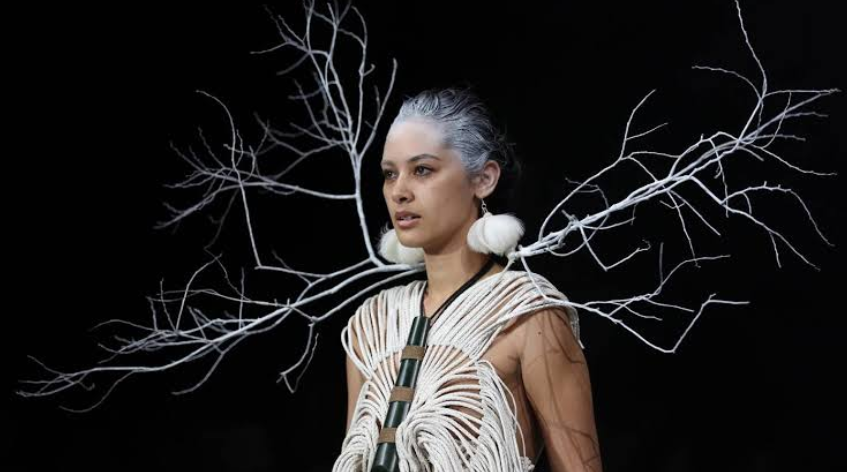
48. Kiri Nathan
Country / region: Aotearoa New Zealand
Community: Maori designer and one of Aotearoa’s most internationally visible Indigenous fashion figures.
Sustainability Index: 4.5/5
Focus: A luxury fashion house combining contemporary tailoring with Maori weaving, symbolism and cultural practice. Nathan’s work is especially important for Indigenous leadership and the expansion of Maori design within global fashion institutions.
- Official website: https://kirinathan.com/
49. Maru Creations
Country / region: Aotearoa New Zealand
Community: Founded by Te Ataraiti Waretini, with Tuhourangi-Ngati Wahiao, Tainui and Te Rarawa whakapapa.
Sustainability Index: 4/5
Focus: A Maori textile and fashion practice expressing cultural identity through contemporary design. The work is relevant to culturally sustainable fashion through Indigenous ownership, local storytelling and the continuity of Maori visual language.
- Verification/source profile: https://indigenousfashionarts.com/practice-area/textiles/
Source: https://www.biennaleofsydney.art/participants/pacific-sisters/
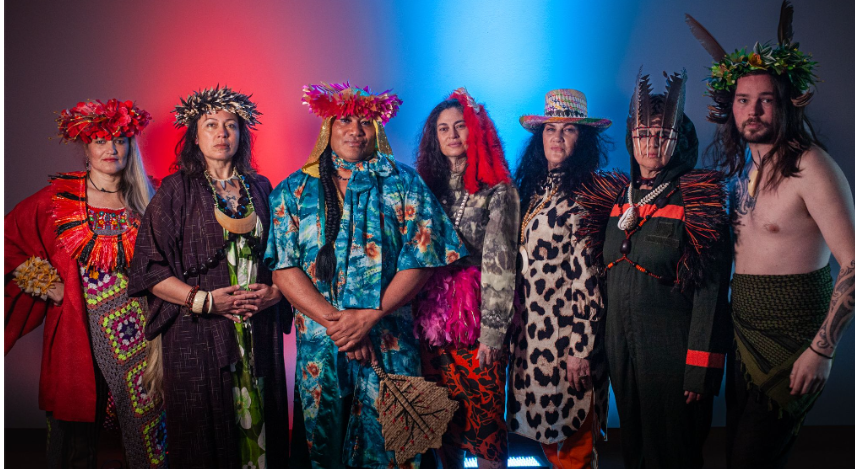
50. Pacific Sisters
Country / region: Aotearoa New Zealand
Community: Maori and Pacific multidisciplinary collective.
Sustainability Index: 4/5
Focus: A pioneering collective merging fashion, performance, art and Pacific Indigenous identity. Its importance is less about a conventional commercial sustainability model and more about long-term cultural experimentation, representation and collective authorship.
- Verification/source profile: https://www.aucklandartgallery.com/whats-on/exhibition/pacific-sisters-fashion-activists
Indigenous jewellery, textiles & craft
Source: https://www.oliobymarilyn.com/2025/11/interview-indigenous-fashion-designer-yolandaskelton-sugiitlukxs-vifw-canada.html
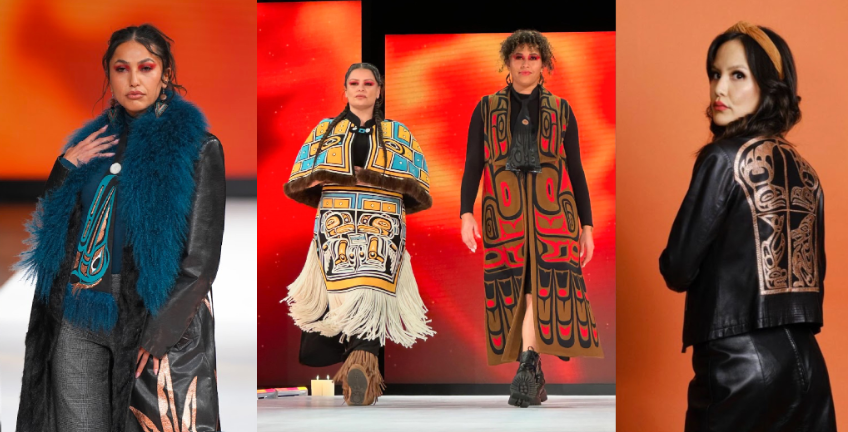
51. SugIit Lukxs Designs
Country / region: Canada
Community: Founded by Gitxsan designer Yolonda Skelton.
Sustainability Index: 4.5/5
Focus: A textile and fashion practice using applique, ceremonial knowledge and Northwest Coast design. Its value lies in translating community-held knowledge into contemporary work while maintaining cultural context and authorship.
- Verification/source profile: https://www.ellecanada.com/fashion/shopping/indigenous-fashion-brands
52. Jaad Kuujus
Country / region: Canada
Community: Haida and Kwakwaka’wakw artist Meghann O’Brien.
Sustainability Index: 5/5
Focus: A high-level weaving practice using materials such as cedar and mountain-goat wool, connecting clothing and textiles directly to land-based Indigenous knowledge. The work exemplifies slow fashion in its most literal form: labour-intensive, local, durable and culturally specific.
- Verification/source profile: https://indigenousfashionarts.com/practice-area/textiles/
53. Kadusne
Country / region: United States / Alaska
Community: Tlingit textile and fashion practice associated with artist Ursala Hudson.
Sustainability Index: 4.5/5
Focus: A contemporary Indigenous weaving practice rooted in Tlingit textile knowledge and wearable art. Its relevance comes from slow hand production and the continuation of highly specialised Indigenous techniques.
- Verification/source profile: https://indigenousfashionarts.com/practice-area/textiles/
Source: https://www.indigenouswomanmade.com/
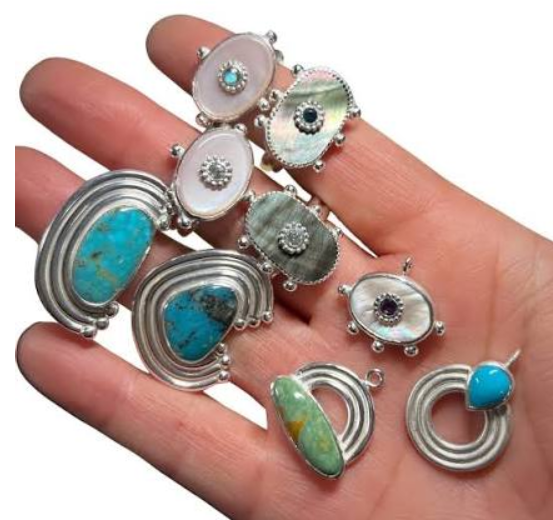
54. Ahlazua – Indigenous Woman Made
Country / region: United States
Community: Founded by Rykelle Kemp; Mvskoke Creek-Euchee, Choctaw and Diné heritage.
Sustainability Index: 4/5
Focus: Wearable Indigenous art combining contemporary jewellery with techniques and visual language grounded in Native identity. Small-scale maker production and direct cultural authorship make it relevant to slow, community-rooted fashion.
- Verification/source profile: https://indigenousfashionarts.com/ifa/artists/
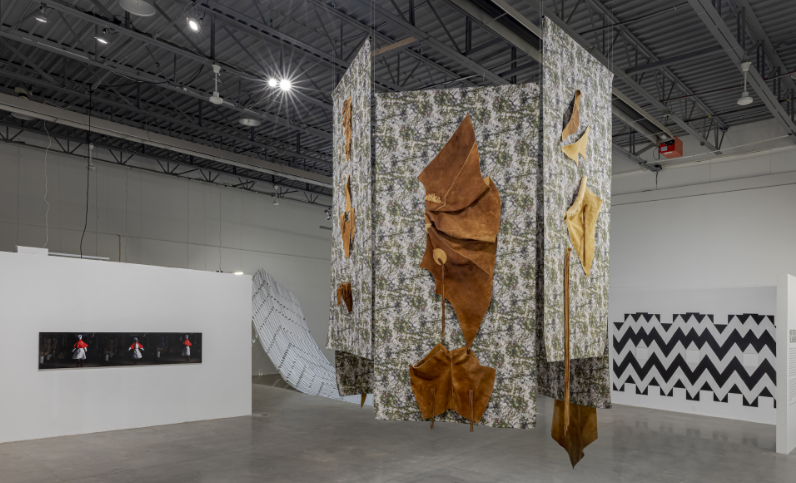
55. Amy Malbeuf
Country / region: Canada
Community: Metis multidisciplinary artist and maker.
Sustainability Index: 4/5
Focus: A practice spanning garments, textiles, installation and cultural research. Malbeuf’s work is included because it treats textile making as Indigenous cultural knowledge rather than simply decorative fashion production.
- Verification/source profile: https://indigenousfashionarts.com/practice-area/craft/
Source: https://torontobiennial.org/exhibition/amy-malbeuf-at-arsenal-contemporary-toronto/
56. Assinewe Jewelry
Country / region: Canada
Community: Founded by Edie and Jacquelyn Assinewe of Sagamok Anishnawbek.
Sustainability Index: 3.5/5
Focus: A contemporary Anishinaabe jewellery practice that keeps family and community authorship visible. Its environmental practices are not extensively published, so its score reflects cultural sustainability and maker-led production.
- Verification/source profile: https://indigenousfashionarts.com/ifa/artists/
57. Audrey Deroy
Country / region: Canada
Community: Anizaatikoong / Lac Des Mille Lacs First Nation maker.
Sustainability Index: 3.5/5
Focus: An Indigenous jewellery and craft practice featured within Indigenous Fashion Arts. Its inclusion reflects direct Indigenous authorship and small-scale making, while public environmental detail remains limited.
- Verification/source profile: https://indigenousfashionarts.com/ifa/artists/
58. Delia Estelle Designs
Country / region: Canada
Community: Ojibway jewellery and wearable-art practice.
Sustainability Index: 3.5/5
Focus: A maker-led Indigenous jewellery business grounded in intergenerational artistic knowledge. The production model is small-scale and culturally specific, though detailed sustainability reporting is not publicly available.
- Verification/source profile: https://indigenousfashionarts.com/ifa/artists/
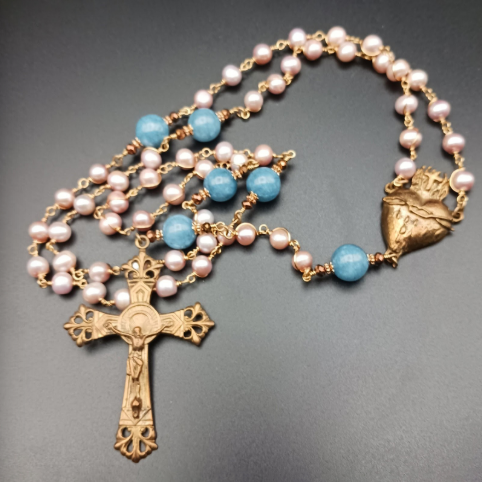
Source: https://nativehillsdesigns.com/product/pink-pearl-rosary/?srsltid=AfmBOoo4VTQxOUQyNwRiOoO0T7fGRuyswRXcu9z3tcEodynqRSfsAdOe
59. Designs by Rosary
Country / region: Canada
Community: Cree maker from Fort Albany First Nation.
Sustainability Index: 4/5
Focus: Jewellery and leatherwork shaped by inherited craft knowledge and Indigenous visual traditions. The business fits the list through small-scale hand production and direct connection between cultural technique and maker.
- Verification/source profile: https://indigenousfashionarts.com/ifa/artists/
60. Eagle Heart Beads
Country / region: Canada
Community: Founded by Brianna Patrick of Roseau River Anishinabe First Nation.
Sustainability Index: 3.5/5
Focus: A beadwork and wearable-art practice using family stories and Indigenous design in contemporary accessories. It demonstrates the role of micro-enterprise in keeping beadwork economically viable and culturally visible.
- Verification/source profile: https://indigenousfashionarts.com/ifa/artists/
61. Tania Larsson
Country / region: Canada
Community: Gwich’in designer and jeweller from the Northwest Territories.
Sustainability Index: 5/5
Focus: A land-based jewellery practice using northern materials and Gwich’in knowledge. Larsson’s work is a strong sustainability example because material use, cultural protocol and small-scale craftsmanship are inseparable from place.
- Official website: https://tanialarsson.com/
62. The Zapotec Weavers
Country / region: Mexico / United States
Community: Third-generation Zapotec weaving family.
Sustainability Index: 5/5
Focus: An intergenerational textile practice centred on Zapotec weaving and Indigenous entrepreneurship. Hand production, durable textiles and family-held techniques make it a strong example of traditional craft operating within contemporary markets.
- Verification/source profile: https://indigenousfashionarts.com/ifa/artists/
63. This Claw
Country / region: Canada
Community: Two-Spirit Tsilhqot’in beadwork and wearable-art practice.
Sustainability Index: 3.5/5
Focus: A contemporary beadwork practice connecting Two-Spirit identity with Indigenous wearable art. The sustainability strength is cultural continuity and small-batch craft rather than documented environmental certification.
- Verification/source profile: https://indigenousfashionarts.com/ifa/artists/
64. Willow Crescent Quilting
Country / region: Canada
Community: Gwich’in textile and quilting practice.
Sustainability Index: 4/5
Focus: A textile practice combining quilting with Gwich’in identity and design. Quilting’s repair, reuse and durability traditions make it particularly relevant to slow-fashion conversations, although public commercial data is limited.
- Verification/source profile: https://indigenousfashionarts.com/practice-area/textiles/
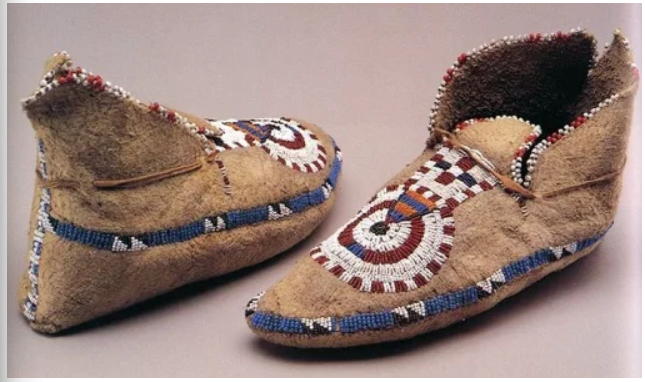
Source:https://www.wolflakefirstnation.com/culural-lifestyle
65. Algonquin Textiles
Country / region: Canada
Community: Indigenous-owned textile business connected to Kitigan Zibi.
Sustainability Index: 4/5
Focus: A specialised textile and material supplier serving Indigenous makers, including powwow and regalia production. Its inclusion reflects the importance of Indigenous-owned supply infrastructure, not only finished fashion labels.
- Verification/source profile: https://indigenousfashionarts.com/practice-area/textiles/
Sustainable brands & startups collaborating with Indigenous / traditional communities
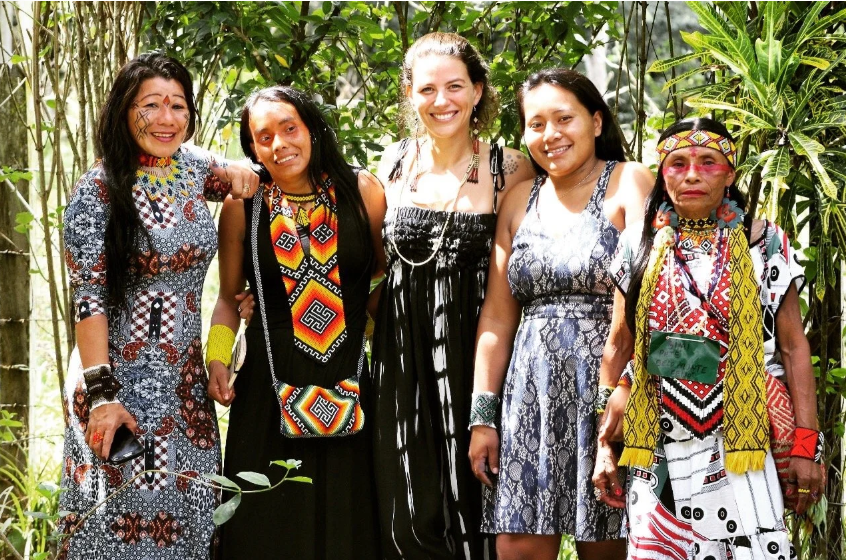
Source: https://www.rito.fashion/about
66. R.I.TO / Ainbu Keneya
Country / region: Brazil
Community: Contemporary fashion collaboration involving Huni Kuin women and kene visual traditions.
Sustainability Index: 4.5/5
Focus: A collaboration model centred on Huni Kuin women’s cultural knowledge and geometric kene design. It belongs in this category – not the Indigenous-owned category – because the relevance comes from documented community partnership and sustainable-fashion positioning.
- Official website: https://www.rito.fashion/
67. Tega Collective
Country / region: India
Community: Works with Adivasi artisan communities and traditional textile practices.
Sustainability Index: 5/5
Focus: A regenerative-fashion project using native fibres, natural dyes, traditional embroidery and limited production. Tega is especially relevant because it discusses community benefit and degrowth rather than treating craft only as surface decoration.
- Official website: https://tegacollective.com/
68. Jiwya
Country / region: India
Community: Works across a broad artisan network rather than being Indigenous-owned.
Sustainability Index: 4.5/5
Focus: A plant-based fashion startup using native plant fibres, natural colours, hand processes and low-impact textile development. It is best described as heritage/artisan-led sustainable fashion, not an Indigenous-owned company.
- Official website: https://www.jiwya.com/
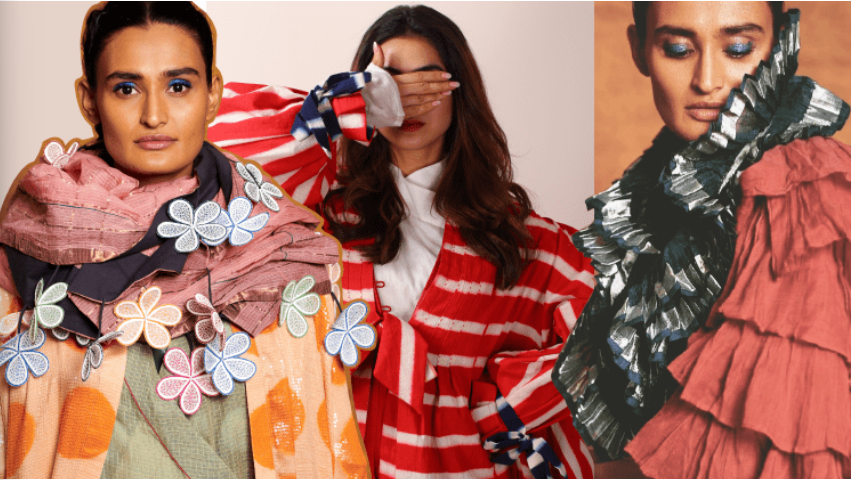
Source: https://apparelresources.com/fashion-news/features/ka-sha-india-redefining-norms-sustainability-conscious-collaborations/
69. Ka-Sha
Country / region: India
Community: Karishma Shahani Khan’s label draws on Indian craft traditions, including work inspired by Rabari dress culture.
Sustainability Index: 5/5
Focus: A craft-led sustainable fashion label whose Heart to Haat initiative reuses post-production remnants and offers mending and repair. It is relevant here as a collaborator with traditional and Indigenous craft references, not as an Indigenous-owned label.
- Official website: https://ka-shaindia.com/
70. Linen Trail
Country / region: India
Community: Slow-fashion label that has worked with Toda women of the Nilgiris.
Sustainability Index: 4.5/5
Focus: The brand’s Toda collection drew on traditional Pukhoor embroidery while reporting a long-term working relationship with Toda women and a commitment to keeping the embroidery’s form intact. That makes the community relationship more meaningful than generic ‘tribal-inspired’ design.
- Official website: https://linentrail.com/
71. P.E.L.L.A
Country / region: India
Community: Founded by Priyanka Ella Lorena Lama; design research has drawn on communities in Sikkim.
Sustainability Index: 5/5
Focus: A zero-waste slow-fashion label known for constructing garments from single pieces of cloth, hand-stitching and using handwoven textiles such as Eri silk. Its community references need careful wording: it is not presented here as an Indigenous-owned label.
- Verification/source profile: https://www.notjustalabel.com/pella
72. IKAI by Ragini Ahuja
Country / region: India
Community: Indian fashion label drawing on craft and community references, including Drokpa-inspired work.
Sustainability Index: 3.5/5
Focus: A contemporary label using local craft and textile references in modern silhouettes. It is included cautiously as a craft/community collaboration example rather than an Indigenous-owned business, because the available source material supports inspiration and craft engagement more strongly than ownership.
- Official website: https://www.ikai.in/
73. Joskai
Country / region: India
Community: Assam-based label associated with Northeast Indian textile traditions and artisan communities.
Sustainability Index: 4.5/5
Focus: Joskai works with handloom traditions and communities from Northeast India, using fashion to expand the market for regionally rooted textiles. Its sustainability case rests on handcraft, local textile systems and cultural continuity rather than industrial-scale production.
- Official social profile: https://www.instagram.com/joskai.studio/
Source: https://uramaku.com/products/tea-dyed-eri-silk-jacket-with-patch-pockets/
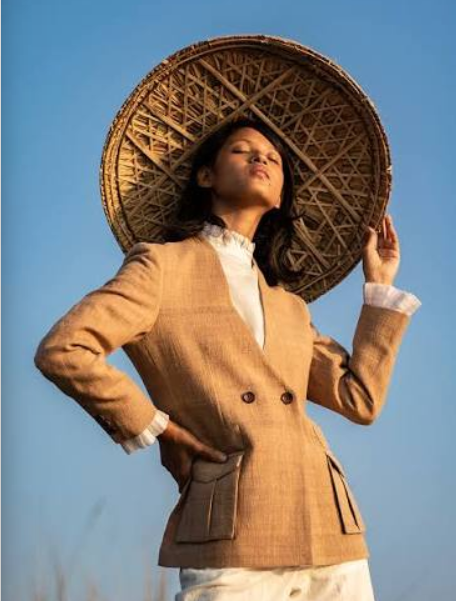
74. Ura Maku
Country / region: India
Community: Indian slow-fashion label working with handwoven textiles and craft traditions.
Sustainability Index: 4.5/5
Focus: A small-scale label focused on natural-feeling handwoven textiles, trans-seasonal design and regional craft. It is better described as a heritage-craft sustainability brand than as Indigenous-owned.
- Official social profile: https://www.instagram.com/uramaku/
Source: https://www.whitelabel-project.com/collections/lafaani?srsltid=AfmBOoqhsSZdzM-ZVyMQKFSdyjsCGp_HiYgrxSJ9IWu82L22Lw1FNQDf
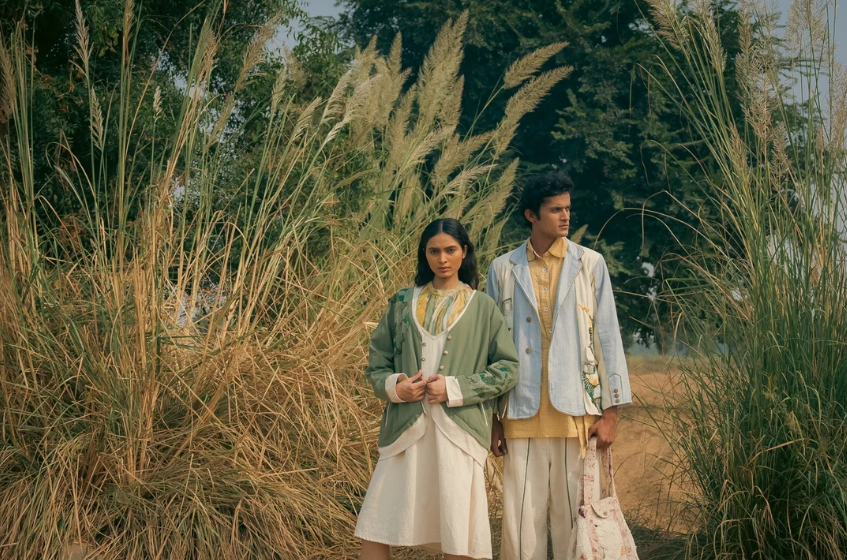
75. Lafaani
Country / region: India
Community: Craft-led circular-fashion label working with Indian weavers and embroiderers.
Sustainability Index: 5/5
Focus: A circular label using natural materials, handweaving, seasonless design and low-waste principles. Its placement here reflects traditional artisan collaboration and sustainable production rather than Indigenous ownership.
Official website: https://lafaani.com/
Influencers, models & advocates
Source: https://www.allure.com/story/model-quannah-chasinghorse-hometown-interview
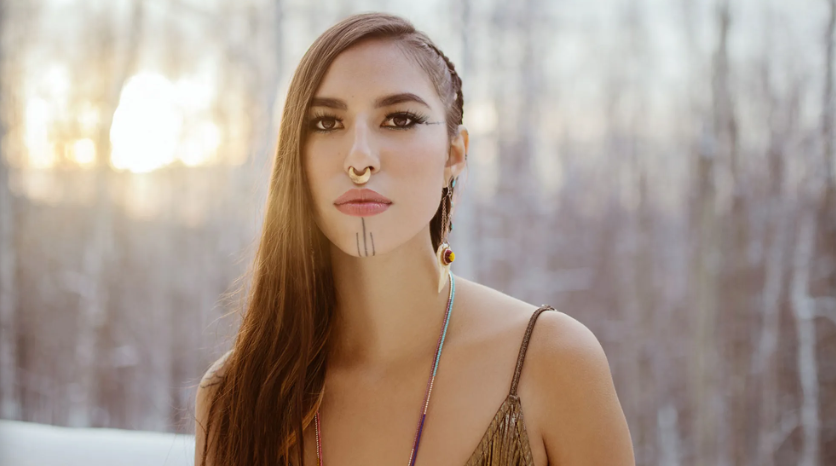
76. Quannah Chasinghorse
Country / region: United States
Community: Han Gwich’in and Oglala Lakota model and activist with major international fashion visibility.
Sustainability Index: 5/5
Focus: One of the most visible Indigenous models in global fashion, Chasinghorse uses editorial and runway exposure to foreground Native identity, land protection and cultural continuity. Her Yidiiłtoo facial markings and Indigenous jewellery have also helped challenge the industry’s tendency to separate fashion from living Indigenous culture.
- Official social profile: https://www.instagram.com/quannah.rose/
Source: https://atmos.earth/fashion-and-design/zaya-guarani-the-fast-rising-model-born-and-raised-in-the-amazon/
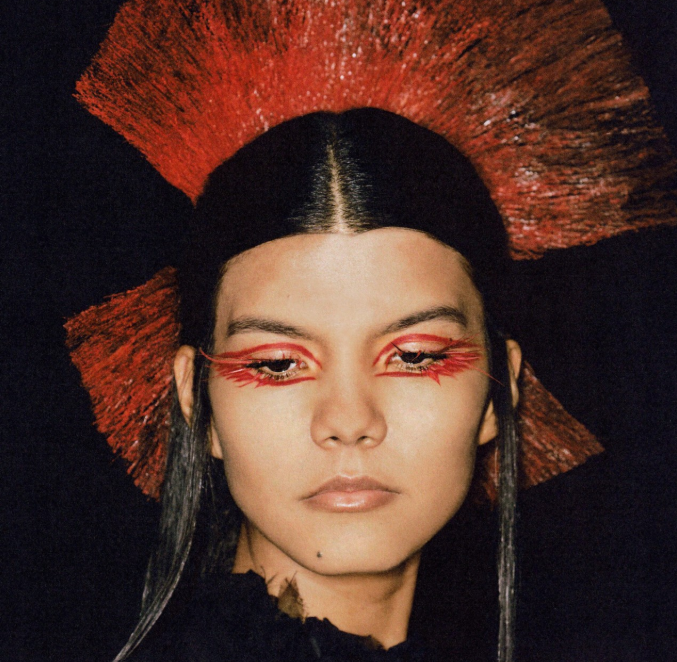
77. Zaya Guarani
Country / region: Brazil / international
Community: Indigenous Brazilian model with international fashion and climate-justice visibility.
Sustainability Index: 5/5
Focus: Guarani uses high-fashion modelling as a platform for Amazonian Indigenous representation and climate justice. She is relevant because her influence connects fashion imagery directly to environmental and Indigenous-rights advocacy.
- Verification/source profile: https://www.businessoffashion.com/people/zaya-guarani/
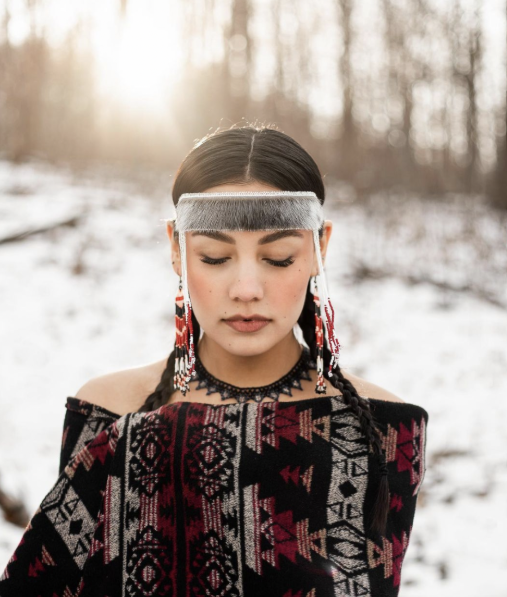
Source: https://www.katienanton.com/journalism/shina-novalinga-cultural-heritage
78. Shina Novalinga
Country / region: Canada
Community: Urban Inuk creator and throat singer; Feedspot listed about 2.1M Instagram followers in 2026.
Sustainability Index: 3.5/5
Focus: A major digital creator bringing Inuit culture, clothing and throat singing to a global audience. Her role is primarily cultural visibility rather than fashion-production sustainability, so the score reflects influence and representation rather than materials or supply-chain impact.
- Official social profile: https://www.instagram.com/shinanova/
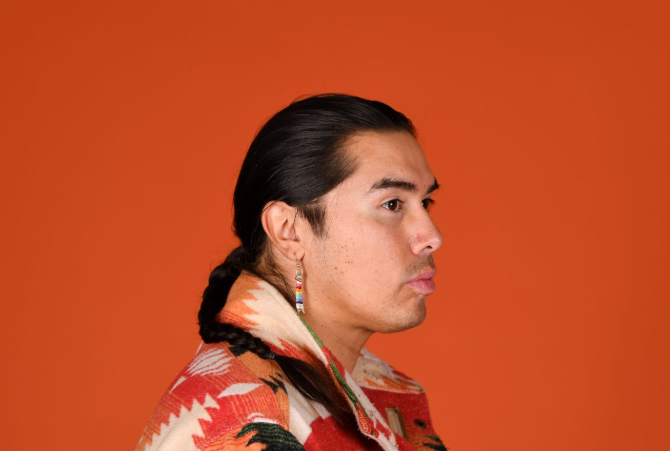
Source: https://www.cip-icu.ca/blog/keynote-announcement-notorious-cree/
79. James Jones / Notorious Cree
Country / region: Canada
Community: Cree creator and hoop dancer; Feedspot listed about 1.3M Instagram followers in 2026.
Sustainability Index: 3.5/5
Focus: Jones blends traditional hoop dance, regalia and contemporary social media to make Indigenous culture visible to mainstream audiences. His fashion relevance comes from the way clothing and regalia are presented as living culture rather than costume.
- Official social profile: https://www.instagram.com/notoriouscree/

Source: https://www.milkmanagement.co.uk/clients/our-talent/3594-willow-allen
80. Willow Allen
Country / region: Canada
Community: Inuit model; Feedspot listed roughly 291K Instagram followers in 2026.
Sustainability Index: 3/5
Focus: An Inuit model working across fashion and editorial markets, Allen increases Indigenous representation within an industry where Native and Inuit faces have historically been underrepresented. Her sustainability relevance is primarily cultural visibility.
- Official social profile: https://www.instagram.com/willow.allen/
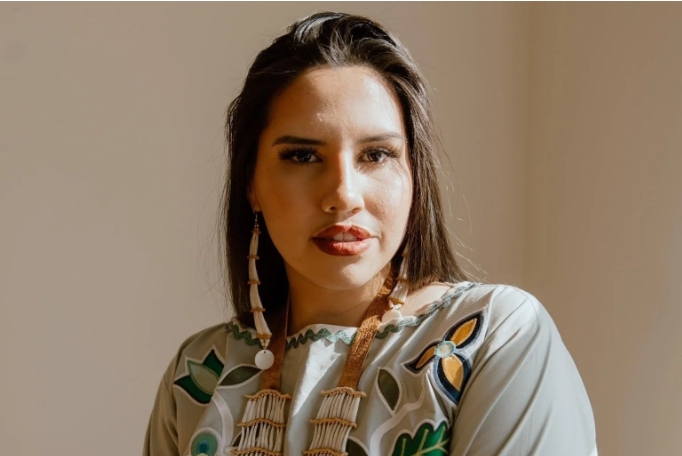
Source: https://marketingnewscanada.com/news/michelle-chubb-on-the-importance-of-diversity-in-beauty-marketing
81. Michelle Chubb
Country / region: Canada
Community: Swampy Cree creator and model known online as Indigenous Baddie; Feedspot listed about 265K Instagram followers in 2026.
Sustainability Index: 3.5/5
Focus: Chubb uses fashion, dance and social content to challenge stereotypes around Indigenous women and contemporary Indigenous life. Her influence helps Indigenous designers and cultural aesthetics circulate within youth-oriented digital culture.
- Official social profile: https://www.instagram.com/indigenous_baddie/
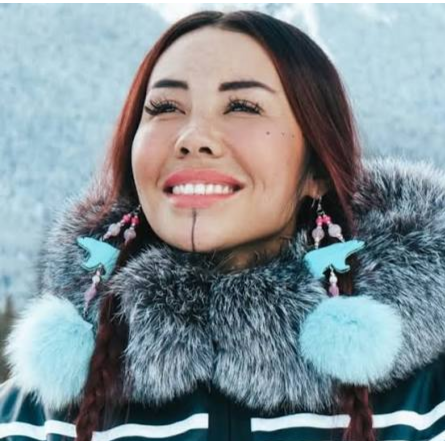
Source: https://www.instagram.com/marikasila/
82. Marika Sila
Country / region: Canada
Community: Inuk actress, performer and creator; Feedspot listed about 484.5K Instagram followers in 2026.
Sustainability Index: 3/5
Focus: Sila’s platform spans Inuit culture, lifestyle, movement and performance. Her fashion relevance is representation-led rather than tied to a specific sustainable label, but she contributes substantial visibility to contemporary Inuit identity.
- Official website: https://marikasila.com/
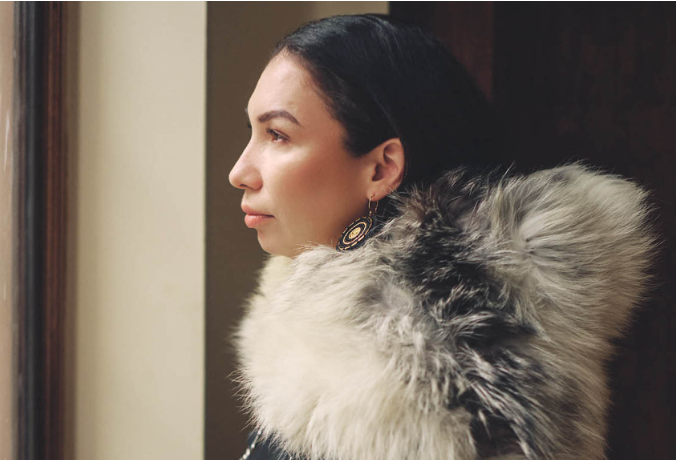
Source: https://nuvomagazine.com/magazine/spring-2023/sage-paul-founder-of-indigenous-fashion-arts?srsltid=AfmBOoo_zhrid1zj63hJT97hKM0hBygy_R1Gf9Rr3HwjVVeADJqBN5b5
83. Sage Paul
Country / region: Canada
Community: Denesuline designer and founding leader of Indigenous Fashion Arts.
Sustainability Index: 5/5
Focus: Paul is one of the most important infrastructure-builders in Indigenous fashion, creating platforms for designers, artists, trade development and cultural sovereignty. Her impact extends beyond personal influence into the systems that allow Indigenous fashion businesses to grow.
- Official organisation: https://indigenousfashionarts.com/
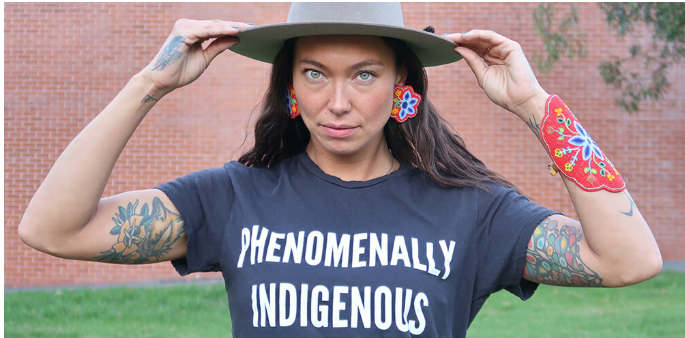
Source: https://caamagazine.com/on/community/what-you-need-to-know-about-sarain-fox
84. Sarain Fox
Country / region: Canada
Community: Anishinaabe storyteller, media figure and activist.
Sustainability Index: 4/5
Focus: Fox works across media, culture, fashion-adjacent storytelling and land-based advocacy. Her platform consistently amplifies Indigenous voices and links cultural identity to environmental responsibility.
- Official social profile: https://www.instagram.com/sarainfox/
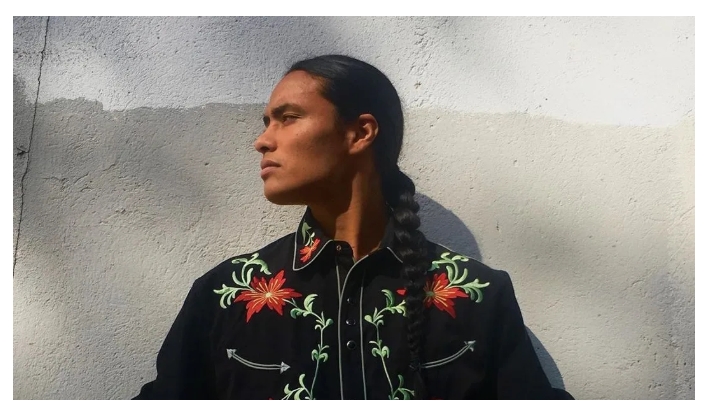
Source: https://www.vogue.com/article/haatepah-clearbear-indigenous-model-activism
85. Haatepah Clearbear
Country / region: United States
Community: Kumeyaay, Pai Pai and Chichimeca-Guamare model and Indigenous-rights advocate.
Sustainability Index: 4.5/5
Focus: A fashion model who has worked with major global brands while speaking about Native identity, reconnection and protection of the Earth. His relevance is the direct intersection of mainstream fashion visibility and Indigenous environmental advocacy.
- Official social profile: https://www.instagram.com/haatepah/
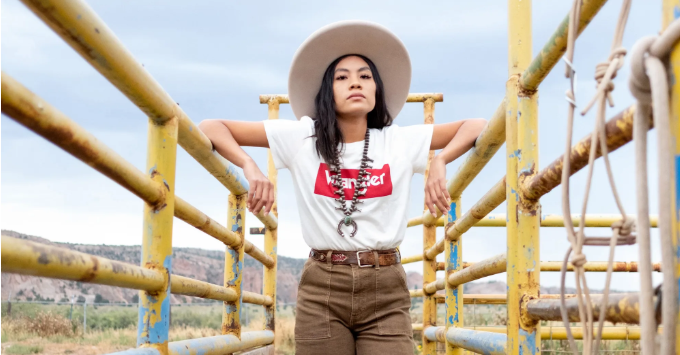
Source: https://www.vogue.com/vogueworld/article/shondina-lee-wrangler-navajo-indigenous-fashion
86. Shondina Lee
Country / region: United States
Community: Diné photographer and stylist associated with Native fashion storytelling.
Sustainability Index: 4/5
Focus: Lee has used styling and photography to spotlight Native-owned labels and Indigenous fashion on Indigenous terms. Her work is especially useful for this list because she functions as a connector between brands, visual culture and wider fashion audiences.
- Verification/source profile: https://www.vogue.com/vogueworld/article/shondina-lee-wrangler-navajo-indigenous-fashion
Source: https://fashionmagazine.com/style/ashley-callingbull-interview-fashion-magazine/
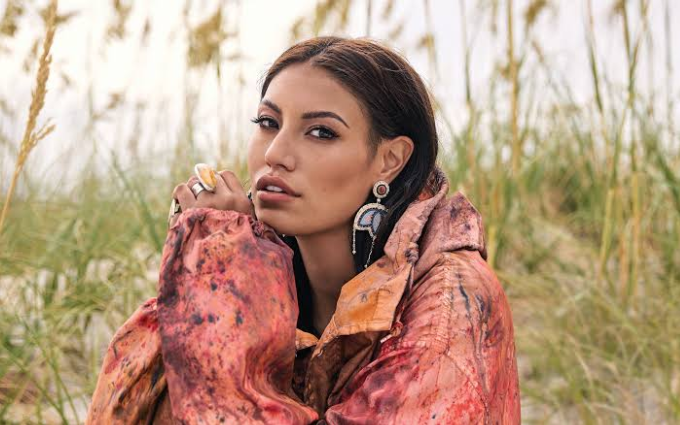
87. Ashley Callingbull
Country / region: Canada
Community: Model, actor and public figure from Enoch Cree Nation.
Sustainability Index: 3/5
Focus: Callingbull has used high-profile modelling, media and pageant platforms to expand Indigenous representation in mainstream popular culture. Her role in this list is primarily influence and visibility rather than direct sustainable-fashion production.
- Official social profile: https://www.instagram.com/ashleycallingbull/
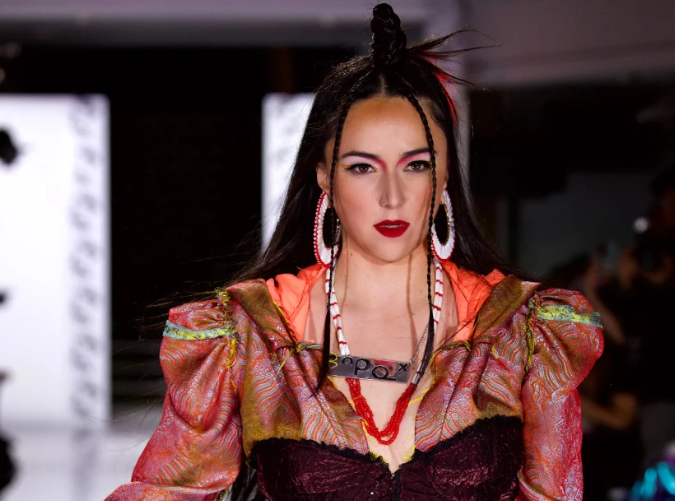
88. Joleen Mitton
Country / region: Canada
Community: Plains Cree model and Indigenous fashion organiser associated with Vancouver Indigenous Fashion Week.
Sustainability Index: 5/5
Focus: Mitton’s contribution is structural: she has helped build runway and development opportunities for Indigenous designers and models. That ecosystem-building role makes her more relevant to sustainable Indigenous fashion than follower count alone would suggest.
- Official organisation: https://vifw.ca/

Source: https://www.cbc.ca/books/canadareads/christian-allaire-1.6326415
89. Christian Allaire
Country / region: Canada / United States
Community: Ojibwe fashion writer and editor.
Sustainability Index: 4.5/5
Focus: Allaire has become one of the most visible journalists documenting Indigenous designers, streetwear, red-carpet dressing and appropriation issues. His work materially expands the discoverability of Indigenous fashion brands within global fashion media.
- Verification/source profile: https://www.vogue.com/contributor/christian-allaire
Source: https://www.ellecanada.com/culture/society/tia-wood-is-a-cree-and-salish-tiktok-creator-sharing-the-beauty-of-her-culture-online
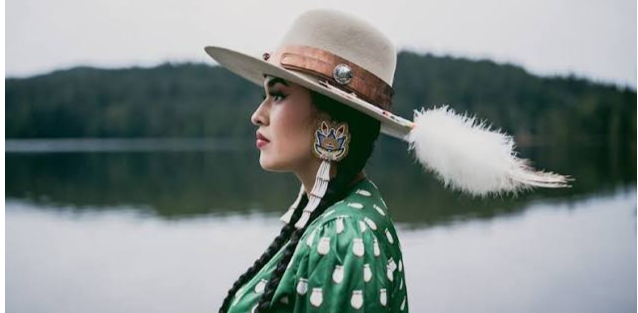
90. Tia Wood
Country / region: Canada
Community: Cree and Salish musician and public figure whose fashion appearances increasingly feature Indigenous designers.
Sustainability Index: 3/5
Focus: Wood is not primarily a fashion influencer, but her growing public profile gives Indigenous designers a visible cultural platform through styling and red-carpet dressing. She belongs in the advocacy/visibility end of the list rather than the sustainable-production core.
- Official social profile: https://www.instagram.com/tiamiscihk/
Source: https://indspire.ca/laureate/braden-kadlun/
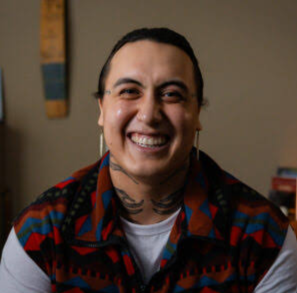
91. Braden Kadlun Johnston
Country / region: Canada
Community: Inuk creator; Feedspot listed about 407.8K Instagram followers in 2026.
Sustainability Index: 2.5/5
Focus: A large-audience Inuit creator whose content broadens visibility for contemporary Inuit identity. The connection to sustainable fashion is indirect, so the score remains modest despite significant community reach.
- Official social profile: https://www.instagram.com/bradenkadlun/
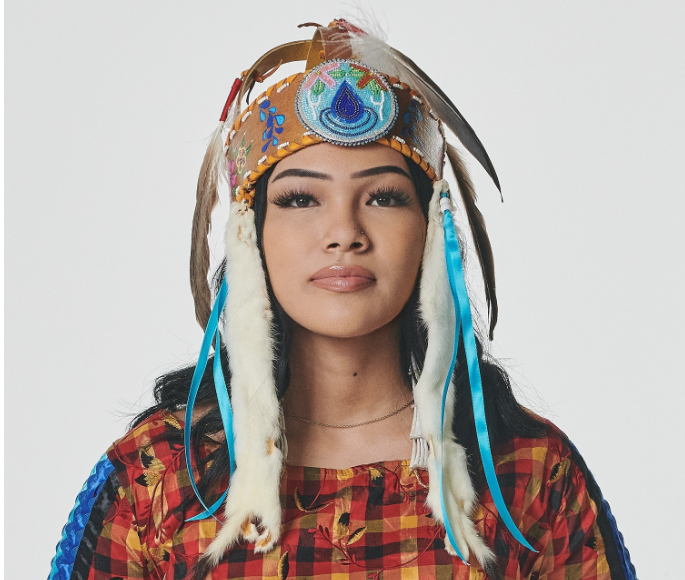
Source: https://nac-cna.ca/en/bio/autumn-peltier
92. Autumn Peltier
Country / region: Canada
Community: Anishinaabe water protector from Wiikwemkoong First Nation; Feedspot listed about 122K Instagram followers in 2026.
Sustainability Index: 5/5
Focus: Peltier is primarily an environmental and Indigenous-rights leader, not a fashion influencer. She is included because sustainable Indigenous fashion increasingly intersects with land, water and climate advocacy, but the article should preserve that distinction clearly.
- Official website: https://autumnpeltier.com/
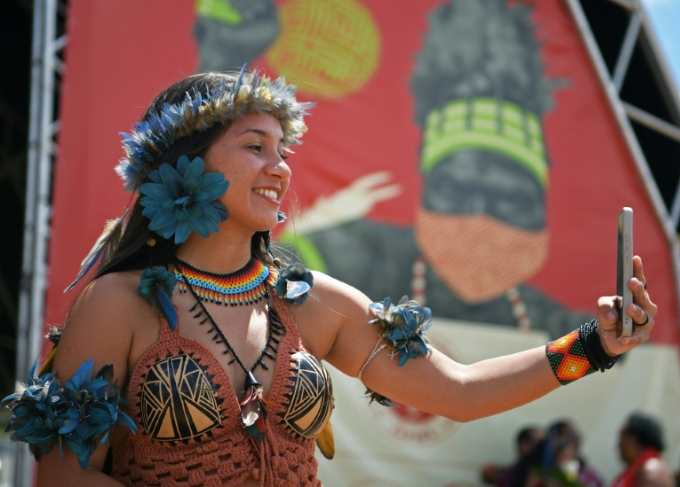
Source: https://www.digitaljournal.com/article/brazil-indigenous-influencers-take-their-fight-online/
93. Samela Awia
Country / region: Brazil
Community: Satere-Mawe climate and Indigenous-rights activist.
Sustainability Index: 5/5
Focus: Awia uses digital media to advocate for Indigenous peoples and Amazon protection. Her role is sustainability and cultural advocacy rather than fashion production, making her useful in a wider influencer category but not as a fashion-brand equivalent.
- Official social profile: https://www.instagram.com/sam_sateremawe/
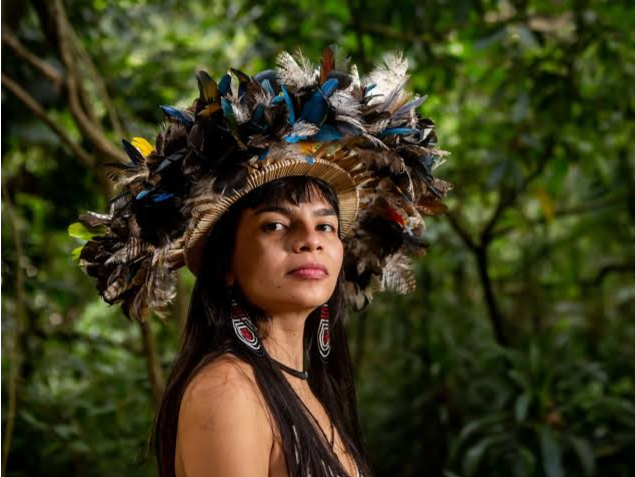
Source: https://english.elpais.com/culture/2023-03-22/the-activism-of-txai-surui-from-the-amazon-jungle-to-the-halls-of-power.html
94. Txai Surui
Country / region: Brazil
Community: Paiter Surui Indigenous-rights and climate activist.
Sustainability Index: 5/5
Focus: Surui is an internationally visible voice on forest protection and Indigenous rights. She is relevant to the sustainability side of the article because the ecological knowledge and land rights she advocates for are increasingly central to responsible fashion sourcing debates.
- Official social profile: https://www.instagram.com/txaisurui/
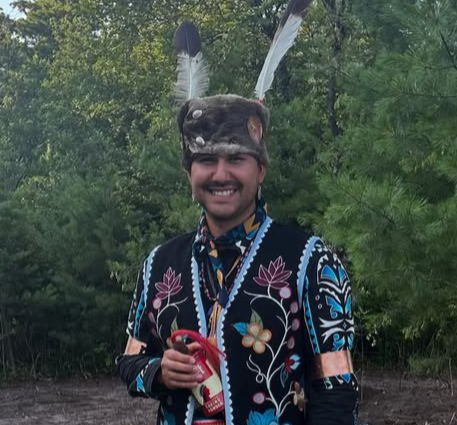
Source: https://www.instagram.com/zhaawnong/
95. Zhaawnong Webb
Country / region: Canada
Community: Ojibwe and Algonquin digital creator; Feedspot listed about 127K Instagram followers in 2026.
Sustainability Index: 3/5
Focus: Webb creates content around Indigenous identity, storytelling and contemporary culture. His relevance is audience-scale cultural visibility rather than direct fashion-production work.
- Official website: https://zhaawnong.com/
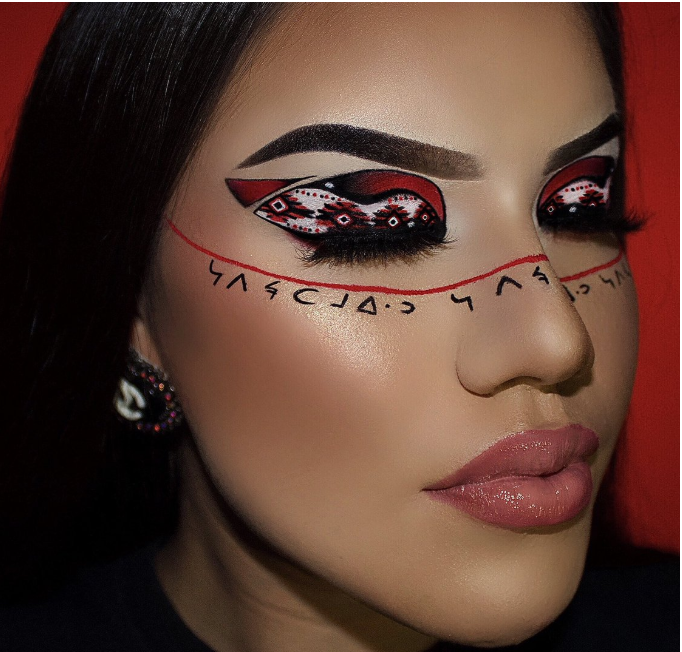
Source: https://x.com/nithaomalakisha
96. Lakisha Custer-Sewap
Country / region: Canada
Community: Nihithaw/Cree creative; Feedspot listed about 18.7K Instagram followers in 2026.
Sustainability Index: 3/5
Focus: A fashion-adjacent Indigenous creator working across beauty, visual identity and editorial content. Her smaller audience is still relevant because Indigenous fashion ecosystems depend on specialised creators as well as mega-influencers.
- Official social profile: https://www.instagram.com/nithaomalakisha/
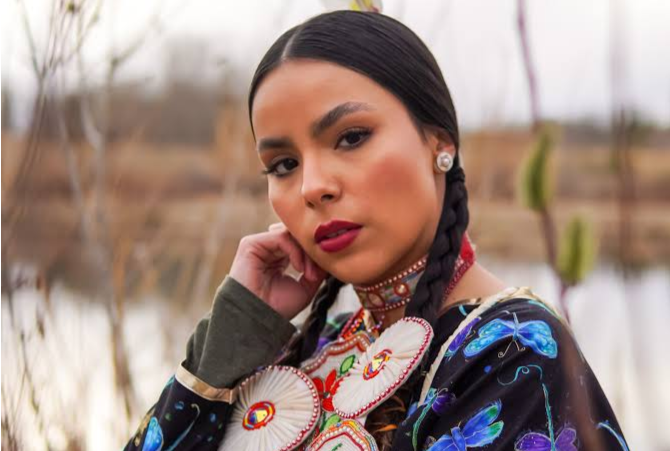
Source: https://styleninetofive.com/2021/05/21/nikita-kahpeaysewat-style-nine-to-five-spotlight-series/
97. Nikita Kahpeaysewat
Country / region: Canada
Community: Nehiyaw/Cree creator; Feedspot listed about 87K Instagram followers in 2026.
Sustainability Index: 4.5/5
Focus: Kahpeaysewat sits at the intersection of Indigenous identity and environmental science, making her especially relevant to sustainability-focused storytelling. Fashion is not her sole focus, so she should be presented as a culture-and-sustainability influencer.
- Official social profile: https://www.instagram.com/nikitaelyse/
https://program.ottawajazzfestival.com/item/30057-Fawn-Wood
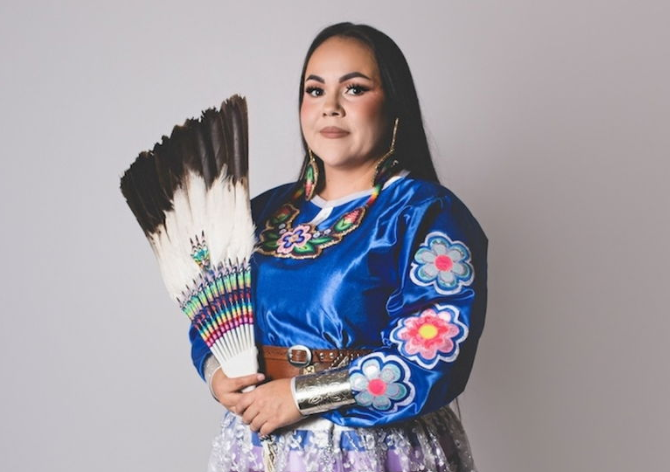
Source: https://program.ottawajazzfestival.com/item/30057-Fawn-Wood
98. Fawn Wood
Country / region: Canada
Community: Cree and Salish musician and creator; Feedspot listed about 91K Instagram followers in 2026.
Sustainability Index: 2.5/5
Focus: Wood’s content and public appearances keep traditional clothing and Indigenous culture visible in contemporary media. Her relevance is representation-focused rather than based on a measurable fashion sustainability programme.
- Official social profile: https://www.instagram.com/fawnwood/
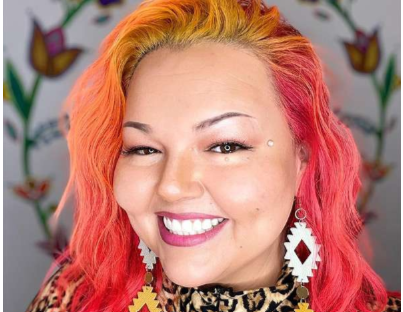
Source: https://www.winnipegcomedyfestival.com/wcf-alumni/artists/628/sherry-mckay
99. Sherry McKay
Country / region: Canada
Community: Anishinaabe digital creator; Feedspot listed about 25K Instagram followers in 2026 alongside a larger TikTok presence.
Sustainability Index: 2.5/5
Focus: McKay uses humour and digital storytelling to challenge stereotypes about Indigenous people and everyday life. Her link to fashion is indirect, so she belongs in the broader Indigenous influencer section rather than the core brand list.
- Official social profile: https://www.instagram.com/officialsherrymckay/
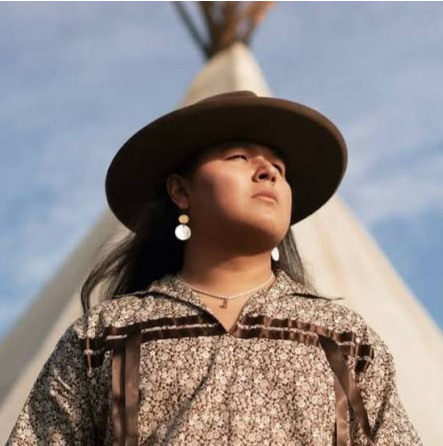
Source: https://www.instagram.com/itzeaglee/
100. Eagle Blackbird
Country / region: Canada
Community: Indigenous storyteller and youth advocate; Feedspot listed about 529.4K Instagram followers in 2026.
Sustainability Index: 3/5
Focus: A high-reach creator using humour, culture and truth-telling to amplify Indigenous perspectives. His inclusion reflects community reach and contemporary cultural visibility rather than direct work in sustainable apparel production.
- Official social profile: https://www.instagram.com/itzeaglee/