
Fashion Trends & Future, resources
Century Of Change: 20th Century Revolution (1900-2000)

“In one hundred years, fashion accelerated through more transformations than in the previous millennium, as if catching up with the speed of human dreams.”
Dinis Guarda
The 20th century compressed fashion evolution into unprecedented acceleration. Each decade brought distinctive styles whilst technological, social, and cultural revolutions continuously reshaped clothing’s role in human expression and reflected the century’s rapid social, technological, and cultural transformations. The century saw significant changes, particularly with the rise of iconic designers and fashion houses that established creative leadership whilst democratising access to fashionable dress through mass production.
The century opened with the Gibson Girl ideal (1900s-1910s), characterised by the S-bend silhouette that emphasised both bosom and hips whilst constraining the waist to impossible narrowness. This style represented the last gasp of Victorian fashion ideals before World War I accelerated changes toward practical dress that acknowledged women’s expanding social roles. The war’s demands for practical clothing began fashion’s liberation from purely decorative function.
The 1920s witnessed fashion revolution through flapper styles that gained popularity among women seeking to express newfound social and political freedoms. The decade’s drop-waisted dresses, bobbed hair, and cosmetic enhancement represented conscious rejection of Victorian feminine ideals, embracing modernity through fashion choices that proclaimed independence and equality. This was fashion as political statement, using dress to declare social transformation.
The Great Depression (1930s) brought practical and military-inspired styles that demonstrated fashion’s adaptability to economic hardship whilst maintaining aesthetic sophistication. Designers learned to create elegance through cut and line rather than expensive materials, establishing principles of economical luxury that influenced fashion throughout the century. The 1940s post-war period saw a mix of styles, including the Zoot Suit and more casual American styles that reflected the country’s emerging global cultural leadership.
Christian Dior’s New Look (1950s) proved highly influential, characterised by nipped-in waists and full skirts that re-established feminine silhouettes after wartime practicality. The New Look marked a turning point in the history of fashion and set the course for post-war fashion. This style represented fashion’s capacity for dramatic reinvention, using clothing to proclaim optimism and prosperity whilst re-establishing traditional gender roles through exaggerated feminine display.
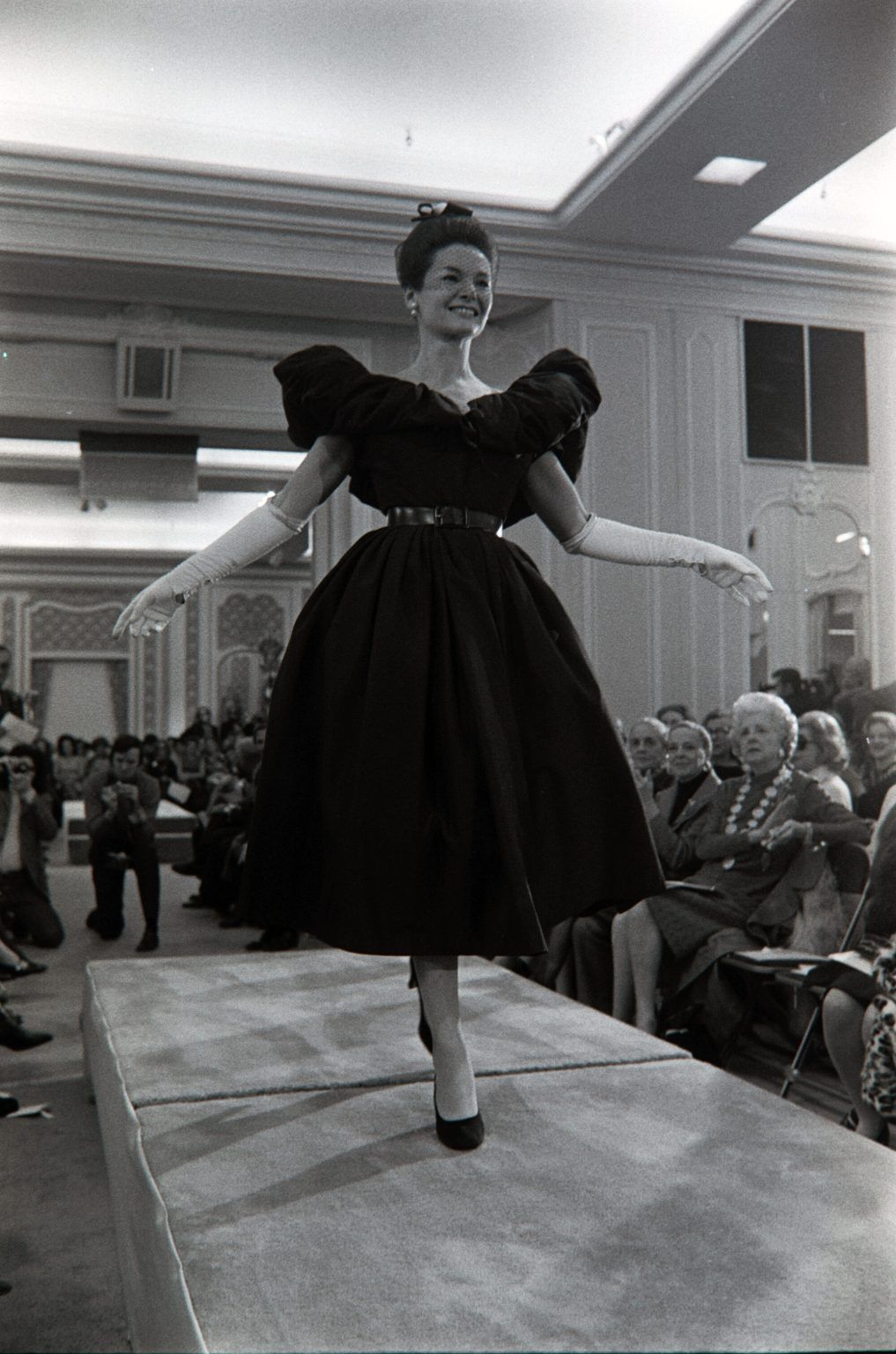
Christian Dior’s New Look
The cultural revolutions of the 1960s-1970s brought bohemian and flowy styles, with bell-bottoms and denim becoming prominent symbols of generational rebellion. These decades established youth culture as primary fashion influence, democratising style through casual wear that rejected formal dress codes whilst embracing comfort and self-expression over social conformity.
The 1980s embraced power dressing and bold, vibrant styles that reflected the decade’s economic optimism and expanding professional opportunities for women. Fashion became armour for corporate success, with shoulder pads and structured silhouettes creating visual authority that supported women’s advancement in traditionally male-dominated professions.
The 1990s brought minimalism and grunge styles that emerged from alternative culture, reflecting shifts in societal attitudes toward authenticity, environmental consciousness, and rejection of conspicuous consumption. These styles demonstrated fashion’s capacity to find beauty in simplicity whilst expressing cultural criticism through deliberately anti-fashion approaches.
More Contents:
baroque brilliance and rococo romance 1600-1789
Belle Époque to War
1900s-1910s: The Gibson Girl look with a S-bend silhouette was popular. The period established many modern fashion principles whilst the First World War accelerated changes toward practical dress.
Jazz Age Liberation
1920s: Androgynous flapper styles gained popularity among women. This decade revolutionised female fashion, establishing principles of movement and liberation that continue to influence contemporary design.
Depression and War
1930s: Practical and military-inspired styles emerged due to the Great Depression. 1940s: The post-war period saw a mix of styles, including the Zoot Suit and more casual American styles. These decades proved fashion’s adaptability to social and economic pressures.
Post-War Revolution
1950s: Dior’s New Look was highly influential, characterized by a nipped-in waist and full skirt. This decade re-established fashion’s role in expressing optimism and prosperity.
Cultural Rebellion
1960s-1970s: Bohemian and flowy styles were popular, with bell-bottoms and denim being prominent. These decades established youth culture as a primary fashion influence.
Power and Minimalism
1980s: Power dressing and bold, vibrant styles were in vogue. 1990s: Minimalism and grunge styles emerged, reflecting a shift in societal attitudes. These decades explored fashion’s relationship with professional identity and cultural rebellion.
Key Benchmarks by Decade
| Decade | Defining Style | Cultural Context | Fashion Innovation |
| 1900s | Gibson Girl | Industrial prosperity | S-bend corsetry |
| 1910s | Wartime practicality | World War I | Simplified silhouettes |
| 1920s | Flapper revolution | Jazz Age liberation | Drop-waist dresses |
| 1930s | Depression functionality | Economic hardship | Practical elegance |
| 1940s | Utility fashion | World War II | Fabric rationing adaptations |
| 1950s | New Look femininity | Post-war optimism | Structured undergarments |
| 1960s | Youth revolution | Cultural rebellion | Mini skirts, mod styles |
| 1970s | Bohemian diversity | Counterculture movement | Ethnic influences |
| 1980s | Power dressing | Economic expansion | Shoulder pads, bold colours |
| 1990s | Grunge minimalism | Alternative culture | Deconstructed aesthetics |
- Dinis Guarda with Jasmeen Dugal


