
Fashion Trends & Future, resources
Ancient Foundations – Mesopotamian Innovations (3500-539 BCE)

“From the cradle of civilisation flowed not just rivers, but ribbons of innovation that would dress humanity for millennia.” Dinis Guarda

Between the Tigris and Euphrates rivers, humanity first transformed clothing from mere necessity into social language. Fashion and dress in Mesopotamia – clothing, footwear, and accessories – was not only functional but defined one’s social status and developed from a simple loincloth in the Ubaid Period (c. 5000-4100 BCE) to brightly coloured robes and dresses by the time of Sassanian Empire (224-651 CE).
Between the Tigris and Euphrates rivers, humanity first systematised fashion, transforming it from individual craft into an organised industry. The Mesopotamians understood that clothing was communication, developing sophisticated systems of dress that immediately conveyed the wearer’s social position, occupation, and cultural affiliations. Their innovations established principles that continue to govern fashion today: the use of textile quality to denote status, the employment of colour as symbolic language, and the recognition that clothing construction could be high art.
The Sumerian kaunakes, with its distinctive tufted construction suggesting overlapping petals or feathers, represented humanity’s first attempt to create textile embellishments and textures that transcended natural materials. By sewing tufts onto fabric or looping them into the weave, Sumerian craftspeople achieved visual effects that transformed simple wool into garments that seemed to shimmer with life. The length of these garments immediately communicated the wearer’s social status—short for servants and soldiers, long for royalty and deities—establishing fashion’s enduring relationship with social hierarchy.

Mesopotamian textile production achieved unprecedented sophistication, with archaeological evidence suggesting that some ancient linens were woven to standards nearly matching modern industrial production. This technical mastery enabled artistic expression on a scale that was previously impossible. Garments could be dyed in brilliant colours—deep purples, vivid reds, bright yellows—that proclaimed their wearers’ wealth and status from a considerable distance. The development of complex looms around 3000 BCE industrialised fashion production, making sophisticated textiles available to broader populations whilst establishing specialised craft traditions.
The Assyrians elevated Mesopotamian fashion to new heights of decorative complexity. Their garments featured elaborate fringes, intricate hand embroidery, and colour combinations so striking that the phrase “Assyrian garments” became synonymous with high fashion throughout the ancient world. The Book of Ezekiel describes them as “clothed most gorgeously,” testament to their reputation for sartorial magnificence that extended far beyond their political borders.
More Contents:
century of change 20th century revolution 1900-2000
baroque brilliance and rococo romance 1600-1789
The Sumerian Foundation
The Sumerians established fashion’s fundamental principles. Their signature garment, the kaunakes, was a woollen mantle associated with ancient Mesopotamia and Persia. It was woven in a tufted pattern, suggesting overlapping petals or feathers by sewing tufts onto the garment or looping them into the fabric. This wasn’t merely clothing—it was communication. The length of the skirts varied according to hierarchical status. Servants, slaves, and soldiers wore short skirts, while royalty and deities wore long skirts.
Textile Triumph
Looms for weaving fabric were in use as early as 3000 b.c.e. The skill of early weavers is extraordinary. Some fragments of linen discovered in royal tombs are almost as finely woven as modern-day linen. This technical mastery enabled artistic expression. Due to the abundance of raw materials, the industriousness of workers, and the vision of merchants, textile manufacture became a major industry in Mesopotamia and a prime source of its wealth.
Colour as Communication
Mesopotamian fashion celebrated chromatic boldness. The Assyrians favoured fringed garments and, according to written works – such as references in the Old Testament of the Bible – as well as pigment on statuary and reliefs, bright colours as well. The Book of Ezekiel 23:12, for example, describes the Assyrians as “clothed most gorgeously”. One aspect of this was the bright colours that included deep purple, light green, vivid red, dark indigo blue, and vibrant yellow all produced from natural elements.
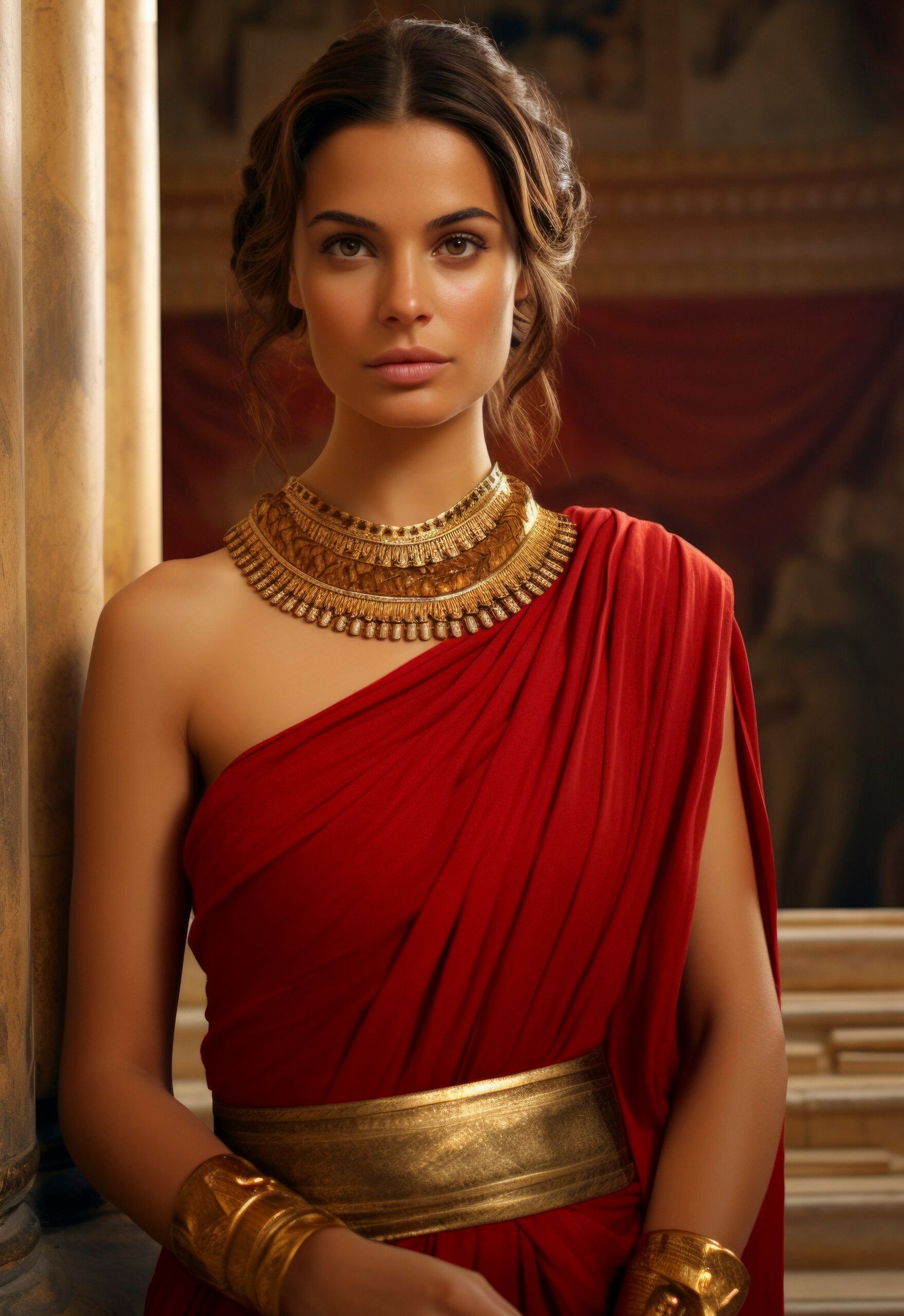
Gender and Garments
Both men and women were clothed in a large piece of material—most commonly of wool, though later also of linen—draped around the body over a skirt. This garment, similar to a shawl, was characteristically edged with tassels or fringe. Women’s fashion developed distinctive elements: By 1750 BCE women were wearing a long bell-shaped skirt, often in a series of flounces, over a loincloth; with this, they wore a bolero-like jacket that had elbow-length sleeves but was open in front, leaving the breasts bare.
Key Benchmarks
| Period | Culture | Innovation | Significance |
| 3500-3000 BCE | Sumerian | Kaunakes garment | Status-based clothing lengths |
| 3000 BCE | Sumerian | Advanced looms | Industrial-quality weaving |
| 2500 BCE | Sumerian | Gender-specific styles | Cultural clothing differentiation |
| 1750 BCE | Babylonian | Flounced skirts | Complex garment construction |
| 700 BCE | Assyrian | Cotton introduction | New textile materials |
An article by Dinis Guardia – with Jasmeen Dugal
Share

Dinis Guarda
Dinis Guarda is an author, entrepreneur, founder CEO of ztudium, Businessabc, citiesabc.com and Wisdomia.ai. Dinis is an AI leader, researcher and creator who has been building proprietary solutions based on technologies like digital twins, 3D, spatial computing, AR/VR/MR. Dinis is also an author of multiple books, including "4IR AI Blockchain Fintech IoT Reinventing a Nation" and others. Dinis has been collaborating with the likes of UN / UNITAR, UNESCO, European Space Agency, IBM, Siemens, Mastercard, and governments like USAID, and Malaysia Government to mention a few. He has been a guest lecturer at business schools such as Copenhagen Business School. Dinis is ranked as one of the most influential people and thought leaders in Thinkers360 / Rise Global’s The Artificial Intelligence Power 100, Top 10 Thought leaders in AI, smart cities, metaverse, blockchain, fintech.


