An AI macro story, GDP uplift, market-size forecasts, “AI will add $X trillion to the global economy”, is true but is largely useless for predicting what happens inside a given industry. The real signal of a tech transformation shows up at the micro level: in the specific, granular tasks a sector performs, which of those tasks AI touches first, and, critically, which it should never touch at all.
World Indigenous-led populations, close to half a billion people, have a unique, powerful, artisan-driven creative fashion that is reaching a roughly $90 billion global category growing at 7–8% annually, colliding in real time with an AI-in-fashion market growing nearly 40% a year. More usefully, it is a sector where the boundary between “AI as tool” and “AI as threat” is load-bearing.
Get the boundary wrong, and the result is not an awkward product but cultural theft with a user interface. That makes it a sharper instrument for understanding AI adoption than almost any other vertical.
What follows is a framework built from that evidence.
Contextualising the Indigenous populations in the world
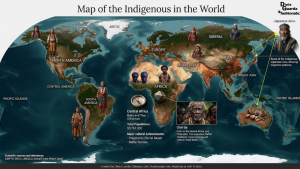
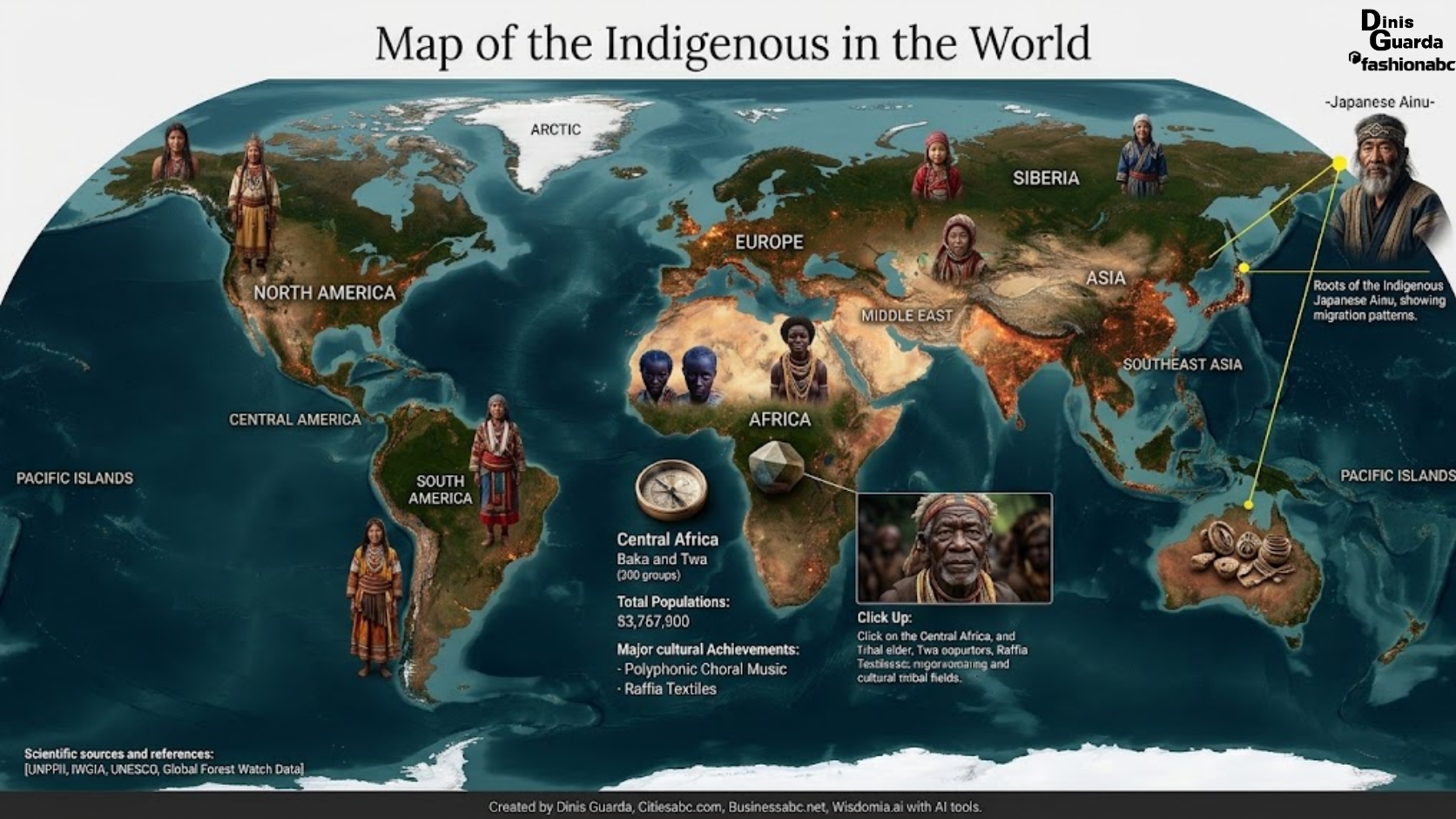
Contextualising the Indigenous populations in the world – Created by Dinis Guarda using AI Tools
According to United Nations data, primarily from the International Labour Organisation and UN DESA, there are over 476 million Indigenous people across 90 countries, comprising more than 5,000 distinct groups or tribes.
Because “tribe” is a broad political and cultural designation with varying regional definitions, such as Scheduled Tribes in India versus Federally Recognised Tribes in the US, official international data categorises populations by specific region and legal framework.
Key Regions: Demographics & Cultural Creations
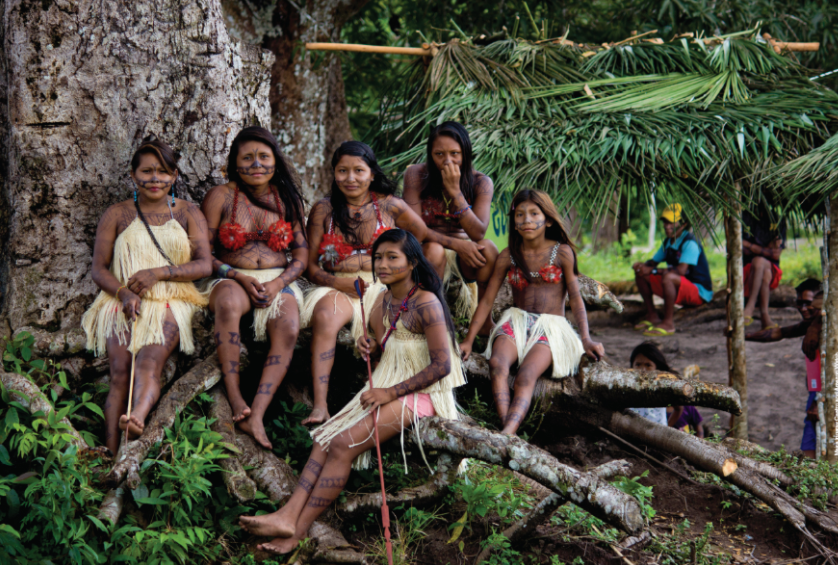
Source: https://geog.ufl.edu/2018/02/28/endangered-amazon-an-indigenous-tribe-fights-back-against-hydropower-development-in-the-tapajos-valley-2/
- Population: ~2.7 million Indigenous people spanning 8 countries and 1 overseas territory.
- Tribal Groups: ~350 distinct ethnic groups, with roughly 60 living in voluntary isolation. Major groups include the Yanomami, Kayapó, Shipibo-Conibo, and Tikuna.
- Artisanal & Fashion Creations:
- Shipibo-Conibo Geometric Textiles (Kené): Intricate, hand-painted and embroidered geometric patterns that represent spiritual maps, botanical pathways, and songs (icaros). Kené is recognised as part of the National Cultural Heritage in Peru and heavily influences modern sustainable fashion.
- Kayapó Beadwork & Body Paint: Intricate black genipapo and red urucum body art, along with vibrant glass and seed bead necklaces that mimic macaw plumage.
- Featherwork (Arte Plumária): Master feather crafting by groups like the Bororo and Yanomami using shed feathers to build ceremonial headdresses (akubá).
2. India (South Asia)
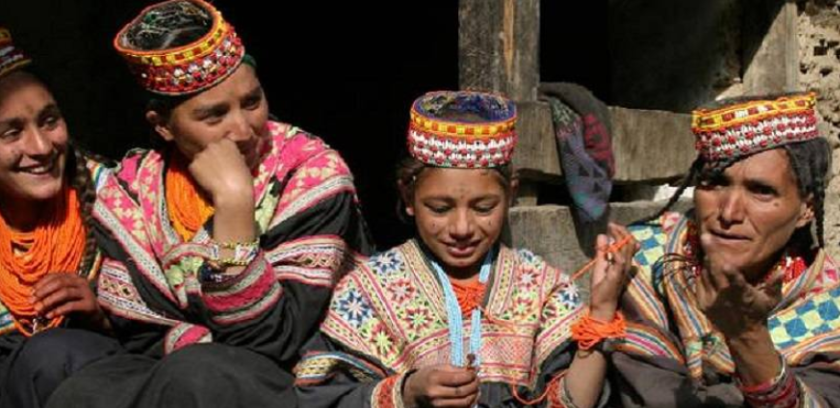
Source: https://www.thefridaytimes.com/13-Feb-2022/how-development-snatched-identities-of-south-asia-s-indigenous-people
- Population: ~104.3 million, or 8.6% of India’s population, officially designated as Scheduled Tribes or Adivasis.
- Tribal Groups: 705 distinct recognised tribal communities. Major groups include the Santhal, Bhil, Gond, Munda, and Naga.
- Artisanal & Fashion Creations:
- Warli & Gond Painting: Sacred wall paintings turned into fine art. Warli art uses basic geometric shapes made of rice paste on mud walls to portray harvest and social rituals.
- Toda Embroidery (Pukhoor): Craftsmanship by the Toda tribe of the Nilgiri Hills, utilising distinct black and red geometric threadwork on unbleached white cotton shawls.
- Naga Weaving & Body Adornment: Distinctive handloom shawls where geometric patterns denote social status and clan heritage, paired with brass-cast neckpieces and cowrie shell beadwork.
- Dokra Metal Casting: 4,000-year-old lost-wax casting technique maintained by tribal artisans in West Bengal, Odisha, and Chhattisgarh to craft brass artefacts and jewellery.
This question of authenticity is also being addressed through new supply-chain models. Purbashree by NEHHDC provides a relevant example from India: a government-certified, technology-verified platform designed to connect buyers with authentic Indian handicrafts while strengthening traceability between products and the artisans and communities behind them. It shows how technology can support Indigenous and traditional craft without replacing authorship, using verification and provenance as infrastructure rather than treating cultural design as content to be generated.
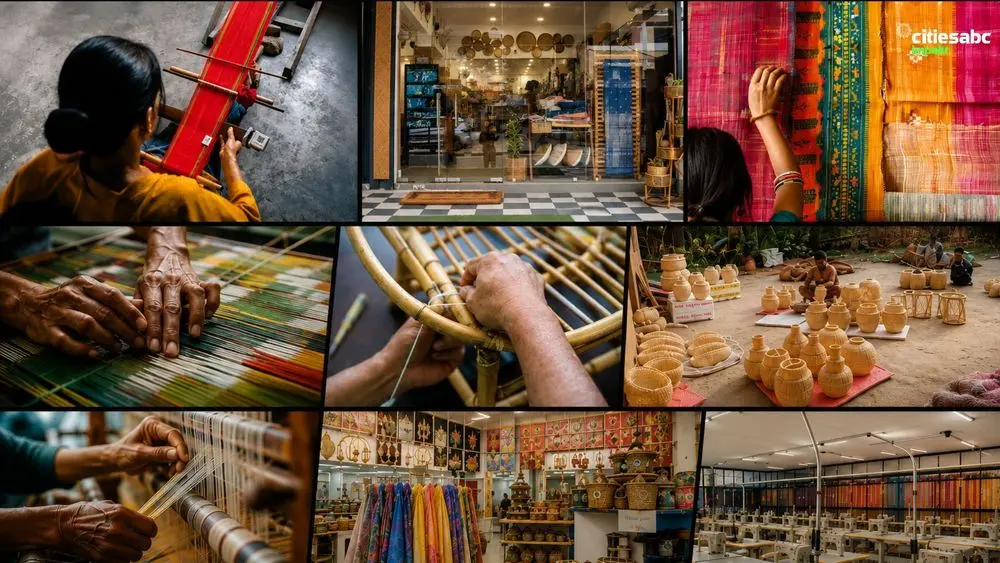
Source: https://impakt.citiesabc.com/purbashree-by-nehhdc-a-government-certified-technology-verified-supply-chain-for-authentic-indian-handicrafts
3. United States (North America)
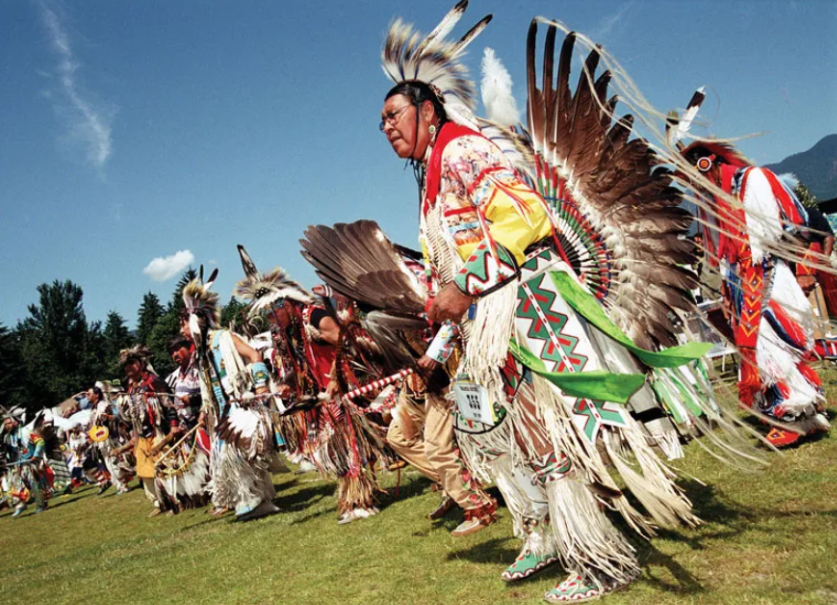
Source: https://www.britannica.com/topic/Indigenous-peoples-of-the-Americas
- Population: ~4.5 million to 9.7 million, identifying alone or in combination with other races, per the US Census Bureau.
- Tribal Groups: 574 federally recognised Native American tribes and Alaska Native entities, alongside state-recognised tribes. Major groups include the Navajo (Diné), Cherokee, Sioux (Lakota/Dakota), and Ojibwe.
- Artisanal & Fashion Creations:
- Navajo (Diné) Weaving & Silverwork: World-renowned handwoven wool rugs featuring intricate storm and diamond patterns. Diné silversmiths pioneered turquoise and silver jewellery techniques, including sandcast and clusterwork.
- Pueblo Pottery: Coiled, hand-scraped, and outdoor-fired ceramics, notably Acoma fine-line pottery and San Ildefonso black-on-black pottery popularised by Maria Martinez.
- Indigenous Haute Couture: Contemporary Native fashion designers such as Patricia Michaels and Jamie Okuma fuse ancestral beadwork, ribbon-work, and quillwork into modern runways.
That contemporary design movement is increasingly being recognised institutionally. The Institute of American Indian Arts’ Art of Indigenous Fashion exhibition brought together more than twenty Indigenous designers from Canada and the United States and positioned Indigenous fashion within a much longer history of design, identity and cultural expression. Curator Amber-Dawn Bear Robe has described Indigenous fashion as “the original fashion and design of North America”, a framing that matters because it shifts the discussion away from Indigenous design as influence and towards Indigenous design as an originating fashion system.
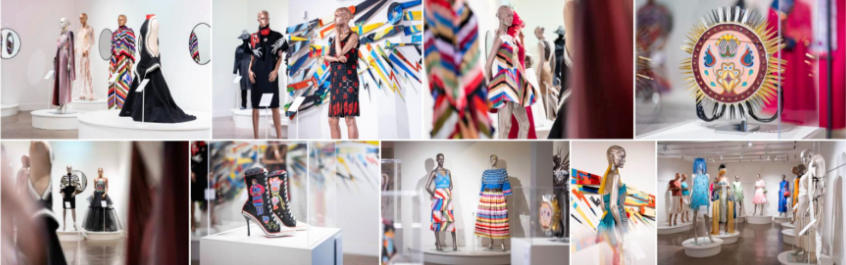
Source: Art of Indigenous Fashion, Matrilineal: Legacies of Our Mothers, and Athena LaTocha: Mesabi Redux—Virtual Exhibition source https://iaia.edu/event/art-of-indigenous-fashion-virtual-exhibition/
4. Canada (North America)
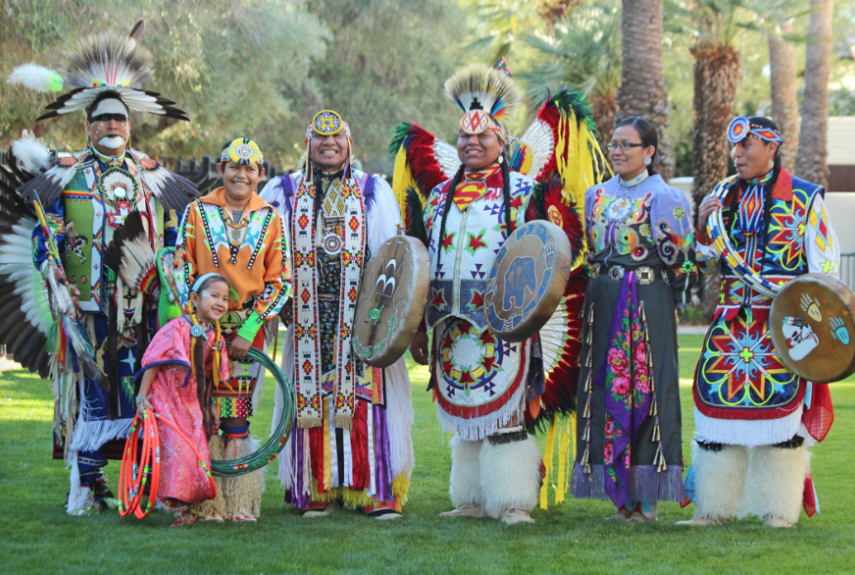
Source: https://thecanadianencyclopedia.ca/en/article/aboriginal-people
- Population: ~1.8 million, or 5% of Canada’s total population, per the 2021 Census.
- Tribal Framework: Recognised as three distinct groups: First Nations, Inuit, and Métis.
- Artisanal & Fashion Creations:
- Inuit Parkas (Amauti) & Stone Carving: Functional, climate-adapted outerwear featuring hidden child-carrying pouches. Inuit soapstone and serpentine stone carvings are internationally prized art forms.
- Cowichan Knitting: Heavyweight, hand-spun wool sweaters created by the Coast Salish peoples of Vancouver Island, featuring natural grey, white, and black geometric animal motifs.
- Haida & Tlingit Carving: Totem poles, ceremonial crest masks, and bentwood boxes crafted from western red cedar, defined by complex “formline” visual design.
- Floral Beadwork & Quillwork: Intricate silk embroidery and glass beadwork on smoked moosehide, famously practised by the Métis.
5. Pacific & Indian Ocean Islands
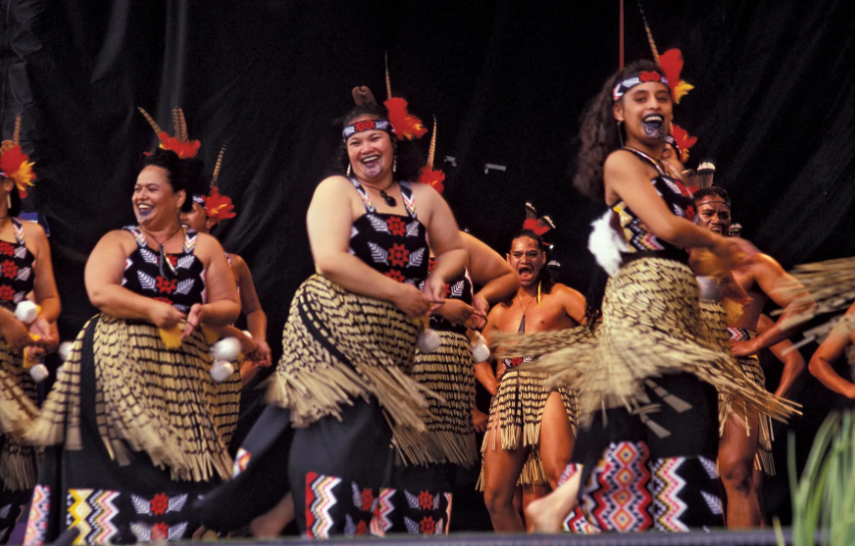
Source: https://www.britannica.com/topic/Maori
- Population: Millions across Oceania and isolated Indian Ocean territories.
- Tribal Groups: Thousands of distinct clans and island groups, including the Māori, iTaukei, Samoans, Kanak, and small isolated groups like the Sentinelese and Jarawa.
- Artisanal & Fashion Creations:
- Tapa Cloth (Siapo / Kapa / Masi): Barkcloth made by harvesting, beating, and felting the inner bark of the paper mulberry tree, then hand-painting or stamping geometric tribal patterns with natural plant dyes.
- Tā Moko & Tatau: Polynesian body ornamentation using chiselled bone tools and natural soot dyes. The designs act as a visual narrative of lineage, social standing, and personal accomplishments.
- Māori Whakairo & Pākē: Intricate wood and greenstone carvings, alongside woven flax cloaks trimmed with feathers and dog hair.
- Marshallese Woven Navigation Charts (Rebbilib): Shell and stick charts developed to map ocean swells and wave patterns between islands.
6. Africa
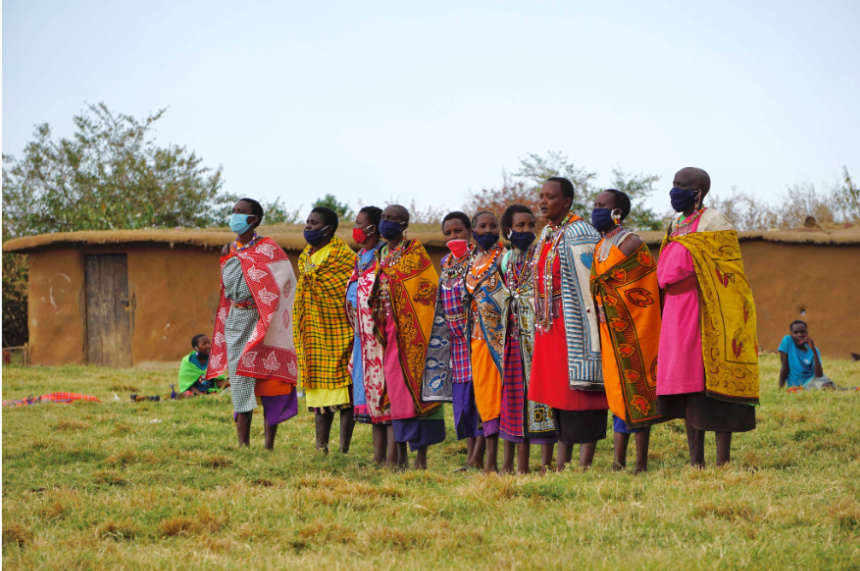
Source: https://www.unesco.org/en/articles/unesco-calls-recognizing-african-indigenous-knowledge-disaster-management
- Population: ~50 million to 70 million people, according to UN and African Commission estimates.
- Tribal & Indigenous Groups: Hundreds of distinct self-identifying Indigenous groups, including the San, Berber / Amazigh and Tuareg, Maasai and Samburu, Himba, and Pygmy / Twa / Baka communities.
- Artisanal & Fashion Creations:
- Tuareg Indigo Textiles & Silverwork: The Tagelmust and intricate silver jewellery carry protective symbolism and histories of desert navigation.
- San Ostrich Eggshell Beadwork: A tradition practised for thousands of years in the Kalahari.
- Maasai & Samburu Beadwork: Colour-coded glass beadwork where combinations can detail age, clan, marital status, and social standing.
- Kuba Cloth: Raffia textiles combining weaving and geometric embroidery.
- Himba Ochre & Leather Styling: Otjize, a mixture of butterfat and red ochre pigment, used alongside leather skirts and iron beadwork.
What is the current size of the indigenous artisan creators’ fashion industry?
Let’s start with the numbers, because they set the stakes. The global ethnic wear market, the commercial proxy analysts use for Indigenous and traditional dress, sits at roughly $90 billion today, with forecasts converging on $140–186 billion within five to nine years at a compound annual growth rate of 7–8%. That is a mature, fast-growing category, not a niche.
Layer the AI-in-fashion market on top: one 2026 estimate puts it at $2.47 billion, projected to reach $9.45 billion by 2030, a nearly 40% CAGR, roughly five times the growth rate of the underlying fashion category it serves.
McKinsey and Business of Fashion’s State of Fashion 2026 research adds a third data point that matters more than either market-size figure: 92% of fashion organisations now plan to increase generative AI investment, while only about a third of executives report actually deploying it for customer-facing work today.
Adoption intent, in other words, is running far ahead of adoption reality, precisely the gap in which a sector gets to decide, if it moves fast enough, what “correct” AI use looks like before incumbents decide it for them.
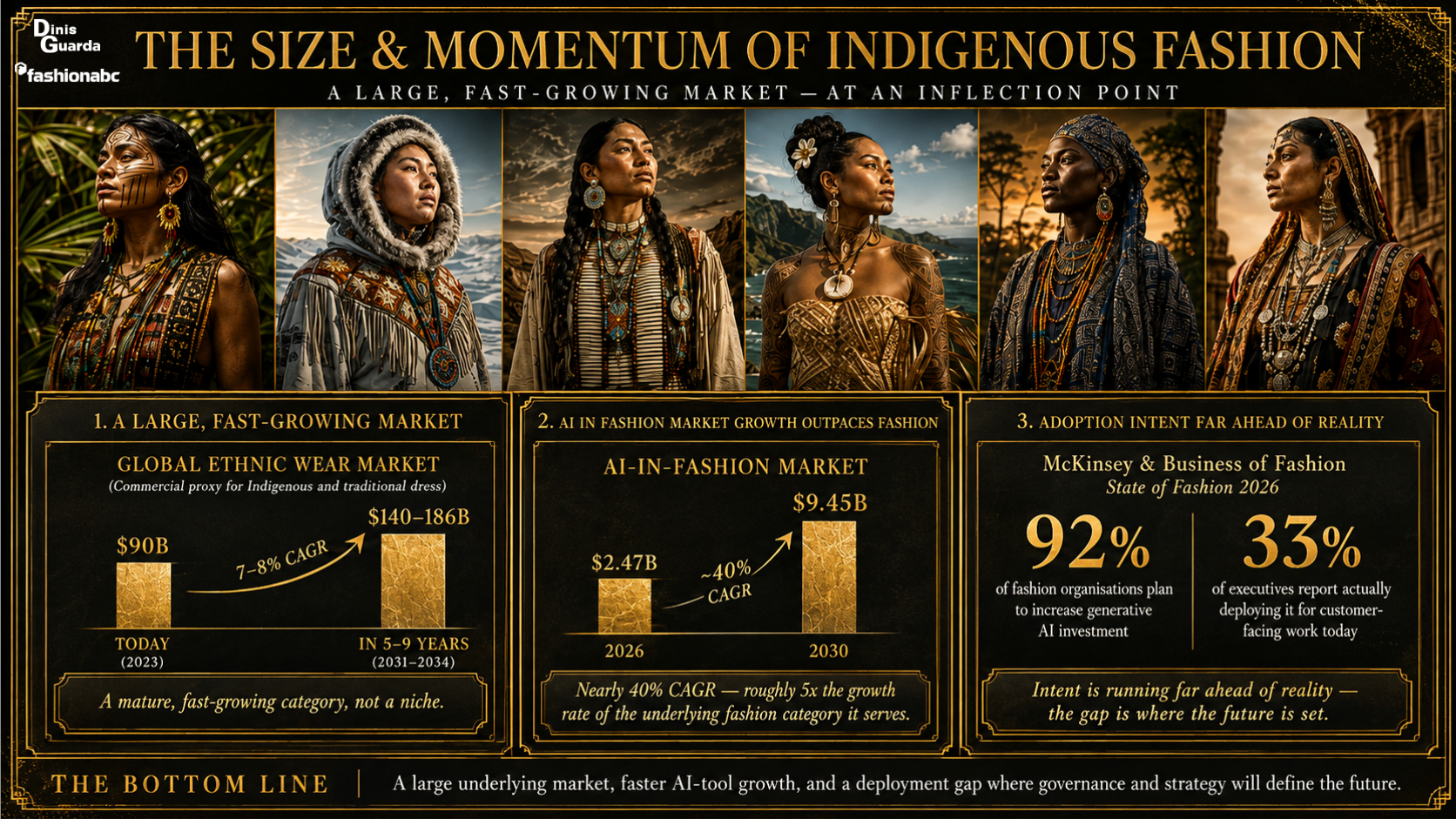
What is the current size of the indigenous artisan creators’ fashion industry? – Created byh Dinis Guarda using AI tools
Indigenous fashion on the global runway
Runway calendars function more like leading indicators, evidence of where capital, talent, and institutional attention are actually flowing, independent of what any press release claims. August 2026 alone produced four references.
Darwin’s Country to Couture, eleven years running, expanded to two nights for the first time, routed 100% of sales from 21 First Nations collections directly back to the designers and art centres that made them. A supply-chain architecture decision supplies the cleanest available control for evaluating any AI tool proposed for this sector: does the tool preserve that direct-to-maker economics, or does it insert a layer between the weaver and the buyer?
Kāhui Collective’s Indigenous runway at New Zealand Fashion Week in Auckland scaled from six designers in its debut year to sixteen twelve months later, a 167% year-over-year expansion, in an industry where most runway programs are lucky to hold flat attendance.
Founder Kiri Nathan’s explanation of why is the more interesting signal: she has been explicit that the traditional “big five” fashion-capital framework, New York, Milan, London, Paris, and increasingly Shanghai, does not structurally accommodate designers who carry responsibility to land and community.
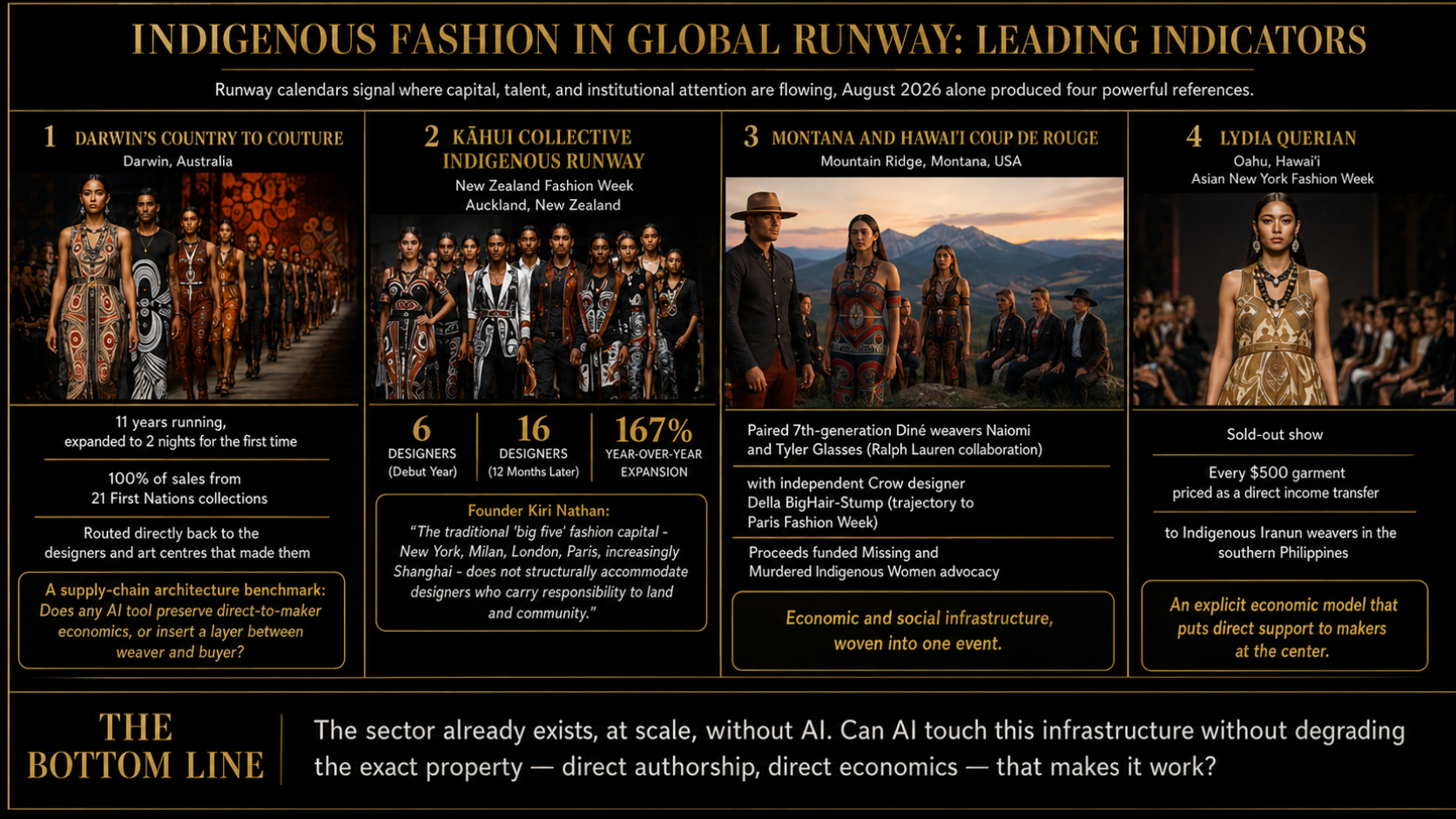
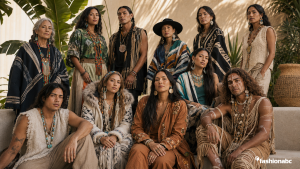
Indigenous fashion on the global runway – created by Dinis Guarda using AI Tools
Montana and Hawai’i Coup de Rouge, staged on a literal mountain ridge, paired seventh-generation Diné weavers Naiomi and Tyler Glasses, already engaged in a Ralph Lauren collaboration, with independent Crow designer Della BigHair-Stump, whose own trajectory runs to Paris Fashion Week; proceeds funded Missing and Murdered Indigenous Women advocacy, folding economic and social infrastructure into a single event. Oahu-based designer Lydia Querian’s sold-out Asian New York Fashion Week show ran an even more explicit economic model: every $500 garment was priced as a direct income transfer to Indigenous Iranun weavers in the southern Philippines.
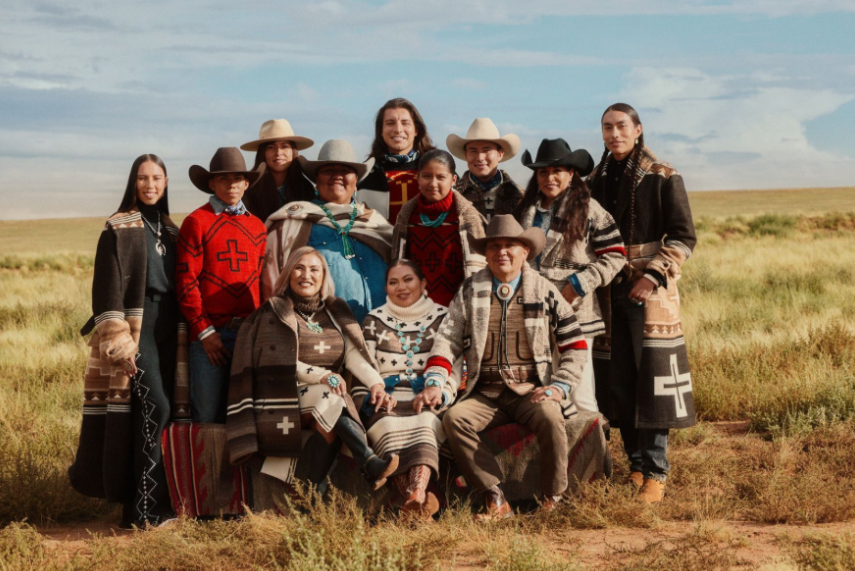
Source: https://www.vogue.com/article/ralph-lauren-naiomi-glasses-artist-in-residence
The wider commercial ecosystem points in the same direction. Brands such as 4KINSHIP, founded by Diné designer Amy Denet Deal and built around reclaimed textiles and Native artist collaborations; B.Yellowtail, founded by Northern Cheyenne and Apsáalooke designer Bethany Yellowtail and operating both as a contemporary label and marketplace for Indigenous makers; and Eighth Generation, owned by the Snoqualmie Tribe and created as an ethical alternative to mass-produced “Native-inspired” goods. Across all three, the important variable is not only sustainability but who owns the design, who is credited, and where the economic value goes.
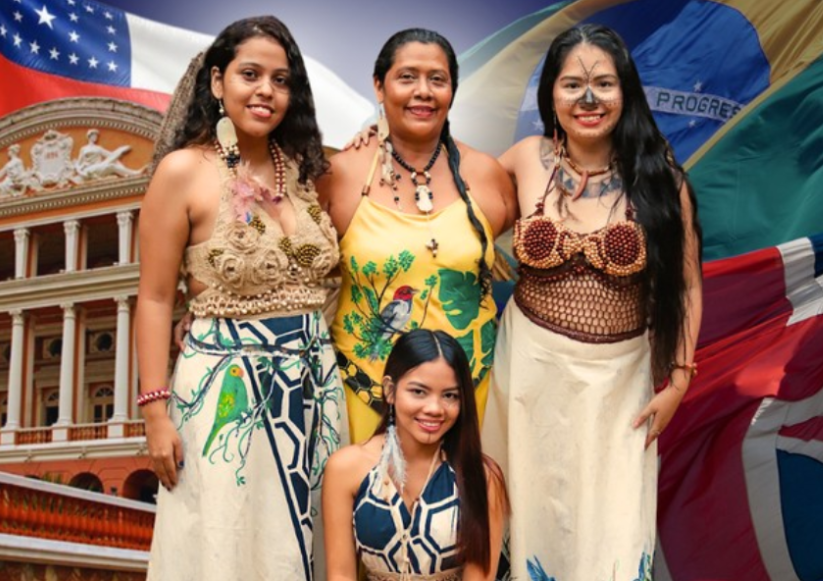
Source: https://g1.globo.com/am/amazonas/noticia/2023/05/15/criada-por-amazonenses-mostra-intercultural-de-moda-indigena-vai-participar-de-desfile-em-londres.ghtml
MI Moda Indigena provides a relevant test of that model. The Munduruku-led initiative was developed in Manaus as both a fashion-training and production platform, combining runway activity with professional development for Indigenous creatives. Its significance therefore sits beyond a single collection: the infrastructure is designed to build fashion skills while keeping cultural authorship visible.
That structure is now moving onto one of fashion’s most visible international stages. On 11 September 2026, MI Moda Indigena is set to bring Amazonian Indigenous fashion to New York through the Best of Fashion Awards. Produced by Rafael dos Santos and Fashion Director Gislaine Balzano, the presentation will place Amazonian Indigenous design alongside an AI-integrated fashion production developed in partnership with fashionabc and Dinis Guarda. The collection incorporates materials from the Amazon, including seeds, plants and fish scales, while the wider MI Moda Indigena programme continues to support designers working within their own Indigenous communities.
Clearly, the sector already exists at scale without AI. Can AI touch this infrastructure without degrading the exact property, direct authorship, and direct economics that make it work?
The micro-transformation map
Much AI-and-industry commentary fails at exactly this point: it treats “AI in fashion” as a single variable, when the honest unit of analysis is the individual task. Break the value chain into its component tasks, and the picture sharpens considerably.
Where AI is a clean net positive, language and knowledge preservation. This is the least contested, highest-leverage application found in any creative-industry vertical, Indigenous or otherwise, because it is racing an actual deadline: of roughly 4,000 Indigenous languages spoken worldwide, one loses its last fluent speaker approximately every two weeks. Michael Running Wolf’s initiative at Quebec’s Mila institute is building speech-recognition models for 200-plus endangered Indigenous languages specifically because that clock does not pause for consensus-building. Danielle Boyer’s SkoBot, a robot trained on recorded Elder knowledge, operationalises the same insight for children who would not otherwise get direct transmission. Artist Suzanne Kite’s work at Bard College’s Wihanble S’a Centre for Indigenous AI stands out as the most conceptually rigorous version of this pattern: she trains models on her own recorded dreams to translate them into Lakota geometric beadwork language, explicitly designing the system around reciprocity and consent rather than the extractive-data defaults built into most commercial AI. The pattern across all three cases is consistent: the community holds the model, the training data, and the output rights. That is the whole mechanism.
Where AI is a plausible net positive, conditionally, production and distribution economics. AI-assisted 3D sampling and virtual prototyping compress the capital a two-person studio needs to compete on speed with a vertically integrated fast-fashion operation. Trend-forecasting tools let an independent designer time a collection to real demand instead of intuition. Translation and market-analytics tools can, in principle, get a weaver’s work in front of a Milan buyer without a middleman extracting margin along the way. The conditionality matters: every one of these tools inherits the direct-to-maker test established by the runway data above. A virtual sampling tool licensed by the designer herself is leverage; the same tool, operated by a platform that takes a cut of every transaction, simply reintroduces the middleman AI was supposed to remove.
Where AI is a demonstrated net negative, generative content and imagery. This is the category the sector has already been burned by, and the case study is instructive precisely because it is mundane rather than dramatic. In 2024, a brand called Nizhoni was found to be using AI-generated imagery of a “Native American woman” alongside AI-written brand copy, marketing under a Navajo word for “beautiful” to which the company had no connection. Nothing about the incident required sophisticated tooling; off-the-shelf image and text generation was sufficient to produce something that read as authentic until someone checked. Terri Janke, one of the leading legal authorities on Indigenous Cultural and Intellectual Property, has articulated the underlying failure mode with more precision than most technologists have managed: AI has no Dreaming, no kinship, no country, no cultural obligations; it cannot know which images carry restrictions on who may reproduce them, and so by default it reproduces everything. Investigations into print-on-demand marketplaces have already found them stocked with AI-generated “Aboriginal-style” art disconnected from any actual community. This is not a tooling failure that can be corrected by better prompting. It is a category error: treating cultural expression as a texture to be interpolated rather than a right to be held.
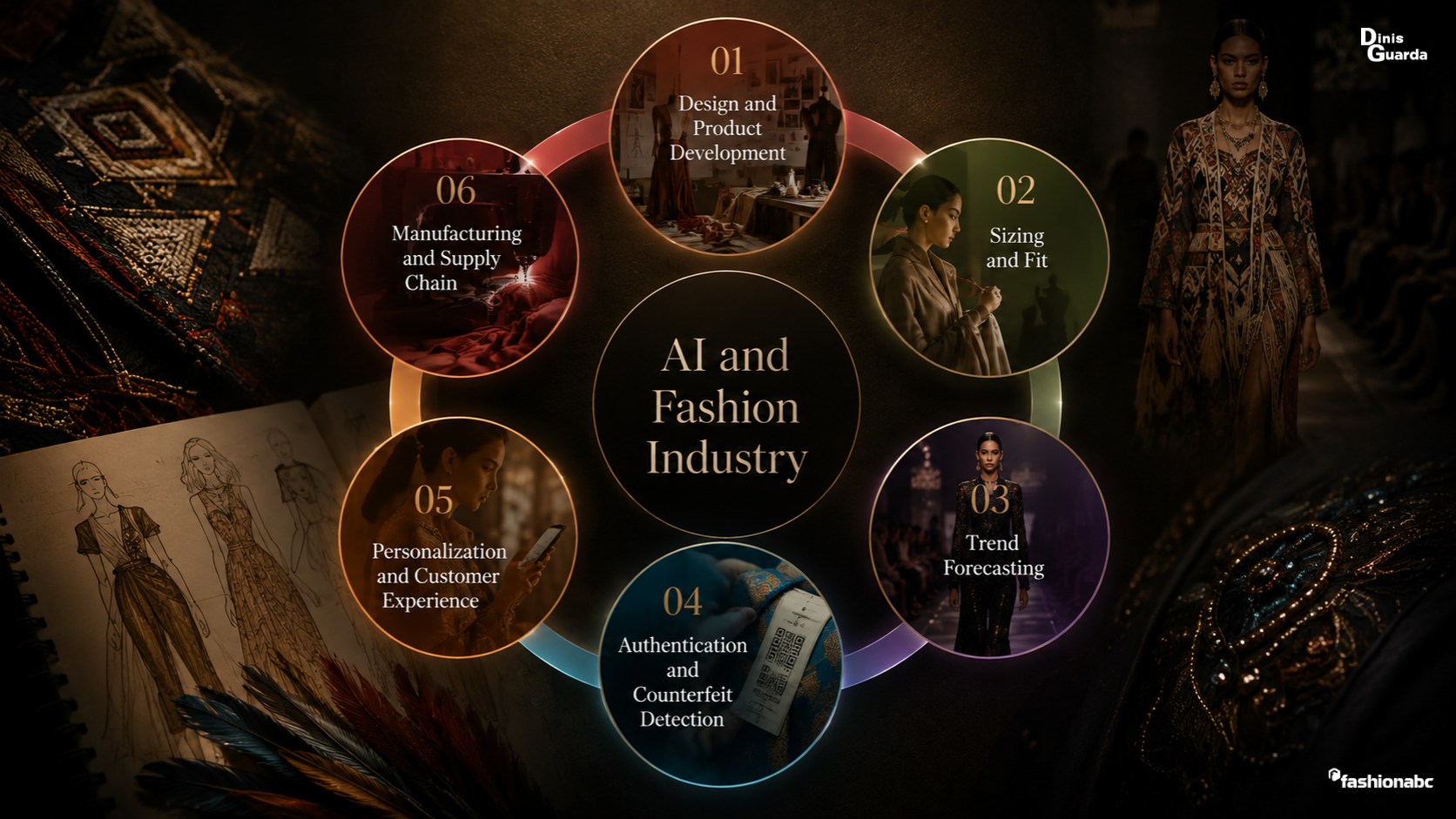
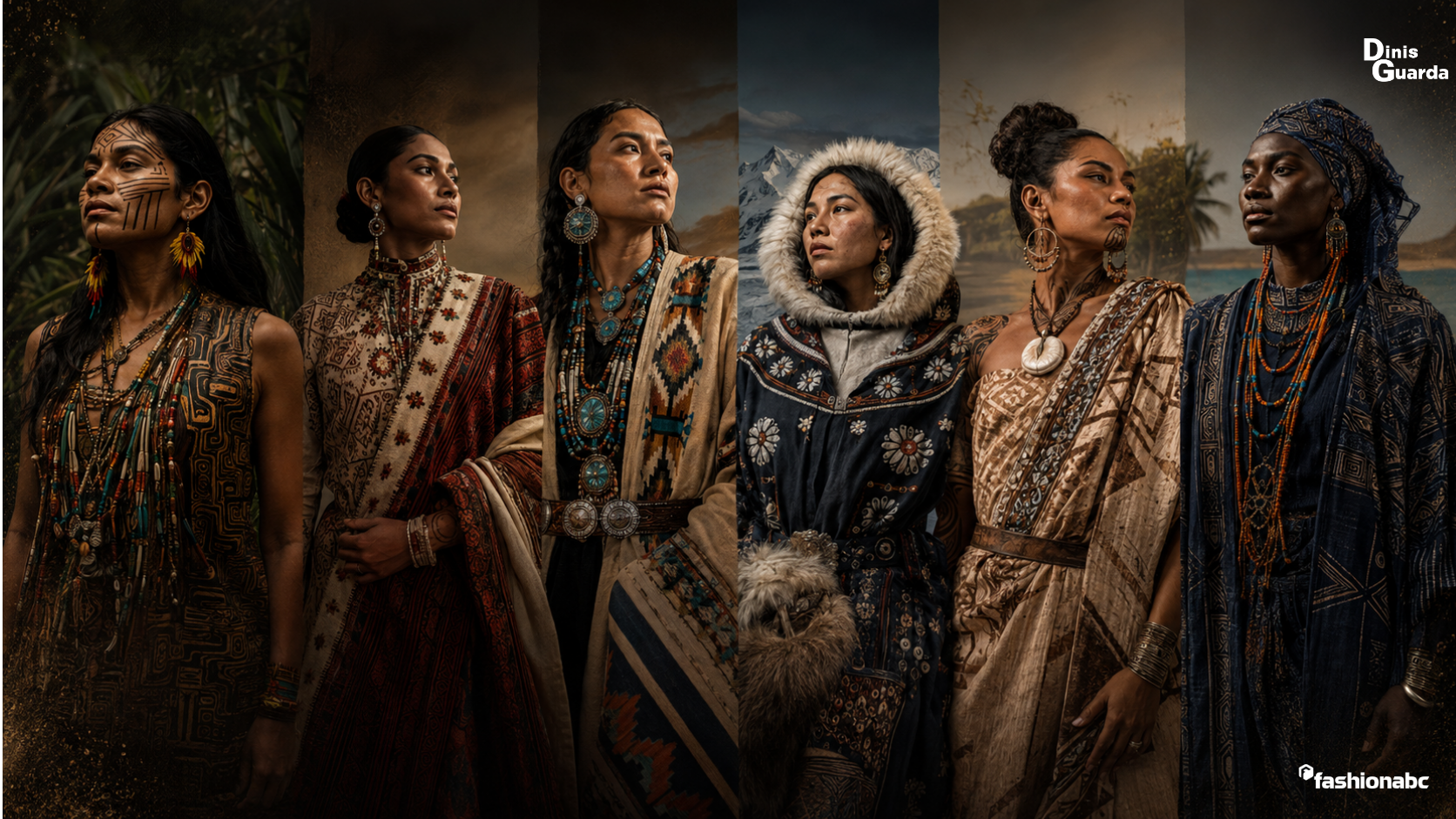
AI and Fashion Industry – created by Dinis Guarda using AI tools
The need for AI governance
What distinguishes this sector from most others under study is that the regulatory and legal scaffolding is not lagging behind the technology; it is arriving in near-parallel.
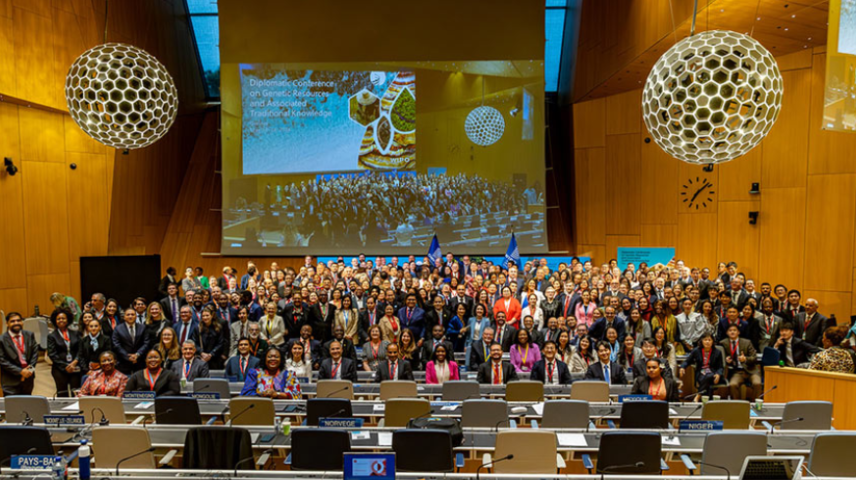
Source: https://www.wipo.int/en/web/igc/w/news/2024/wipo-member-states-adopt-historic-new-treaty-on-intellectual-property-genetic-resources-and-associated-traditional-knowledge
In May 2024, WIPO adopted a treaty requiring patent and design applicants to disclose when their work draws on traditional knowledge, the first WIPO treaty to explicitly name Indigenous peoples. Article 31 of UNDRIP already establishes that Indigenous communities control their own cultural heritage and traditional cultural expressions, a right that legal scholars are actively extending to cover AI training data and outputs.
That amounts to a faster institutional response than social media’s decade-long lag on content moderation, or generative AI’s ongoing, unresolved fight with visual artists over training-data consent across mainstream fashion and entertainment.
Academic work on AI in fashion design more broadly keeps converging on the same operating model, sometimes labelled “collective” or “hybrid” intelligence: AI adds the most value, with the least risk, when confined to accelerating variation and production around decisions a human expert has already made, not when asked to originate the cultural content itself.
That framework arguably represents the correct default for AI deployment in any domain built on protected, attributable cultural or intellectual property, journalism, independent music production, regional cuisine, traditional medicine, not just Indigenous fashion.
The sector arrived at this framework first because the cost of getting it wrong is measured in something more durable than a bad review: cultural erasure.
The takeaway
AI transformation is not a single event that happens to an industry. It is dozens of small, task-level substitutions, each of which either preserves or breaks the specific property that made the industry valuable in the first place. In fashion generally, that property is often taste or speed. In Indigenous fashion, it is authorship, the direct, unbroken line between a maker, her Country, and the buyer who pays her for it.
The sector is not waiting for permission to answer this question. Darwin sold out two nights with 100% of the proceeds returned to the makers. Auckland grew its Indigenous runway by 167% in a year while its founder publicly rejected the traditional fashion-capital operating model. A ridgeline in Montana turned a runway into a fundraiser for missing and murdered Indigenous women while placing a Ralph Lauren collaborator next to an independent Crow designer with no institutional backing at all. None of that required AI.
What AI can add, if the sequencing holds, is leverage at the margins that were never really about creativity in the first place: keeping a dying language alive for one more generation, letting a two-person studio sample at the speed of a conglomerate, getting a weaver’s work in front of a buyer she would otherwise never reach.
Get the sequencing wrong, let generation replace authorship rather than accelerate it, and the same technology becomes the most efficient extraction tool the industry has ever encountered. It is a governance choice, being made in public, in real time, by a sector that has already proven it does not need anyone’s algorithm to succeed.
Sources:
- United Nations — Indigenous Peoples: 476 million people across 90 countries, 5,000+ groups
United Nations — Indigenous Peoples - United Nations — International Day of the World’s Indigenous Peoples
UN — International Day of the World’s Indigenous Peoples - United Nations — Indigenous languages and global Indigenous population background
UN — Indigenous Peoples Background - University of Florida — Indigenous communities and the Amazon/Tapajós region
University of Florida — Endangered Amazon - The Friday Times — Indigenous identities and communities in South Asia
The Friday Times — Indigenous People of South Asia - Purbashree by NEHHDC — Government-certified, technology-verified Indian handicraft supply chain
Citiesabc Impakt — Purbashree by NEHHDC - Encyclopaedia Britannica — Indigenous Peoples of the Americas
Britannica — Indigenous Peoples of the Americas - Institute of American Indian Arts — Art of Indigenous Fashion exhibition
IAIA — Art of Indigenous Fashion - Statistics Canada — Canada’s Indigenous population: more than 1.8 million, 5% of population
Statistics Canada — Canada’s Indigenous Population - The Canadian Encyclopedia — Indigenous Peoples in Canada
The Canadian Encyclopedia — Indigenous Peoples in Canada - Encyclopaedia Britannica — Māori culture and history
Britannica — Māori - UNESCO — African Indigenous knowledge and communities
UNESCO — African Indigenous Knowledge - The Guardian — New Zealand Fashion Week 2026 and Kāhui Collective’s 16 Indigenous creatives
The Guardian — First Nations Excellence at New Zealand Fashion Week - Vogue — Diné weaver Naiomi Glasses and Ralph Lauren’s Artist in Residence programme
Vogue — Naiomi Glasses and Ralph Lauren - G1 Globo — MI Moda Indígena and its international fashion activity
G1 Globo — MI Moda Indígena - Eighth Generation — Tribally owned Indigenous design business and ethical alternative to “Native-inspired” goods
Eighth Generation — About - Eighth Generation — Inspired Natives programme and Native-designed products
Eighth Generation - WIPO — Treaty on Intellectual Property, Genetic Resources and Associated Traditional Knowledge
WIPO — GRATK Treaty - WIPO — 2024 adoption of the historic Indigenous and traditional knowledge treaty
WIPO — Member States Adopt Historic Treaty - WIPO — Traditional Knowledge, Traditional Cultural Expressions and Genetic Resources
WIPO — Traditional Knowledge