Have you ever opened your closet full of clothes and nothing to wear?
It happens to nearly everyone. And it probably has nothing to do with their clothes. It’s all about the room they are kept in.
Most bedrooms are designed with one thing in mind: the bed. Everything else just fits around it. A wardrobe here, a chest of drawers there, maybe a chair in the corner. Soon enough, that chair becomes a pile of laundry.
Here’s the problem:
That closet was never designed for anyone with a large wardrobe. It was designed to hoard clothes, not coordinate them.
The good news? You can transform your bedroom into a bona fide dressing room without tearing down walls.
Here’s how it works…
What’s coming up:
- Why Ordinary Bedrooms Fail Big Wardrobes
- The Dressing Room Layout That Works
- Lighting, Mirrors And The Finishing Touches
- Keeping The Room Working
Why Ordinary Bedrooms Fail Big Wardrobes
The average person owns many more clothes than their bedroom was designed for. Waste charity WRAP discovered the average UK adult has 118 items of clothing hanging up in their wardrobe, and approximately 31 of these items will go unworn for over a year.
Read that again. Almost a third of a wardrobe is dead weight.
That’s not really a shopping issue. That’s a visibility issue. Unseen clothes don’t get worn, and clothes jammed onto one sagging rack can’t be seen.
Space is the other biggie. Young homeowners most commonly regret buying a property with too little space according to the HomeOwners Alliance. That’s exactly why renovating your existing rooms is better than relocating 99% of the time.
That is usually the point that dressing room projects fail. Rails need to be fitted to solid fixings. Alcoves need boxing. Existing flat pack wardrobes need demolishing and removal. It’s not sexy stuff, and it doesn’t require a full building team. It does, however, require a capable pair of hands. Most good handyman services will do this sort of job: fitting shelves, rail brackets, door hangings; filling and finishing. Take a moment to find a handyman that has done carpentry work and can show you pictures of fitted storage jobs, because the quality of handyman services you pick will determine if the final product looks professional or DIY.
Pretty important, right?
What Separates A Dressing Room From A Bedroom
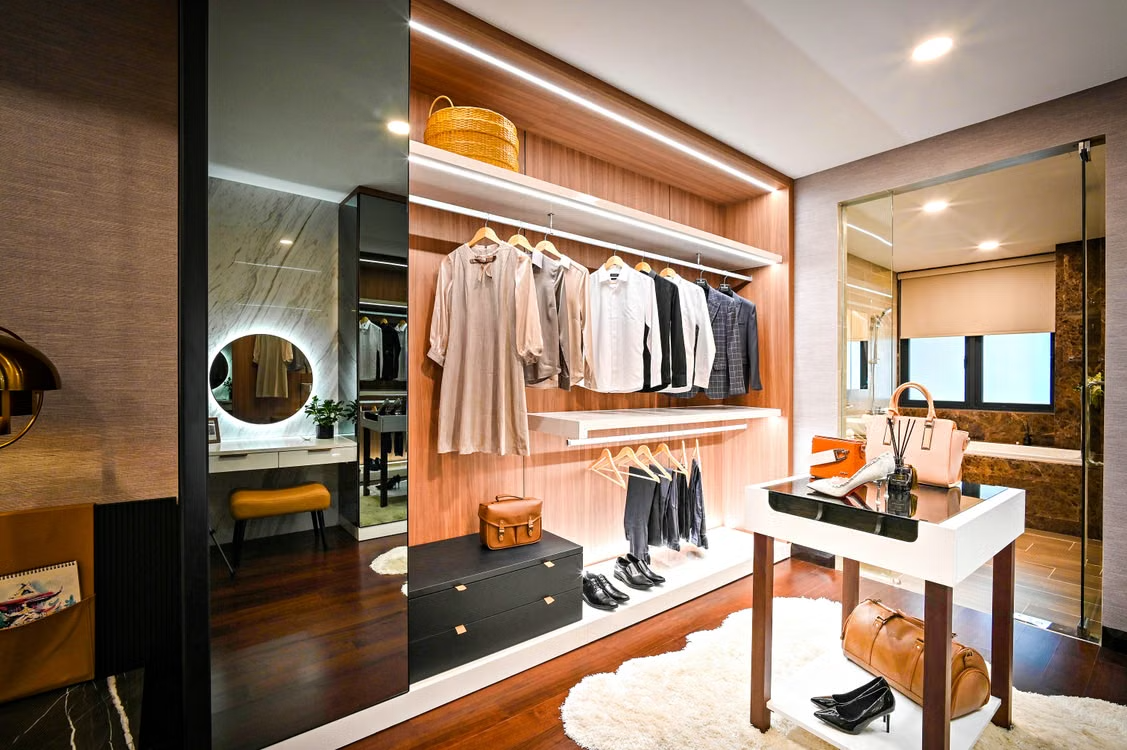
A bedroom stores clothes. A dressing room presents them.
That difference sounds small. It really isn’t.
In a dressing room, everything has its place, everything can be seen in one view and there is floor space for you to stand back and see how an outfit looks. Nothing gets lost in the abyss of a deep cupboard.
A proper dressing room does three jobs:
- Shows the whole wardrobe clearly
- Protects garments from creasing, dust and light damage
- Makes getting dressed quick instead of stressful
Get those three right and the room does the hard work for you.
The Dressing Room Layout That Works
Forget buying furniture first. Start with the walls.
Measure all the walls in the room. Subtract the doorway swing, window, radiator and any pesky chimney breast. Whatever remains is your usable wall run, and that single figure dictates everything else.
Move The Bed, Free The Walls
Most bedrooms devote their best wall to a bed. Float the bed away from the longest wall, or against the window if the space allows. Voila! An entire run of wall opens up for floor-to-ceiling storage.
Floor to ceiling.. That’s the magic words right there. Normal wardrobes sit around the 600mm BELOW ceiling. That’s empty space just going to waste.
Split The Room Into Zones
Thrifty wardrobe builders plan by zones, not pieces. One zone consists of garments of a single type:
- Long hang for coats, dresses and suit bags
- Double hang for shirts, jackets and folded trousers
- Drawers for knitwear, which stretches badly if you hang it
- Open shelving for shoes, bags and anything worth putting on display
Double hanging affords the largest capacity increase of any trick. Hanging two rails, stacked within the profile of one takes double the weight for the cost of some brackets.
Leave Room To Move
Here’s something people forget until the units are already fitted…
You need an approximate 900mm gap of free floor space in front of any wardrobe. Less than that and your drawers won’t open properly, doors hit each other and you find yourself dressing around corners in the hallway. Until you get sliding doors that fix that for tight spaces.
Lighting: The Part Everyone Gets Wrong
Ever bought something that looked navy in the shop and black at home?
That’s lighting. And in a dressing room, lighting isn’t decoration. That’s the whole point.
The pendant in the centre of the ceiling casts shadows directly down your body and washes the colour out of fabrics. Horrible for trying on outfits.
Layer the light instead:
- Warm ceiling light for general use
- LED strips inside the wardrobe, triggered when the doors open
- A bright, front-facing light beside the mirror
That last point is most important. Light should reach your face and clothing, as well as your head.
Mirrors And The Finishing Touches
A dressing room should have at least one full-length mirror. Ideally, this mirror will be hung so that you have space to stand away from it. You can hang one on the back of the door in a pinch, but having a wall-mounted mirror across from a window will reflect daylight all around the room and make it feel twice as big.
A few small additions that lift the entire room:
- Slim velvet hangers, which take half the rail space of wooden ones
- A bench or ottoman for putting shoes on
- Hooks by the door for tomorrow’s outfit
- A lidded basket for laundry, so it never lands on a chair
Small stuff. Big difference.
Keeping The Room Working
A dressing room isn’t a one-off project. It’s a system, and systems drift.
Resort every six months. Rotate winter and summer garments in and out of your best closet real estate and the top shelves. Whatever you haven’t worn in two seasons heads for resale donation or mending. Speaking of mending, seriously consider repairing holes or tears, because your updated item will most likely outlive its replacement that you bought from the store.
Look at the hardware too while you’re in there. Rails droop. Hinges slip. Drawer runners loosen. Ten minutes with a screwdriver twice a year will keep a fitted room solid for ten years and anything more than that is an hour’s job for handymen vs. a whole new installation.
Bringing It All Together
A bedroom that battles you every morning isn’t a clothing issue. It’s an organizational issue, and organizational issues can be solved.
To recap quickly:
- Measure the walls before buying a single thing
- Move the bed and free up a full wall run
- Build floor to ceiling and split the space into zones
- Layer the lighting and get a proper full-length mirror
- Reset the whole room twice a year
Do that, and your clothes will stop avoiding you. Which was the whole point of this endeavor.