Achieving Natural Movement in Aesthetic Enhancements The Rheology of Monophasic Fillers
The more aesthetic medicine talks about “natural-looking results,” the more I think we need to be honest about what that phrase often hides.
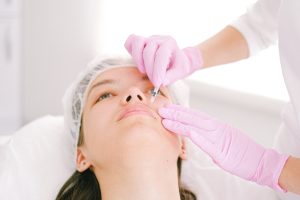
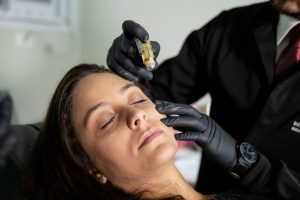
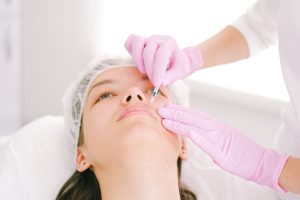
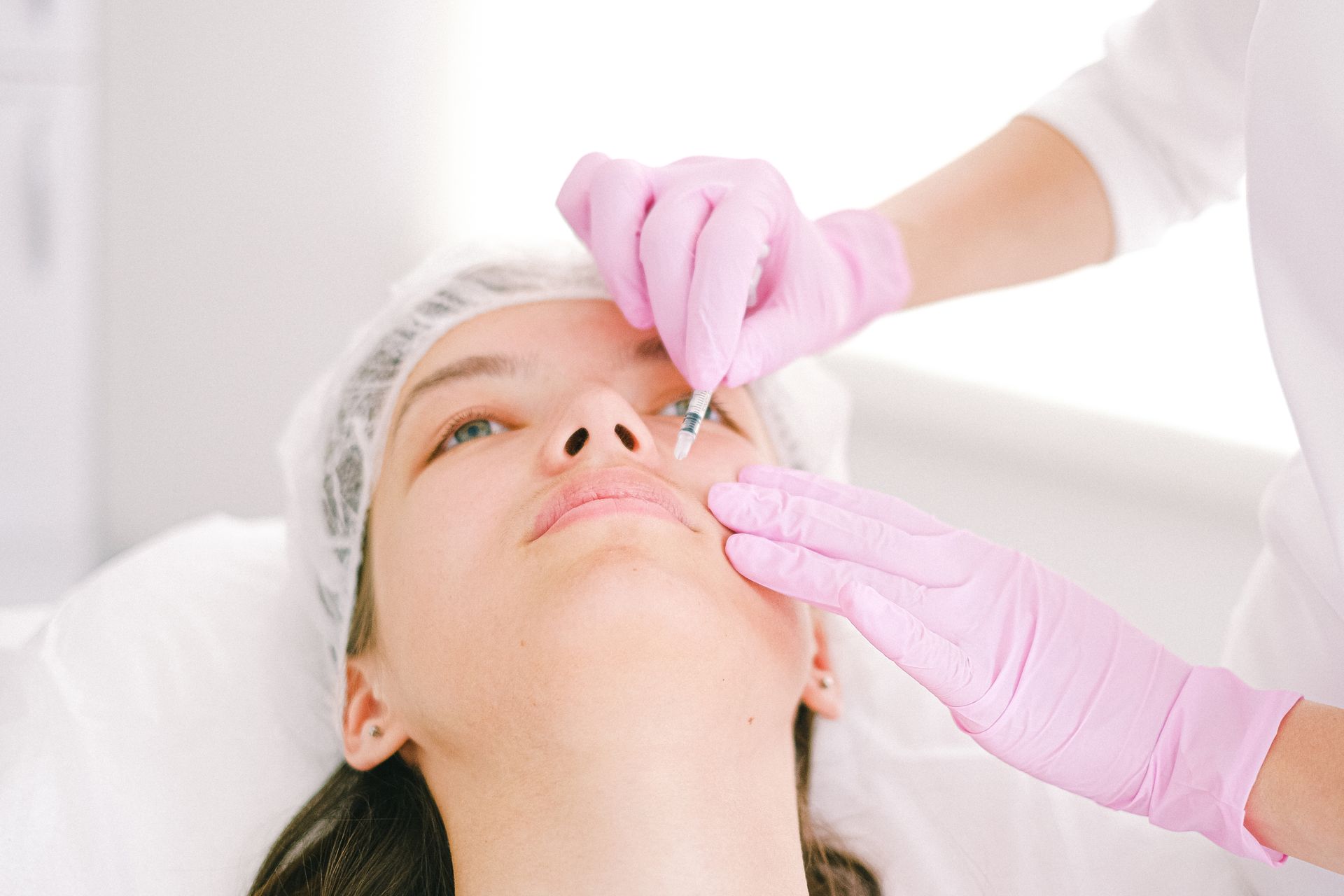
Natural movement is not a finishing touch. It is not something an injector adds through good bedside manner, conservative dosing, or a reassuring before-and-after photograph taken at rest. It begins with the material. If a filler resists deformation too aggressively in an area designed to stretch, compress, fold, and recoil thousands of times a day, the result can look acceptable in a static image and still feel wrong in motion.
That distinction matters.
A patient does not experience their face as a frontal photograph. They talk, laugh, squint, chew, purse their lips, sleep on one side, and pull the lower face through a surprising range of mechanical stresses. Skin laxity complicates the picture further because the problem is rarely a simple shortage of volume. Tissue support, dermal quality, hydration, ligamentous support, and dynamic movement all enter the equation.
This is why I have become less interested in asking which filler is “best” and more interested in asking a narrower question first: what does this tissue need to do after the product is placed?
For many dynamic indications, monophasic filler rheology deserves more attention than it gets.
The static face can be misleading
A patient with early midface descent might look hollow in one photograph. Fill the visible depression, take another photograph, and the correction appears successful.
Then the patient smiles.
The tissue bunches differently. The product moves as a distinct unit, or the transition between treated and untreated tissue becomes easier to see. Nothing necessarily looks disastrous, but the face has lost some of its continuity.
This is one reason I am cautious about treating every age-related contour change as a volumetric deficit. A syringe answers a physical problem. It does not automatically answer a biological or biomechanical one.
Monophasic fillers are interesting here because their gel structure tends to behave as a more continuous phase rather than a collection of visibly distinct particles suspended within a carrier. That does not mean every monophasic filler behaves the same way, and the label itself should not be treated as a guarantee of natural movement. Cross-linking technology, hyaluronic acid concentration, cohesivity, viscosity, elasticity, and intended tissue plane all matter.
Still, the underlying question is useful: how does the gel respond when the tissue around it deforms?
That is a better starting point than asking for the strongest product in the range.
Rheology sounds academic until you watch someone smile
We tend to reduce rheology to a few familiar terms. G-prime for elasticity. G-double-prime for viscosity. Cohesivity for the way the gel holds together. Viscosity for resistance to flow.
Those measurements matter, but the problem starts when clinicians turn them into a ranking system.
High G-prime is not “better.” Low G-prime is not automatically “more natural.” A filler with substantial elastic behavior may be entirely appropriate over bone or in a deep structural indication. Place the same product superficially in highly mobile tissue and the experience changes.
The face does not care about a product ranking.
It cares about what happens under stress.
A useful way to think about filler selection is to look at the mechanical demand of the treatment area rather than treating rheological values as isolated numbers.
| Clinical question | What to consider |
| Will the tissue undergo frequent compression? | Cohesivity and behavior under repeated deformation |
| Is projection or structural support the main goal? | Elasticity and lifting capacity in the intended plane |
| Is the area thin or superficially treated? | Integration, spread, visibility, and contour risk |
| Does the patient show significant skin laxity? | Whether volume replacement addresses the underlying problem at all |
| Is the area highly expressive? | Dynamic integration and how the gel behaves during movement |
The numbers still have value. They help us understand why products behave differently. But a rheology chart cannot substitute for anatomical judgment.
And, frankly, two clinicians using the same filler can produce completely different outcomes because placement depth, volume, technique, tissue quality, and patient selection change the mechanical environment.
The mistake is thinking “soft” automatically means dynamic
This is a common confusion.
A soft filler is not necessarily the right filler for an area requiring natural movement. Softness describes only part of the material’s behavior. A product also needs to integrate appropriately with the surrounding tissue and maintain enough structural integrity for the indication.
If the gel spreads too freely, correction becomes less precise. If it remains too localized, movement may expose the treated area as a separate mechanical entity.
The target is not softness. It is compatibility.
This is where monophasic technology becomes clinically interesting. A homogeneous gel structure can offer smooth tissue integration in indications where you want the material to behave less like a discrete deposit and more like part of the treated tissue environment. But that principle should not be stretched into a universal rule. There are indications where a firmer, more structurally supportive product is the better choice.
I used to think the discussion around “natural movement” was mostly about injecting less product.
I am less convinced now.
Volume restraint matters, especially in patients who have already accumulated filler over several years. Yet an appropriately selected product at an appropriate volume can look more natural than a smaller amount of material with poorly matched mechanical behavior.
Where bio-remodeling enters the conversation
Skin laxity is where filler selection becomes particularly easy to oversimplify.
If a patient presents with crepey skin, reduced dermal elasticity, and mild tissue descent, adding volume beneath the surface may improve contour without meaningfully improving the skin itself. Sometimes that is enough. Often it is not.
This is where bio-remodeling injectables belong in the conversation.
They occupy a different clinical category from conventional volumizing fillers. The goal is less about building projection in a specific anatomical point and more about influencing tissue quality through high-concentration hyaluronic acid formulations designed for biostimulation and remodeling effects.
For clinics comparing professional product options in this space, practitioners looking to buy Dermalax for your clinic can review product information and wholesale purchasing options for licensed professionals. The important decision, though, is to separate conventional volumization from bio-remodeling before choosing a product. A patient with dermal laxity and declining tissue quality does not automatically need more projection, and a product selected for remodeling serves a different clinical purpose from one selected primarily for contour support.
That distinction is easy to state and surprisingly easy to ignore in practice.
A practical selection framework
I find it useful to start with the problem rather than the product category.
Choose structural support when the deficit is structural
Think about areas where projection, contour, or deeper support is genuinely missing.
Examples include:
- Chin projection in an appropriately selected patient
- Deep preperiosteal contour support
- Jawline definition where tissue characteristics support a structural approach
- Specific areas of volume loss with a clear anatomical deficit
Here, a product with greater elastic behavior may make sense because the tissue is asking for support.
Choose a more dynamically integrated approach when movement dominates
The lips, perioral region, mobile cheeks, and other expressive areas require a different thought process. The product has to coexist with repetitive deformation.
That does not mean selecting the lowest G-prime product available. It means looking at the whole rheological profile and matching it to the treatment plane, tissue thickness, and expected movement.
Choose bio-remodeling when the primary complaint is tissue quality
This is the category that gets overlooked when clinics feel pressure to solve every concern with a filler syringe.
Poor elasticity, fine creping, diffuse laxity, and changes in dermal quality do not always respond well to more focal volume. In those patients, bio-remodeling approaches may fit the biological problem more closely.
The answer is sometimes a combination. Structural support in one plane and tissue-quality treatment in another. But combinations should follow diagnosis, not inventory.
Common selection mistakes I still see
The first is chasing lift in tissue that does not need more volume.
Overfilling often begins with a reasonable correction. The problem develops when every follow-up treatment tries to recreate the result of the previous syringe instead of reassessing the patient’s current anatomy. Eventually, the practitioner is treating accumulated product and altered tissue rather than the original concern.
The second is choosing by brand familiarity.
A clinic may have excellent results with one product and gradually start using it as the answer to everything. Familiarity is comfortable. Anatomy is less accommodating.
The third is treating rheological terminology as if it predicts outcomes on its own.
A G-prime value measured under laboratory conditions does not tell you exactly what will happen in a 52-year-old patient with thin skin, prior filler, photoaging, and significant tissue mobility.
And the fourth is confusing skin laxity with volume loss.
Those two problems often overlap, but they are not interchangeable.
Patient selection still matters more than the technology
No filler technology fixes poor indication.
Patients with significant skin redundancy, advanced ptosis, or substantial structural descent may require a different intervention altogether. Repeated injection into increasingly lax tissue can create weight without restoring meaningful support.
Previous filler also deserves more attention than it sometimes receives. Before adding product, it is worth asking what is already present, where it was placed, and whether the apparent deficit represents volume loss or migration, edema, tissue change, or product persistence.
Ultrasound has made this reassessment easier in practices equipped to use it. It has also exposed how unreliable treatment history can be when patients have undergone injections across several clinics.
There are also the usual exclusion and caution factors. Active infection at the treatment site, known hypersensitivity to product components, pregnancy or breastfeeding where product guidance advises against treatment, uncontrolled inflammatory disease, and poorly understood prior reactions all warrant careful consideration. Product-specific instructions for use should guide the final decision.
This is not glamorous medicine. It is the part where good outcomes are often won.
Technique can rescue a poor choice only up to a point
A skilled injector can improve the behavior of a product through depth, distribution, volume, and placement strategy.
But technique has limits.
If the material is fundamentally mismatched to the mechanical demands of the tissue, perfect injection technique does not turn it into a different product. Likewise, an excellent product in the wrong plane can create problems its rheological profile was never meant to solve.
I think this is where aesthetic medicine has become more mature. The old conversation centered heavily on correction. How much volume? How much lift? How many syringes?
The more useful conversation asks what the tissue is doing before treatment and what we expect it to do afterward.
A face in motion gives more information than a face at rest. Watch the patient talk before reaching for a needle. Watch the cheek during a broad smile. Look at how the perioral tissue folds. Ask the patient to animate naturally rather than perform the same exaggerated expression every time. Sometimes the best clue appears in those few seconds.
Because natural movement is not an aesthetic bonus added after correction. It is part of the correction itself.