
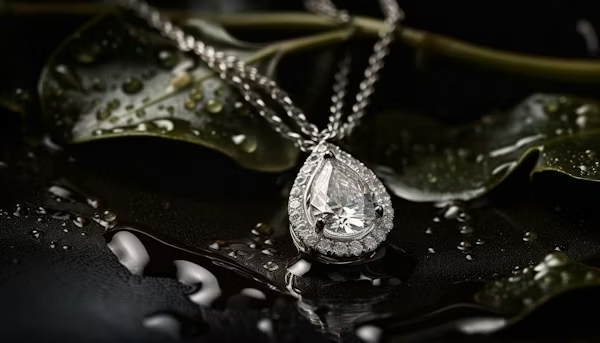
The dainty gold necklace has become the white t-shirt of fine jewelry. Quiet, layered, worn every day, photographed nowhere and noticed everywhere. The category has exploded in the last five years, and you can now buy a dainty chain at almost any price point.
The problem is that most shopping guides treat all of those necklaces as roughly equivalent. They are not. The most consequential decision isn’t between cable chain and box chain, or sixteen inches and eighteen. It’s between solid gold and everything else. Vermeil, gold-filled, and gold-plated chains start showing wear around month nine of consistent daily use: the clasp goes gray, the chain dulls at the back of the neck, a faint silver or pink line appears where the gold layer has thinned. Solid gold doesn’t do this, because it’s the same metal at the surface as it is at the core.
This guide is sorted around that distinction. Six of the eight brands below work primarily or exclusively in solid 14k or higher. Two work in vermeil and earn their spots anyway because they do it well at price points solid gold can’t reach.
A Quick Primer: What “Gold” Means on a Jewelry Tag
Solid gold is the same metal all the way through. 14k is 58.5% pure gold, 18k is 75%, 10k is 41.7%, alloyed with copper, silver, or zinc for color and durability. It doesn’t tarnish, doesn’t fade, and doesn’t have a layer to wear through. The piece you buy today is the same piece in twenty years.
Gold vermeil is sterling silver with a gold layer at least 2.5 micrometers thick (the U.S. legal minimum). More durable than plating, but the gold layer will eventually wear through with daily use, usually starting at the clasp and other high-friction points along the chain.
Gold-filled is a mechanically bonded layer of gold (at least 5% of the piece’s total weight) over a base metal core. More durable than plating, less stable than vermeil over time, depending on the manufacturer.
Gold-plated is a thin gold layer (often under one micron) over base metal. On a daily-wear necklace, plated gold typically wears through within six to eighteen months, sometimes faster around the clasp.
Shorthand: if a brand doesn’t explicitly say “solid 14k” or “solid 18k,” assume it isn’t. Real solid gold is the headline feature, not a footnote.
The 8 Best Dainty Gold Necklace Brands of 2026
1. Mejuri
Price range: $80 to $1,200+ Material: Mix of solid 14k and vermeil Best for: Building a starter stack at accessible prices
Mejuri is the default answer for a reason. The Toronto-founded brand essentially built the modern demi-fine category, and its dainty necklace selection is enormous, covering bold chains, diamond solitaires, name necklaces, and station styles across hundreds of SKUs. The catch is that Mejuri sells both solid 14k and gold vermeil, often within the same product family, and the difference isn’t always front-and-center on the page. Read the material spec carefully. The solid 14k pieces are excellent and reasonably priced, holding their own against more expensive brands in the same tier. But a vermeil dainty chain at this price point is doing the same job as a vermeil chain from anywhere else, and it should be priced and treated accordingly. The website’s filter tools make this distinction clear if you know to look for them, which most casual shoppers don’t.
2. ENEA Studio
Price range: $198 to $700 Material: Solid 14k and 10k gold, never plated, never vermeil, never filled Best for: Buyers who want one dainty necklace that lasts a lifetime
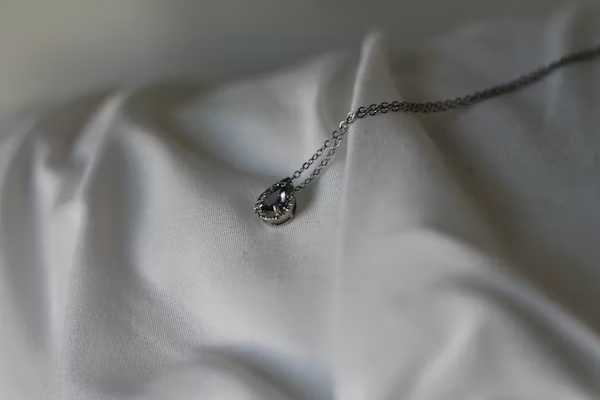
Run by the third generation of the Vouclos family in Athens, ENEA Studio has been goldsmithing since 1953, with the youngest generation now bringing the workshop’s small-batch production to a wider U.S. audience. Every piece in the dainty gold necklaces by ENEA collection is solid 14k or 10k gold, with no plated, vermeil, or gold-filled pieces anywhere in the lineup. The collection runs a tightly curated range of dainty styles, from a $198 Fine Cable Chain to a $698 Herringbone, with diamond styles like the Núde Diamond by the Yard and the Petal Diamond Necklace ($498) in between. Select pieces in the Narcissus collection carry Swiss Hallmark certification. Every piece carries a lifetime manufacturing warranty, plus repair, resizing, and restoration support for as long as you own it
3. Catbird
Price range: $98 to $2,500+ Material: Solid 14k gold, with some 18k options Best for: Brooklyn-cult aesthetic and in-house craft
Catbird’s Brooklyn workshop has been making solid-gold thin chains since 2004, and the brand essentially defined what a “stackable” fine jewelry wardrobe looks like for a generation of New Yorkers. Their threadbare-light chains are sized to layer in twos and threes without tangling, and the pendant collection has become a quiet uniform among the city’s design-adjacent crowd. Pricier than mass-market demi-fine, but everything is solid 14k and made in-house at the Brooklyn workshop, and the brand’s quality control is famously tight. Catbird also runs one of the more interesting custom and engagement programs in the demi-fine space, with rings and chains designed for daily wear rather than special-occasion use. The aesthetic is distinctly Brooklyn: understated, hand-finished, with a bias toward smaller and finer rather than chunkier and more obvious in styling.
4. AUrate
Price range: $150 to $3,000+ Material: Solid 14k and 18k gold, recycled Best for: Polished design with brick-and-mortar showroom access
AUrate sits in the same solid-gold tier as Catbird and ENEA but with a more uptown New York sensibility: cleaner lines, more diamond pieces, and a recognizable design language across the catalog. The brand is solid 14k and 18k throughout, with no vermeil anywhere, uses recycled gold, and operates several physical showrooms in major U.S. cities for in-person try-ons before purchase. A strong choice for buyers who want a slightly more polished aesthetic in their daily-wear chains, or who prefer to handle a piece before committing the spend, particularly on diamond-set styles where photography can be misleading. AUrate also publishes some of the more transparent material and sourcing documentation in the category, with carat weights, gold weights, and origin information clearly listed on every product page. The diamond pendant collection is particularly worth attention for first-time fine jewelry buyers.
5. Quince
Price range: $50 to $300 Material: Solid 14k gold Best for: The lowest legitimate prices on solid gold dainties
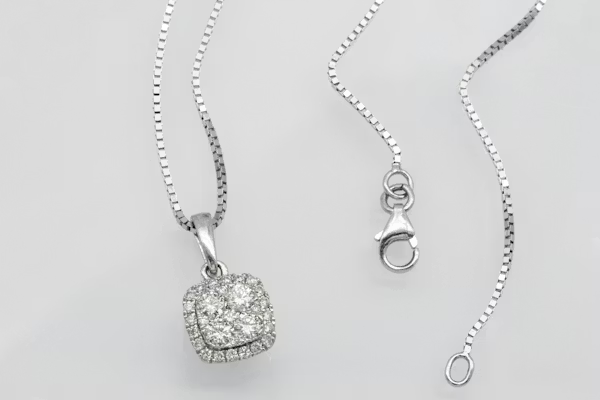
Quince’s pitch is factory-direct: the same manufacturing infrastructure as bigger fine jewelry brands but without the middleman markup, which translates to solid 14k chains at prices closer to what vermeil costs elsewhere on this list. The dainty gold necklace selection is intentionally narrow, with a few cable chains, a few diamond solitaires, and a handful of pendants, but the prices are real and the gold is real solid 14k, certified and stamped accordingly. The trade-off is fewer style options and less hand-finishing than the workshop-based brands above, plus a less editorial e-commerce experience overall, which matters more than it should for a category where presentation often signals quality. But for the buyer who wants a basic solid-gold chain at the lowest credible price, with no compromise on the material itself, this is the answer that other brands struggle to match on cost alone.
6. Missoma
Price range: $80 to $400 Material: 18k gold vermeil and gold-plated brass (with some solid gold capsule pieces) Best for: Trend-forward styling at accessible prices
Missoma is the first vermeil brand on this list, and it’s here because the design work is genuinely strong, with chunky-meets-dainty hybrid styles, heart and lock motifs, and an easy mix-and-match aesthetic that’s been widely imitated across the category. The honest disclosure is that most of the catalog is 18k gold vermeil over sterling silver, which is a step above plated brass but will eventually wear at high-friction points like clasps and chain edges with consistent daily use. Missoma does sell some solid gold capsule pieces under a separate “fine” line, and those are worth considering for shoppers who like the brand’s design language but want material that lasts beyond a season or two. Buy Missoma for the styling and the stacking, not for the heirloom potential, and price your expectations accordingly when committing to a piece.
7. Brilliant Earth
Price range: $200 to $5,000+ Material: Solid 14k and 18k gold, recycled Best for: Buyers who prioritize traceable sourcing alongside material quality
Brilliant Earth’s reputation is built on ethical and traceable sourcing: recycled gold, lab-grown and conflict-free diamond options, and transparent supply chain documentation across the entire catalog. The dainty necklace selection is smaller than the brand’s broader bridal and engagement focus, but every piece is solid gold (14k or 18k), and the diamond pieces are documented to a level that no one else on this list matches in scope or detail. For buyers who want sourcing transparency to match material quality, Brilliant Earth goes deepest on the documentation side, with named diamond sources and gold provenance listed where available on the product page. Pricing trends higher than other solid-gold brands here, but you’re paying for the documentation infrastructure, the lab-grown diamond options, and the brand’s engineering of an ethical supply chain end-to-end rather than just at the jewelry stage.
8. Kinn Studio
Price range: $150 to $2,000+ Material: Solid 10k, 14k, and 18k gold Best for: Softer, family-business aesthetic with strong daily-wear pieces
LA-based Kinn works exclusively in solid gold (10k, 14k, and 18k) and leans into a more understated design language that feels slightly rounder and warmer than the East Coast brands above. The dainty offering is strong across initial necklaces, signet pendants, and lightweight chains, with a styling sensibility that suits a more casual or California-leaning wardrobe rather than the sharper New York aesthetic. Family-founded and family-run, with that scale of brand feeling intact across the catalog rather than corporatized away, which shows up in the customer service and made-to-order processes for personalized pieces. Kinn’s website also publishes detailed care guides and sizing documentation that’s more thorough than most of the demi-fine category, which matters more than it sounds for daily-wear pieces. A good fit for buyers who want solid-gold integrity but find some New York brands too sharp or too minimal in their styling.
How to Choose
If you intend to wear a dainty gold necklace daily, meaning you’ll shower in it, sleep in it, and sweat in it, buy solid gold. The math works out in your favor over even a five-year horizon. A $250 solid 14k chain that lasts a decade is cheaper per year than a $90 vermeil chain replaced every eighteen months, and significantly cheaper than the same logic applied to plated brass that’s replaced even more frequently.
If you want a chain to layer with three others for a single season’s look and don’t mind cycling through it, vermeil and plated are valid options. Just price them accordingly, and don’t expect them to outlast the trend that prompted the purchase in the first place.
If you’re buying a gift or marking an occasion like a birthday, an anniversary, or a milestone, buy solid gold from a workshop that warrants its work. Pieces from brands like ENEA Studio, Catbird, AUrate, and Brilliant Earth come with manufacturing warranties and repair programs that account for the fact that fine jewelry is meant to be kept, not replaced.
The best dainty gold necklace is the one you forget you’re wearing until someone notices it three years later, and it still looks the way it did the day you bought it. That’s the test, and that’s what solid gold is for.