
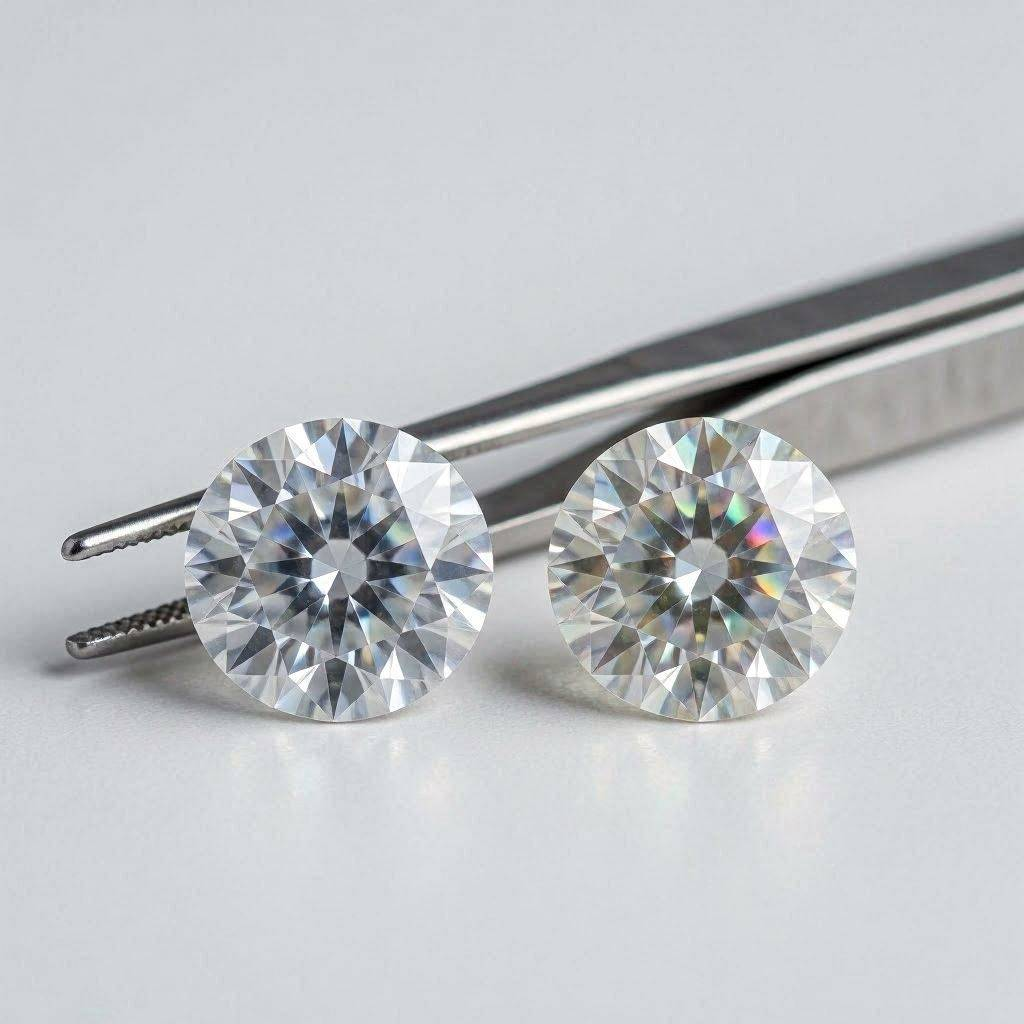
Yes, lab-created diamonds are real diamonds. They are not simulants, not imitations, and not “almost” diamonds. They are chemically and optically identical to mined stones, grown above ground instead of formed underground.
If you are shopping for an engagement ring or fine jewelry, understanding how they form and how they are graded helps you compare options with confidence rather than confusion.
How Lab-Created Diamonds Are Made
Lab-created diamonds are grown using either High Pressure High Temperature or Chemical Vapor Deposition. Both methods replicate the conditions that form natural diamonds, just in controlled environments.
HPHT mimics the earth’s intense pressure and heat by dissolving carbon into molten metal, then crystallizing it into diamond. CVD, however, uses a carbon-rich gas inside a chamber, where carbon atoms bond layer by layer onto a tiny diamond seed. According to research published on arXiv about microwave plasma CVD processes, optimizing temperature and pressure is critical to achieving high-quality crystal growth, which shows how technical and precise this method has become.
If a certificate lists HPHT or CVD, that simply refers to how the diamond was grown, not whether it is “better” or “worse.” Both can produce exceptional stones when cut and polished correctly.
How Lab-Created Diamonds Are Graded
Lab-created diamonds are graded using the same 4Cs as mined diamonds: cut, color, clarity, and carat weight. The grading standards come from the same gemological framework that professionals have used for decades.
According to experts, both IGI and GIA evaluate lab-grown stones using the traditional D-to-Z color scale and established clarity grades. In other words, an F color or VS1 clarity means the same thing whether the diamond was grown in a lab or formed in the earth.
IGI has become the dominant lab for lab-created diamonds, certifying a large majority of stones on the market. Meanwhile, GIA reports often carry prestige and may grade slightly more conservatively. If resale confidence matters to you, then you may lean toward one; if value and transparency matter more, then the other may suit you just as well.
Most reports also disclose the growth method and include a laser inscription on the girdle. That inscription links the physical diamond to its grading report, which professionals use to verify authenticity.
Hardness, Brilliance, And The Moissanite Myth
A common misconception is that lab-created diamonds are the same as moissanite. They are not only different visually but also chemically.
Lab-created diamonds are composed of pure carbon and rank 10 on the Mohs hardness scale, the highest possible rating available today. Moissanite, on the other hand, is made of silicon carbide and measures around 9.25. Both are durable for everyday wear, yet only lab-created diamonds fully match a natural diamond’s structure and hardness.
Moissanite also has higher dispersion, meaning it throws more rainbow flashes. If you love bold sparkle, then that may appeal to you. If you prefer the crisp white brilliance associated with diamonds, then lab-created diamonds deliver that familiar look.
Neither option is “right” nor “wrong,” but they are not interchangeable.
Why So Many Buyers Are Choosing Lab-Created Diamonds
Consumer sentiment has shifted quickly. According to a 2025 survey reported by Country Life, 74% of Americans said they were open to a lab-grown diamond engagement ring, and acceptance was even higher for non-bridal jewelry.
If nearly three out of four buyers are comfortable with lab-created diamonds, then you are not stepping into unknown territory. You are participating in a mainstream shift.
Pricing is another factor. As reported by Axios, a natural 3-carat diamond can cost on average 16 times more than a lab-grown equivalent. If budget flexibility matters, then that price gap can translate into either a larger center stone or higher color and clarity grades without stretching finances.
What To Verify Before You Buy
Before purchasing, professionals suggest reviewing more than just carat size. You should confirm:
- The grading laboratory and report number
- The 4Cs breakdown with specific grades
- The listed growth method and any post-growth treatments
If a report seems vague, then ask for clarification. If the diamond lacks certification, then reconsider. Transparency protects both your investment and your peace of mind.
When shopping for women’s rings especially, it also helps to browse sustainable diamond ring styles so you can compare setting durability, metal choices, and certification details side by side. For example, you can browse sustainable diamond ring styles that clearly outline grading information, durability factors, and design options, which makes it easier to align aesthetics with verified quality.
Choosing Lab-Created Diamonds With Confidence
Ultimately, Lab-created diamonds are neither a downgrade nor a trend-driven substitute. They are genuine diamonds produced through advanced technology, assessed by respected grading labs, and featured in designs ranging from clean solitaires to ornate vintage settings.
When you understand their formation and grading, you can shop confidently and consult a trusted jeweler for guidance.