
A well-chosen piece of jewelry can do more for an outfit than almost any other accessory. Not in a vague, decorative sense: the right ring, necklace, or pair of earrings changes how an outfit reads entirely, shifting it from forgettable to considered. Getting that right depends heavily on context.
Occasion, formality, neckline, and cultural resonance all feed into the decision. Styles rooted in craft traditions carry a weight that mass-produced pieces simply do not. Native american jewelry, with its hand-stamped silverwork and natural turquoise stones, brings that kind of depth to a look. It works across casual and semi-formal settings, and it tends to attract genuine attention precisely because the workmanship is visible.
This guide covers the full range, from everyday wear to black-tie events, so you can approach each occasion with a clearer sense of what actually works and why.
Right Jewelry for Every Occasion
Casual Outings and Everyday Wear
Comfort drives most everyday jewelry decisions, and for good reason. Pieces worn daily need to hold up to movement, layering, and repeated wear without becoming a distraction. They also need to suit a wide range of situations, since most days involve more than one context. The goal is not invisibility; it is to look like you made a deliberate choice without overthinking it.
Minimalist pieces tend to perform best here. Stud earrings, a slim pendant necklace, and a single thin ring all read as intentional without demanding attention. Sterling silver and yellow gold both hold up well to daily wear and pair easily with most casual wardrobes.
A single bolder piece can anchor an otherwise simple outfit. A wide cuff bracelet or a pair of medium-sized hoops can shift a plain t-shirt and jeans combination into something that looks put-together. One focal piece, everything else quiet: that is the rule worth keeping. A bold necklace and oversized earrings worn together tend to compete rather than complement.
The Professional Workplace
Office environments vary enormously in what they consider appropriate, so the first step is reading the room. A law firm and a design studio have different expectations, and jewelry that reads as polished in one setting might come across as distracting in the other.
In more traditional or corporate environments, classic pieces are the safest bet. Pearl studs, a simple metal watch, or a thin pendant necklace that sits above the collar signal attention to detail without drawing focus away from the work. Avoid anything that makes noise. Stacked bangles that clink with every keystroke are a genuine irritant in quiet office settings, regardless of how good they look.
Creative and relaxed workplaces give more room to experiment. A geometric statement ring or a layered necklace can work well, provided the rest of the look stays clean. One strong piece, worn with intention, reads better than five pieces worn at once.
Romantic Dates and Anniversaries
A date is one of the few occasions where jewelry is expected to do some emotional work. The pieces you choose signal effort, taste, and awareness of the moment, which is why this is worth thinking through rather than defaulting to whatever is already on your dresser.
For a first date or a casual dinner, the priority is looking considered without appearing overdressed. Drop earrings or a layered necklace add enough sparkle for a dimly lit restaurant without tipping into formal territory. Matching metals and stones to your outfit’s color palette keeps everything cohesive.
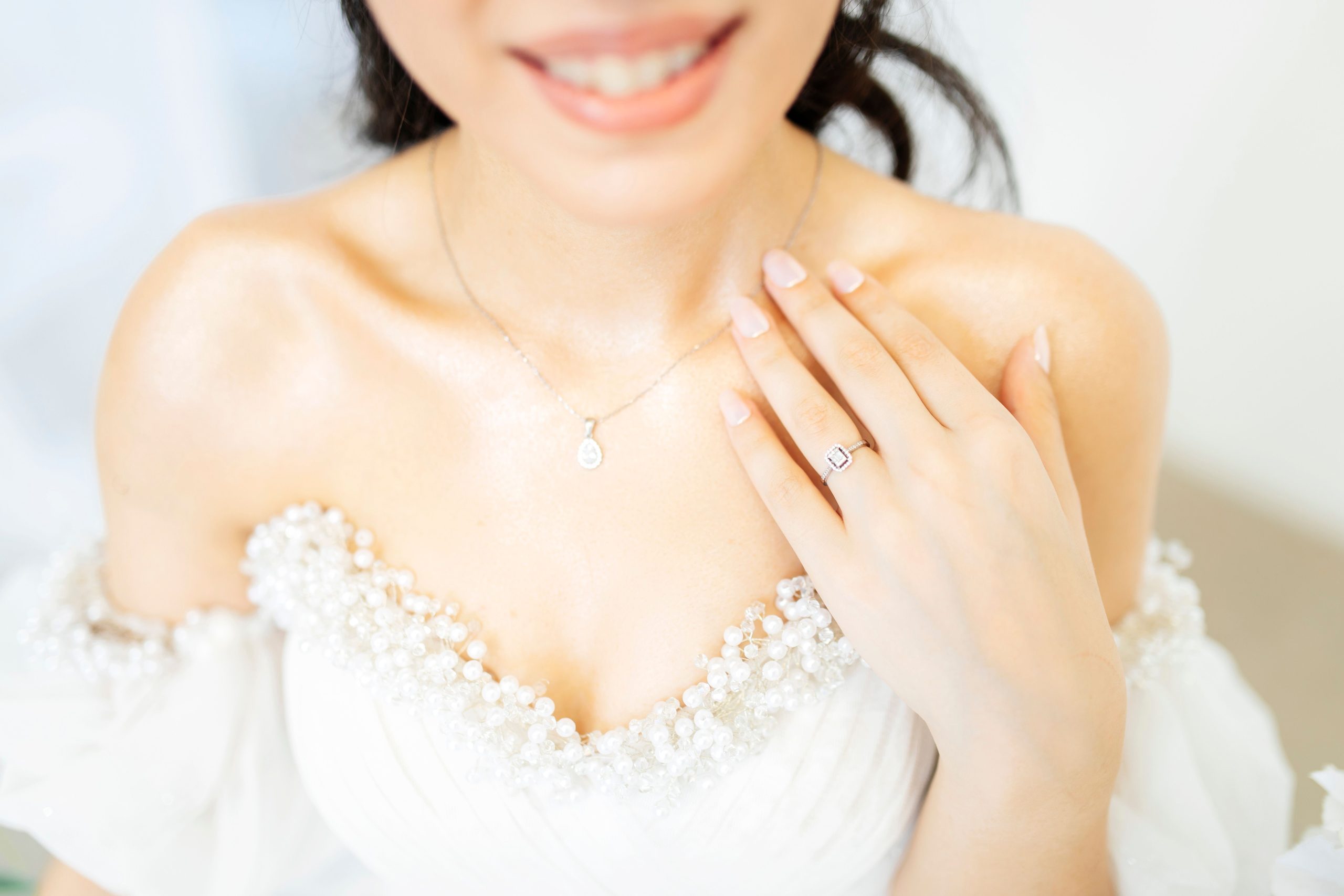
Anniversaries and engagements are a different matter. These are the occasions where the jewelry carries meaning beyond aesthetics, and the choice of stone or setting reflects something about the relationship itself. Many couples today are moving away from traditional diamonds toward alternatives that offer comparable or superior brilliance. Moissanite engagement rings have gained significant traction for exactly this reason: the stone scores 9.25 on the Mohs hardness scale (compared to a diamond’s 10), produces more fire and brilliance under most lighting conditions, and comes at a fraction of the cost. For a milestone that deserves a standout piece, that combination is hard to argue with.
Formal Events and Black-Tie Galas
Black-tie events are where jewelry gets to be genuinely bold. The expectation at a charity gala or an awards ceremony is that you have dressed with intention, and your accessories should reflect that. Minimalism has no place here.
Neckline is the primary guide. A strapless or sweetheart neckline creates a natural frame for a statement necklace: a diamond collar, a multi-strand pearl piece, or a bold gemstone pendant all work well. If the neckline is already heavily embellished or high-necked, skip the necklace entirely and redirect attention to the ears. Chandelier earrings or a wide cuff bracelet carry the visual weight without competing with the dress.
Diamonds, sapphires, rubies, and emeralds remain the standard for formal occasions, and for good reason. They catch light in ways that colored glass or lower-grade stones simply do not replicate. Platinum and white gold settings suit a modern aesthetic and pair cleanly with most formal gowns. Whatever you choose, make sure the pieces are clean and polished before the event. Dull metal and cloudy stones undercut even the most expensive jewelry.
Weddings
Whether you are a guest, a bridesmaid, or the mother of the bride, the guiding principle at a wedding is the same: your jewelry should not compete with the bride’s. That does not mean you need to be understated to the point of invisibility. Your choices should feel celebratory without drawing the room’s focus away from the couple.
Guests should take cues from the venue and the time of day. Outdoor daytime weddings suit lighter, more colorful pieces: floral motifs, freshwater pearls, or pastel gemstones. Evening ceremonies allow for more sparkle. Crystal drop earrings, a metallic cuff, or a layered necklace all work well without crossing into bridal territory.
Bridal party jewelry is often coordinated by the bride, which removes the decision entirely. If you are selecting your own pieces as a bridesmaid, simple and elegant is the right frame. Delicate silver chains or pearl studs complement most bridesmaid dress styles and photograph cleanly. Avoid anything too bold or too trendy; the photos will outlast the trend.
Traveling and Vacations
Packing jewelry for travel requires a different kind of thinking. Versatility matters more than variety, and the risk of loss or theft changes the calculus around which pieces are worth bringing. A single piece that works across five outfits is more useful than five pieces that each work with only one.
A travel jewelry capsule of 3 or 4 pieces that work across multiple outfits and occasions is a more practical approach than packing your full collection. A pair of hoop earrings, a simple pendant necklace, and a durable watch cover most situations from sightseeing to a nicer dinner. Leave anything irreplaceable or high-value at home. The stress of losing a sentimental piece on a trip is not worth it.
For beach or resort destinations, lean into lightweight and colorful. Beaded bracelets, shell pendants, and enamel earrings add personality to resort wear without the worry of salt water or sand damaging something expensive. In cities, mixed-metal pieces that combine gold and silver tones transition well from daytime to evening without requiring a full accessory change.
Layering and Stacking
Layering has moved well past trend status at this point. It is now a standard approach to building a jewelry look, and done well, it reads as personal and considered. Done poorly, it looks cluttered.
The mechanics of necklace layering are straightforward: vary the lengths and the weights. A choker or short chain at the base, a mid-length pendant in the middle, and a longer, slightly chunkier piece at the bottom. Mixing metals is no longer a rule violation; gold and silver together add visual texture that a single-metal stack often lacks.
Ring and bracelet stacking follows the same logic. Vary the widths, textures, and finishes across the stack rather than repeating the same profile. If one wrist carries a heavy stack, keep the other bare or limit it to a single watch. Style guides on fashionabc.org regularly return to this point: the difference between a layered look that works and one that does not usually comes down to whether the pieces feel curated or just accumulated.
Putting It All Together
Jewelry selection is ultimately about matching the weight of the occasion. Casual settings reward lightness and personality. Professional environments reward restraint. Formal occasions reward quality and boldness. Romantic milestones reward meaning.
None of these are rigid rules; they are frameworks. A piece of native american silverwork can be as appropriate at a gallery opening as it is at a weekend market. A moissanite ring bought for an engagement carries the same emotional significance as any diamond. What matters is that the choice feels deliberate, that the pieces suit the setting, and that you are comfortable wearing them. Confidence, more than any specific gemstone or metal, is what makes jewelry work.pex