
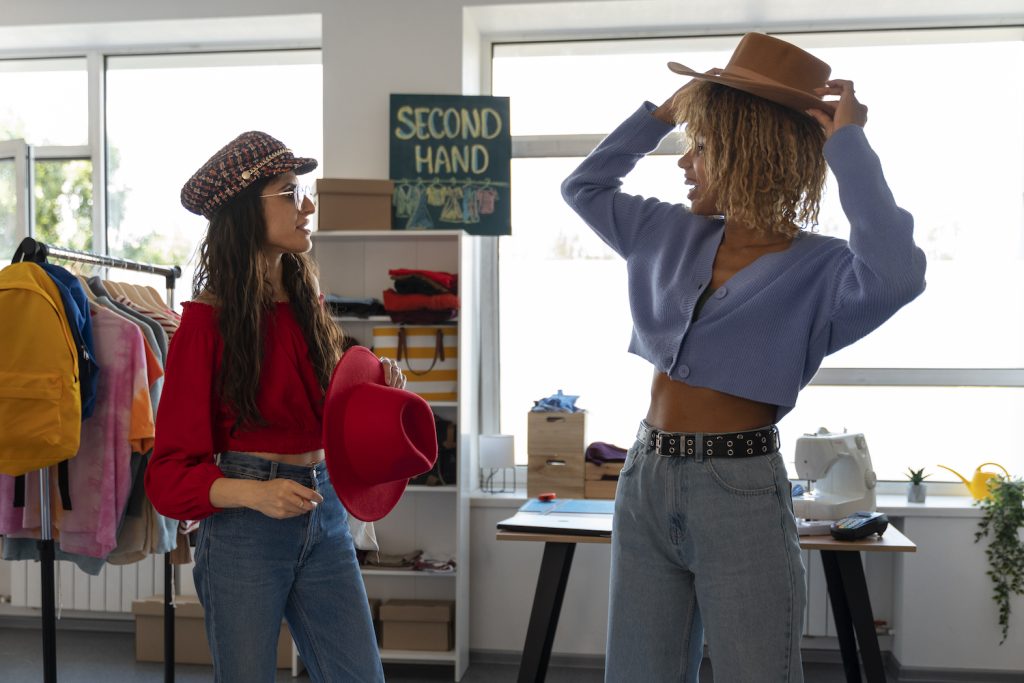
Luxury fashion is experiencing a fundamental shift in how it is valued, perceived, and consumed — with the secondhand apparel market projected to reach $367 billion by 2029 per ThredUp, there is a move towards a second-hand economy.

Resale is no longer a fringe niche. It’s a mainstream pillar of the luxury fashion ecosystem. Per ThredUp Resale Report 2025, the secondhand apparel market is projected to reach $367 billion by 2029 — growing 2.7 times faster than the overall apparel market.
“As consumers are increasingly thinking secondhand first, the retail industry is adopting powerful new pathways for resale. From the integration of social commerce and innovative AI applications to the establishment of trade organisations and interfacing with government, it’s clear why resale is seeing accelerated growth,” says James Reinhart, CEO, ThredUp.
The accelerated demand for sustainable fashion and affordable luxury has given rise to luxury resale platforms, which are attractive due to the competitive prices and access to items that are no longer available or, if available, unaffordable. The pre-loved market democratises luxury fashion when we perceive iconic jewellery or watches through new lens. Per the ThredUp 2025 Resale Report conducted by third-party retail analytics firm GlobalData, 94 percent of retail executives say their customers participate in resale while 86 percent say customer demand for secondhand has increased or stayed the same over the last three years.
AI is driving resale adoption by reducing thrift overwhelm and bridging the gap between shopping used and new. 48 percent consumers say personalisation, improved search and discovery make shopping secondhand apparel as easy as shopping new. 78 percent of retailers have made significant investments in AI and 58 percent plan to launch AI-powered tools in the next year.
“As consumers are increasingly thinking secondhand first, the retail industry is adopting powerful new pathways for resale. From the integration of social commerce and innovative AI applications to the establishment of trade organisations and interfacing with government, it’s clear why resale is seeing accelerated growth and has such a promising growth trajectory,” says James Reinhart, CEO, ThredUp.
It is important for retailers to take back pre-loved garments or provide consumers with resources about where they can resell it. Per the report younger generations try to sell 52% of their old or unwanted apparel, on average. 68% say the ability to resell apparel online has made it easier to get rid of items responsibly. Iconic handbags from brands such as Chanel, Louis Vuitton, Hermès, and Gucci dominate resale listings thanks to their timeless appeal, brand heritage and scarcity. This ensures high demand — and good resale value — long after retail availability ends.
What Is Luxury Resale?
Luxury resale refers to the buying and selling of pre-owned high-end fashion items through specialised platforms, offering consumers access to coveted pieces at a fraction of their original cost. Platforms like The RealReal and Vestiaire Collective have made it easier for sellers and buyers to engage in a secure, authenticated marketplace. These platforms often provide authentication, customer reviews and return policies, creating a trusted environment for pre-owned luxury transactions.
Luxury items retain value because they are designed with exceptional craftsmanship, using rare, high-quality materials that ensure their durability and timeless appeal. This intrinsic value is what allows them to retain demand in the resale market long after they leave the retail shelves. The rarity of certain pieces, whether limited edition handbags or vintage couture, solidifies their value.
Timeless design—whether it’s the elegance of a Chanel bag or the classic silhouette of a Louis Vuitton suitcase—ensures that these items remain desirable even as trends shift. Take, for example, Hermès Birkin, which has become one of the most coveted items in the resale market. Due to its timeless design and craftsmanship, the Birkin shows incredible capacity to retain and increase in value over time. Bags like these are investment pieces, which buyers can purchase second-hand and resell at a higher price. This “luxury as investment” concept has grown increasingly popular as the resale market continues to expand.

Luxury Fashion Brands And Resale
Traditionally, luxury brands have been hesitant to embrace the resale market, with some even going so far as to prohibit the sale of their goods in secondary markets. However, as the demand for resale has surged, brands are reconsidering their stance. While many have been reluctant to endorse resale platforms, a few have begun to see the value in collaborating with these platforms and even launching their own certified pre-owned initiatives.
“Shoppers are prioritising quality as resale value becomes an increasingly important factor in purchasing decisions, and retailers are evolving their secondhand offerings to meet consumer demand with new avenues like social commerce, further driving adoption and preference for secondhand,” says Neil Saunders, Managing Director, GlobalData.
Gucci has partnered with resale platform The RealReal to offer a curated collection of its pre-owned pieces. Similarly, Balenciaga has launched its resale programme in partnership with resale‑tech firm Reflaunt that lets customers return pre‑owned Balenciaga goods for store credit or resale. The Alexander McQueen brand approved programme in partnership with Vestiaire Collective allows clients to trade pre-owned Alexander McQueen pieces for store credit and Valentino operates its own resale initiative Valentino Vintage that allows clients to return vintage or pre-owned items for resale.
Digital Resale Platforms: Bridging The Gap Between Consumers And Luxury
The expansion of luxury resale can largely be attributed to the rise of digital platforms. Online marketplaces like The RealReal, Vestiaire Collective, and Rebag have changed the way consumers interact with luxury goods. These platforms have made it easier for consumers to buy and sell authenticated, pre-owned fashion from the comfort of their homes. By offering services like professional authentication and certification, these platforms have built trust with their audiences, ensuring that buyers feel secure in their purchases.
The RealReal, founded in 2011, has become one of the largest and most influential platforms in the luxury resale market. The company has raised millions of dollars in funding, expanded its global reach, and built a loyal following of fashion enthusiasts looking for second-hand luxury pieces. With over 20 million members, The RealReal has made luxury resale accessible to a wide range of customers, further establishing the second-hand market as a legitimate alternative to traditional retail.
Similarly, commerce platforms such as eBay, Vestiaire Collective, and Depop are leveraging this shift in perception with platforms that facilitate secondhand shopping. With no fees for listings and a concierge service for luxury fashion, sellers have streamlined listings for one-off purchases and rental platforms such as Hurr and Volte. New platforms such as Oly enable multi-marketplace automatic listings. Resellers such as Messina Hembry, Reskinned and Luv Lux focus on curating brands that they know buyers are looking for.
Authentication solutions such as Entrupy and product IDs have emerged in the luxury resale segment to address fraud. EON product passport collects, unifies and standardises product data — from raw materials and certifications to the lifecycle. This facilitates re-sale as the digital ID offers a record of the item’s ownership history and detailed condition, promoting transparency and building consumer trust.
Pickup points, low cost postage and integration into the marketplace enables providers such as inPost to offer lockers, allowing buyers to collect their parcels from a secure location whenever it’s convenient, with no risk of missed deliveries. This is also environmentally friendly as it reduces individual delivery trips and helps minimise carbon emissions.

AI-powered Platforms Scale Resale
University of Oxford spinout, Aesthetic, applies GenAI, computer vision and deep learning to re-commerce and e-commerce fashion, building an AI-powered enriched scalable data platform that delivers conversion, channel growth and productivity.
How does this work? Customers can shop their favourite looks on social media, through the products on their feed or similar products that fit a certain aesthetic. They simply message Alma, Aesthetic’s proprietary fashion AI/ML algorithm, including videos, reels and carousels. Within seconds, they get a link to shop the look — within the Instagram browser. Users can archive the looks for a later purchase. “[Alma] allows us to learn your style but it also offers value in finding what you like and closing the gap between inspiration and purchase,” founder Northington told WWD.
“Forecasters project it will hit $350 billion by 2028”, says Duncan McKay, CEO, Aistetic in his newsletter. “Underpinning it will be AI facilitating more efficiency — digital authentication, passports and AI-powered computer vision will provide more transparency, authentication, speed and standardisation for both sellers and buyers… AI is already able to analyse any individual clothing from a single image and also analyse any buyer from simple inputs — all from a mobile device — saving time and money for the seller and taking the guesswork and uncertainty off the buyer’s shoulders.”
Partnering with pre-loved fashion reseller Messina Hembry, Aistetic’s AI-driven image recognition and cataloguing tools have optimised listings, increasing listing capacity and efficiency. “Using Aistetic’s AI Listing solution has revolutionised our workflow,” says Zac Hembry, CEO, Messina Hembry. “We’re uploading 7,000+ items weekly — AI lets us compete with speed and without the waste and cost.”
Tech start-up Truss’ catalogue API helps consumers to tap into product data from hundreds of thousands of products through a photograph, providing precise insights in seconds. Instead of searching the Internet for a match Truss searches its mammoth database of fashion items. It started out using standard AI software but struggled to identify something as the same garment if it’s on a hanger in one picture and laid out on the floor in another. With the £1 million grant it received from the UK government’s innovation agency., Truss is now building proprietary algorithms.

The Resale Future Is Clear:
- -AI algorithms are providing accurate appraisals of pre-owned goods, ensuring fairer pricing and making the resale industry more appealing to buyers and sellers alike.
- -Increasing prices on new apparel are encouraging consumers to explore pre-loved fashion as an affordable option.
- -As sustainability becomes a core value in fashion, circularity (buying, selling, and recycling clothing) is now integral to the industry’s future growth.
- -Platforms like The RealReal, Vestiaire Collective, and others are utilizing AI to optimize search functions, personalize recommendations, and enhance the shopping experience.
- -With increasing environmental awareness, consumers are demanding eco-friendly options, and resale is a direct solution to combat fast fashion’s environmental impact.
- -Luxury fashion brands are joining the resale market, either by launching their own platforms or partnering with existing resale platforms, with luxury watches, handbags, and apparel showing strong resale value.

Jasmeen Dugal is Associate Editor at FashionABC, contributing her insights on fashion, technology, and sustainability. She brings with herself more than two decades of editorial experience, working for national newspapers and luxury magazines in India.
Jasmeen Dugal has worked with exchange4media as a senior writer contributing articles on the country’s advertising and marketing movements, and then with Condenast India as Net Editor where she helmed Vogue India’s official website in terms of design, layout and daily content. Besides this, she is also an entrepreneur running her own luxury portal, Explosivefashion, which highlights the latest in luxury fashion and hospitality.