How AI Is Transforming Fashion Campaign Production From Sample to Shoot to Publish
For most of fashion’s modern history, the campaign has been the industry’s most expensive and least flexible ritual. A brand commits to a concept months ahead, books a model, a photographer, a stylist, and a location, ships physical samples across time zones, and prays the weather holds on the one day everyone is available. The result is a handful of hero images that must carry an entire season. That model is now being rebuilt from the inside out, and the shift is happening faster than most industry veterans expected.
Artificial intelligence has moved from novelty to production infrastructure in a remarkably short window. It is no longer a gimmick bolted onto a marketing deck; it is quietly reorganizing how imagery gets made at every stage of the pipeline. To understand the scale of the change, it helps to walk the campaign from beginning to end from the physical sample to the final published frame and see exactly where the old costs are collapsing.
The Sample Stage: Where Campaigns Used to Begin and Bottleneck
Traditionally, nothing could be photographed until a physical garment existed. That single dependency shaped everything. Sampling is slow, expensive, and wasteful: a brand might produce three or four iterations of a single piece before approving it, each requiring fabric, labor, and freight. Multiply that across a full collection and the sample budget alone can rival the cost of the shoot itself, while the calendar stretches by weeks.
The environmental toll compounds the financial one. The industry produces enormous volumes of sample garments every year, a meaningful share of which are never sold and often discarded. For a sector under growing pressure to reduce waste, the sampling process has become a quiet liability that rarely appears in sustainability reports but weighs heavily on both margins and conscience.
AI is loosening that bottleneck. Brands can now visualize a garment on a realistic digital model before a final physical sample is ever cut, using a reference flat lay, a technical sketch, or an early prototype. Decisions about color, drape, and styling that once required a finished sample can be made earlier and cheaper. The physical sample does not disappear entirely, the fit and fabric still demand real cloth, but it stops being the gate that holds up every downstream step, and far fewer throwaway iterations get produced along the way.
The Shoot Stage: The Studio Without the Studio
The shoot is where the transformation becomes most visible. A conventional editorial or catalog shoot is a logistical assembly line: casting and booking models, securing a location or renting a physical space, coordinating hair, makeup, lighting, and assistants, then compressing all of it into a single high-pressure day that yields few usable frames per hour.
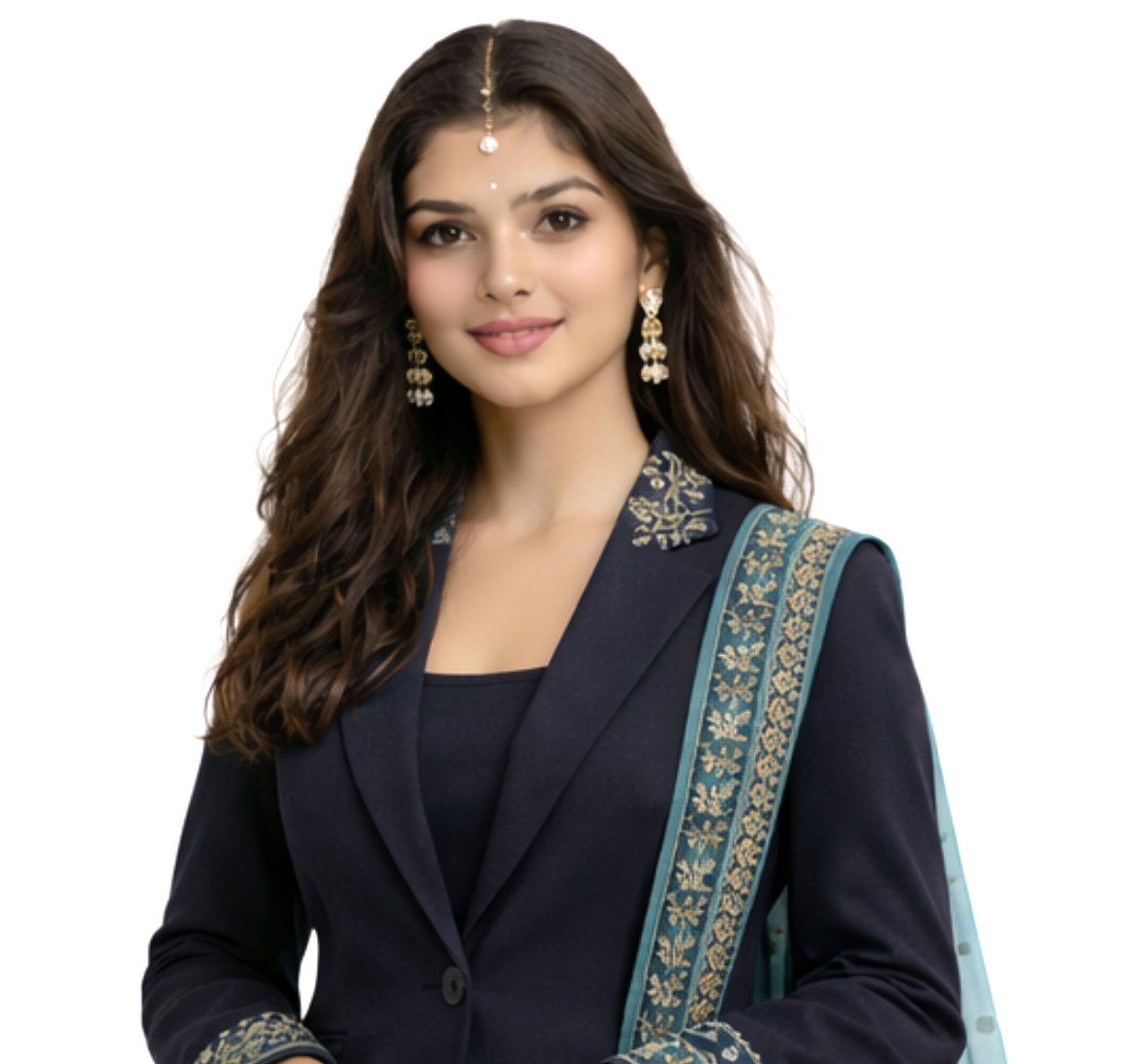
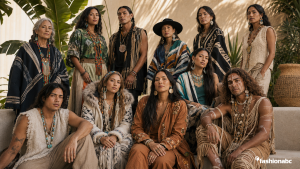
A modern AI fashion studio tool compresses that entire apparatus into software. Instead of booking talent and space, a brand selects or creates a model, dresses it in the collection, sets a background, directs the pose, and generates finished images or video in minutes. Platforms such as ImagineArt’s AI fashion studio lets a team run this end to end without a single physical booking, iterating on looks the way a designer iterates on a sketch rather than committing thousands of dollars to a one-shot production day.
Two advantages stand out here, and both address long-standing pain points. The first is consistency. Human models age, move on, and rarely look identical from one shoot to the next, which makes reshooting a range months later a genuine matching problem. A digital model stays exactly the same across an entire catalog and every future drop, so a spring capsule and a fall re-release can share the same face and body without any visible seam. For brands running hundreds of listings a season, that coherence used to be nearly impossible and is now the default.
The second is iteration at near-zero marginal cost. In a physical shoot, trying five backgrounds or ten poses means paying for every variation upfront in time and money. In a generative workflow, experimentation is effectively free. A team can test an outdoor editorial scene against a clean studio backdrop, swap a model, or restyle an entire look, and only commit to what actually works. The creative process shifts from scarcity to abundance, which quietly changes what brands are willing to attempt.
None of this erases the value of a great photographer or a singular creative vision. What it changes is the ratio: the repetitive, high-volume, consistency-driven work moves to software, freeing human craft and budget for the two or three hero images a year that genuinely define a brand and deserve real production.
The Styling and Direction Layer: Creative Control Without the Crew
A frequent misconception is that AI imagery means surrendering creative control to a machine. In practice, the better tools have moved in the opposite direction, handing more granular direction to the brand than a chaotic shoot day often allows. Pose can be specified or supplied as a reference. Backgrounds can be swapped from catalog-clean to outdoor editorial in seconds. Aspect ratios can be set for a square product page, a vertical reel, or a widescreen campaign from the same underlying look.
This matters because it collapses the gap between intent and output. On a traditional set, a creative director describes a vision and hopes it survives contact with the model, the light, and the clock. In a generative workflow, the director adjusts and regenerates until the frame matches the idea, without the sunk cost of a reshoot. Control becomes iterative rather than a single expensive gamble, and the brief stops being a document you defend and becomes something you actively sculpt.
The Publish Stage: One Shoot, Many Outputs
The final stage is where AI quietly delivers some of its biggest gains. In the old model, a campaign shoot produced stills, and turning those into video, social cutdowns, or paid-ad variations meant additional shoots or expensive post-production. Each format was its own line item and its own delay in the calendar.
Generative workflows treat the finished look as a starting point rather than an endpoint. The same model and outfit can be animated into short video, adapted into vertical formats for TikTok or Reels, or spun into fresh ad creatives without staging a new shoot for every placement. A single approved look can populate an entire funnel, product page, email, paid social, and organic content in a fraction of the time and cost. For performance marketers who need constant creative variation to keep campaigns from fatiguing, this steady supply of on-brand imagery solves a problem that traditional production never could economically address.
Ownership and rights, once a tangle of usage windows and licensing fees tied to a model’s contract, also simplify. With reputable platforms, brands own the output outright for commercial use across store, ads, and social, removing a layer of legal friction that historically capped how long and how widely a campaign image could travel before renegotiation.
The Economics: Why the Math Is Hard to Ignore
Step back and the aggregate effect on cost is striking. A traditional campaign carries model fees, photographer and crew day rates, studio or location rental, hair and makeup, sample production and freight, and post-production a stack that can run well into five or six figures. A generative approach removes most of those line items, and crucially, it makes the cost roughly the same whether a brand produces one image or an entire seasonal catalog.
That flattening of cost is the part legacy players tend to underestimate. In physical production, output scales linearly with spend: more looks mean proportionally more money. In a generative model, once the setup exists, additional looks are marginal. This is precisely why smaller labels and independent designers, long priced out of professional campaign imagery, are among the fastest adopters. A tool that is a fashion studio without the overhead is transformative for a founder who could never justify a full production budget.
It would be dishonest to pretend the transition is frictionless. Garment fidelity still requires care, since fine details, exact fabric behavior, and precise logo placement can drift and sometimes need human retouching. The very top of luxury editorial still rewards a singular human eye that no prompt fully replicates. And the industry is still working through legitimate questions of disclosure, model-likeness rights, and authenticity that deserve honest attention rather than hand-waving. These are real considerations, not reasons to dismiss the technology.
What the Smart Brands Are Actually Doing
The brands winning with this shift are not treating it as a binary between AI and photography. They are assigning each job to whichever method does it best. High-volume ecommerce, colorway variations, seasonal refreshes, and social creative move to generative tools, where consistency and cost efficiency are decisive. The rare, vision-defining hero campaign stays with human photographers, where taste and cultural timing still command a premium the machine cannot yet match.
The two feed each other. A hero shoot can establish the mood and styling language that a fashion studio workflow then extends across an entire range, keeping a season visually unified without a dozen separate bookings. The result is not a cheaper version of the old process but a fundamentally different one, where creative ambition is limited by imagination rather than by the size of a production budget.
Getting Started Without Overhauling Everything
For a brand curious but cautious, the sensible move is a contained pilot rather than a wholesale replacement. Choose one low-risk project, a single colorway refresh or a small social drop, and run it entirely through a generative workflow alongside the normal process. Compare the two outputs honestly, measure the hours and money saved, and note precisely where a human touch was still required. That controlled test reflects your garments, your standards, and your customers far better than any vendor demo, and it tells you where the technology fits your specific pipeline.
Most teams come away surprised twice: first by how publishable the results already are, and second by the specific, predictable places where craft still matters. From there, scaling is a matter of judgment rather than faith, handing the repetitive volume to software while reserving human attention for the imagery that carries the brand’s name.
The Bigger Picture
Fashion has always been shaped by the tools available to make and show clothing, from the sewing machine to the digital camera to the smartphone feed. AI is the next of these inflection points, and it is arriving at the exact layer, in image production, where the industry spends heavily and moves slowly. The campaign is not disappearing; it is being decoupled from the enormous fixed costs that once defined it.
What emerges is a pipeline where sampling produces less waste, shoots require no studio, direction is iterative rather than final, and a single look publishes everywhere at once. For established houses, that means faster cycles and leaner budgets. For the independent designer working from a spare room, it means access to campaign-quality imagery that was simply unreachable a few years ago. Either way, the sample-to-shoot-to-publish journey that once took months and a fortune is collapsing into something a small team can run in an afternoon and that is a genuine transformation, not a trend.