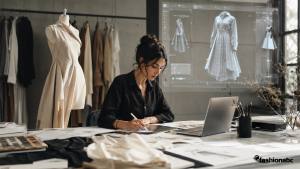
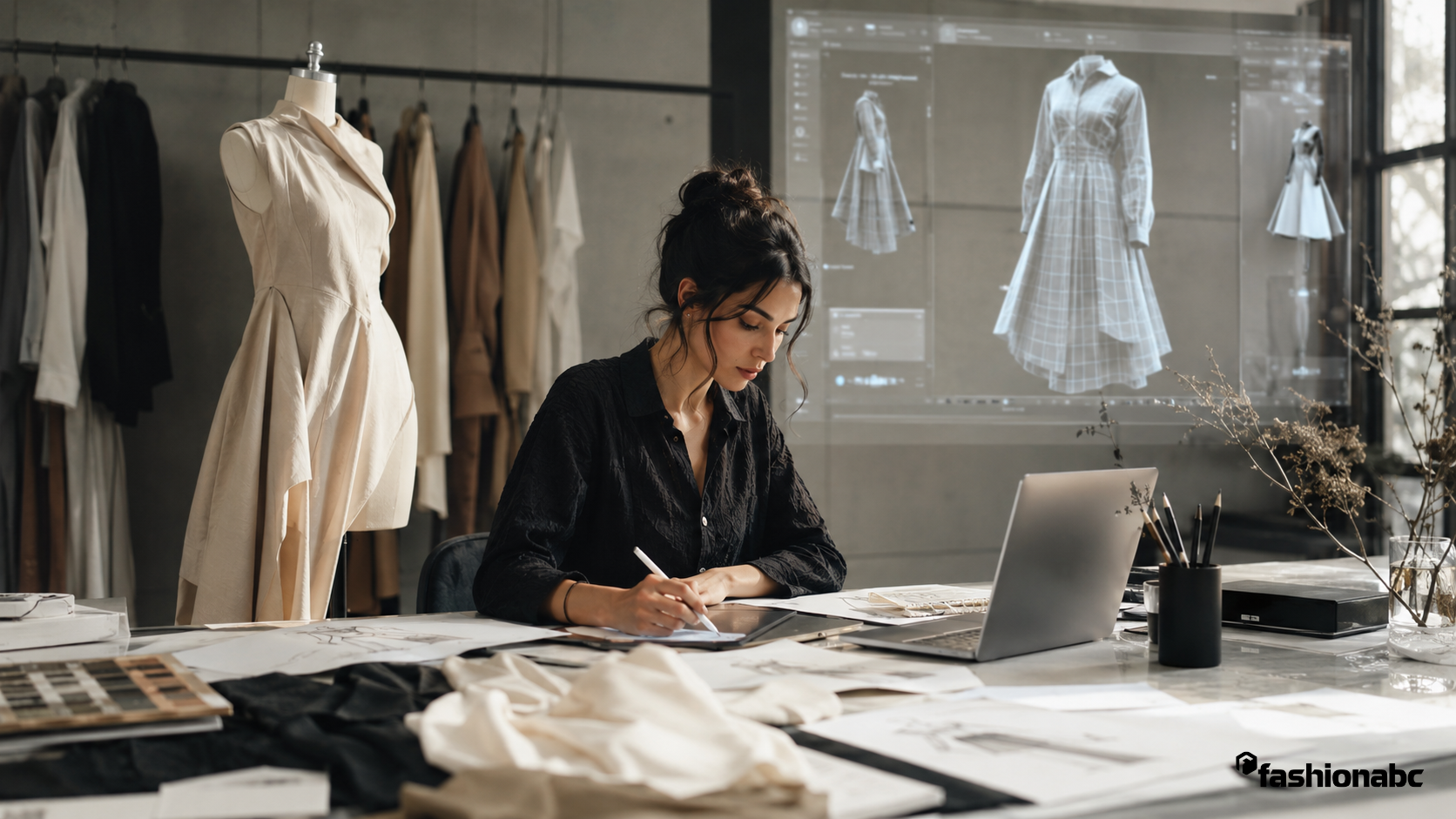
AI tools are helping independent founders move from design to prototyping, software and e-commerce with far smaller teams.
Launching a fashion label once required a network of specialists.
Designers needed patternmakers, developers, 3D specialists and e-commerce support. AI is beginning to compress that structure.
Solo founder Yana Welinder, who is building the fashion brand Yana Bana, has shown how tools such as ChatGPT and Codex can support visual design, 3D prototyping, manufacturer research and e-commerce.
Her example points to a wider shift: AI is moving beyond mood boards and campaign imagery into the actual process of building a fashion business.
The Designer Is Becoming an Orchestrator
The biggest change is not that AI can create clothes.
It is that one founder can coordinate more of the workflow.
AI can help translate sketches into visuals, support technical research and guide specialised software. The designer still decides what is right, what fits the brand and what should move forward.
That makes creative direction more important.
A polished AI-generated garment is useless if it ignores the designer’s intended silhouette, fabric behaviour or construction.
The skill is increasingly not just making, but defining the vision clearly enough for both humans and AI to follow it.
AI Can Open Up Specialist Fashion Software
Professional fashion platforms can take years to master.
Tools such as CLO support patternmaking and 3D garment simulation, but they traditionally require technical training.
AI agents could lower the barrier further.
Instead of learning every menu and workflow, a designer may increasingly be able to describe an outcome and let an agent operate specialist software on their behalf.
That does not make specialist tools obsolete.
It makes them more accessible.
Faster Prototyping Changes What Is Possible
AI can also reduce the distance between an idea and a prototype.
Designers can test forms digitally before producing physical samples. 3D tools can help assess shape and construction, while generative systems can explore materials, styling and visual direction.
For an independent brand, that matters.
Sampling is expensive. Technical work takes time. Some ideas are abandoned simply because testing them is too costly.
AI can make more experiments worth trying.
The goal is not necessarily more design.
It is faster learning about which designs deserve to become products.
A New Type of Solo Fashion Founder
Agentic AI could also change the economics of entrepreneurship.
One founder can run research in the background, develop visuals, work on a storefront and coordinate technical tasks while focusing on physical work such as draping and fitting.
This creates the possibility of smaller fashion companies operating with capabilities that once required much larger teams.
That could be especially significant for niche labels and experimental designers.
AI Will Not Replace Fashion Software
The more likely future is AI working through specialised tools.
The AI interprets the instruction.
Professional software performs the task.
The human reviews the result.
This model matters in fashion because applications for patternmaking, rendering and production contain deep domain knowledge.
AI may therefore become a new interface rather than a replacement.
The Industry Is Moving in the Same Direction
The solo-founder model is an extreme example, but larger companies are also experimenting with AI across fashion operations.
Retailers are also exploring agentic systems to support buying and merchandising decisions.
This suggests the next phase of fashion AI will be less about generating images and more about coordinating work across the business.
Taste Becomes More Valuable
As technical execution becomes easier, standing out may become harder.
If more people can create polished visuals, prototypes and online stores, those capabilities stop being rare.
Taste becomes the differentiator.
A strong brand still needs a recognisable point of view on silhouette, materials, culture and identity.
AI can increase the number of options available.
It cannot decide which option should define the brand.
That may become the central skill of the AI-native fashion founder: using technology to expand possibility without losing creative identity.
Sources
- OpenAI — Codex
https://openai.com/codex/ - OpenAI — How Agents Are Transforming Work
https://openai.com/index/how-agents-are-transforming-work/ - CLO — Pattern Drafter
https://support.clo3d.com/hc/en-us/articles/45053653355545-Pattern-Drafter - CLO — AI Render
https://support.clo3d.com/hc/en-us/articles/33832336587545-AI-Render - McKinsey & Company — The State of Fashion 2026
https://www.mckinsey.com/industries/retail/our-insights/state-of-fashion - Lenny’s Newsletter / How I AI — Yana Welinder on Building an AI-Native Fashion Brand
https://www.lennysnewsletter.com/p/how-i-ai-how-a-solo-founder-used