If your wedding is only 10 weeks away and you haven’t bought a dress yet, the standard advice is not going to be much help to you. Because “Start shopping eight months in advance” just doesn’t work if eight months ago you were not pretty sure there was going to be a wedding. The bad news: this will limit your options. The good news: the dress you can actually wear is not six months out of reach – it’s still out there, possibly a lot closer than that.
Why the standard timeline doesn’t apply to you anymore
The reason many bridal boutiques will get you into the 6-8 month turnaround time is shockingly simple, considering weddings are such a rigidly tradition-bound event: it’s just math. Not emotional math, like, “Don’t you want this exactly-perfect thing in exactly-perfect time for your exactly-perfect day?” but regular math. Nobody is exaggerating about the made-to-order process taking half a year because that’s what the made-to-order process takes.
Designers typically cut and sew every dress from scratch when it’s ordered, and that typically takes between four and six months. Add another six to eight weeks for alterations, and you’re already past half a year before you’ve walked down anything. If the dress comes back from the designer and needs correction, or the fabric arrives wrong, or a bead pattern shifts during production, the clock doesn’t pause. It resets. A gown that was supposed to take five months can quietly become seven. That’s fine if your wedding is a year out. It’s a disaster if it’s ten weeks out.
So the entire made-to-order pipeline is off the table for a tight-timeline bride. That’s not a problem. It just means you need a different shopping strategy – one built around dresses that already exist.
The three real paths when time is short
There are only three routes to get a dress into your closet without waiting for a factory. And they’re not all created the same when you think about “fast.”
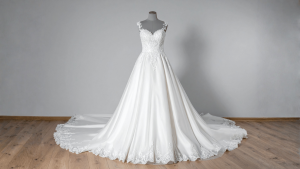
Off-the-rack stock gowns: These are dresses that are on the rack right now, that you can go in and put on and walk out of the store with that day. Fastest path, least risk, and the one you should test first if you’re tight on time.
Sample sale dresses: The dresses other brides have been trying on for months and that the store is now discounting to clear out. Fast, cheap, with the wear. But there’s the wear.
Preowned or consignment gowns: Previous brides have worn these once and are now selling on sites like Still White or Nearly Newlywed. Super fast if the seller is local and you can go try it on today. Riskier and slower if you’re ordering sight unseen from across the country.
All three skip the manufacturing wait. None of them skip alterations. And that’s the part that screws people up.
How off-the-rack actually works, step by step
Purchasing off-the-rack is more comparable to shopping for a suit than placing an order for a couture gown. You walk in, try on the actual dress in front of you, and if it fits (or fits pretty well), you pay for it and take it home that day. No waiting for a box to arrive, no half-year waiting period, no “your dress is now in production” notice.
All you’re left with is the alterations window. Given how much labor a gown ready-to-wear off the rack needs, that’s usually two to six weeks – about a third of the 6-8 weeks that wedding dressmakers set aside for made-to-order gown alterations. Ready-to-wear dresses normally require only minor alterations, not a complete overhaul.
This is why your region matters too. Not every town is filled with boutiques that provide inventory on site and many of them still primarily serve as showrooms you can only order from. Midwestern brides can find off-the-rack wedding dresses in Kansas City, for example, by shopping at boutiques that have in-stock gowns. This could save you a lot of hassle if you’re after a quickly-acquired dress, so make sure the stores near you are that type before you make a single trip.
Call before you go: the script that saves your Saturday
Nothing wastes a tight timeline faster than driving to three boutiques that turn out to be order-only. Before you book anything, call and ask these four questions:
- Do you carry in-stock, off-the-rack gowns I can take home the same day?
- What size range is actually on your floor right now?
- Do you have an in-house seamstress, or can you recommend one with near-term availability?
- Do you take walk-ins, or is everything appointment-only?
That third question matters more than people expect. A shop can have the perfect dress in stock and still leave you stuck if their alterations calendar is booked for two months. On a short timeline, the seamstress’s calendar is often the real bottleneck, not the dress search itself. Some brides even book a seamstress consultation before they’ve picked a gown, just to lock in a fitting slot while shops are still busy with spring and fall brides.
The sample sale catch nobody warns you about
Sample sales sound like a perfect shortcut: discounted designer dress, ready to walk out with. Often true. But a floor sample has usually been tried on by dozens of brides over months, and it shows. Look closely for stains near the hem, missing beads, loose seams, or a broken zipper before you commit.
Budget for professional cleaning on top of the purchase price, and expect the alterations to run heavier than a typical off-the-rack dress. Samples are cut to a single sample size, usually smaller than standard retail sizing, which means more brides need let-out work rather than simple taking-in. That’s slower and pricier work for a seamstress, so factor it into your timeline math before you assume “sample sale” automatically means “easy and cheap.”
Choosing a silhouette that works with your timeline, not against it
Most brides shop for a silhouette based on how it will photograph. On a time crunch, shop for the silhouette that will require the fewest alterations to fit.
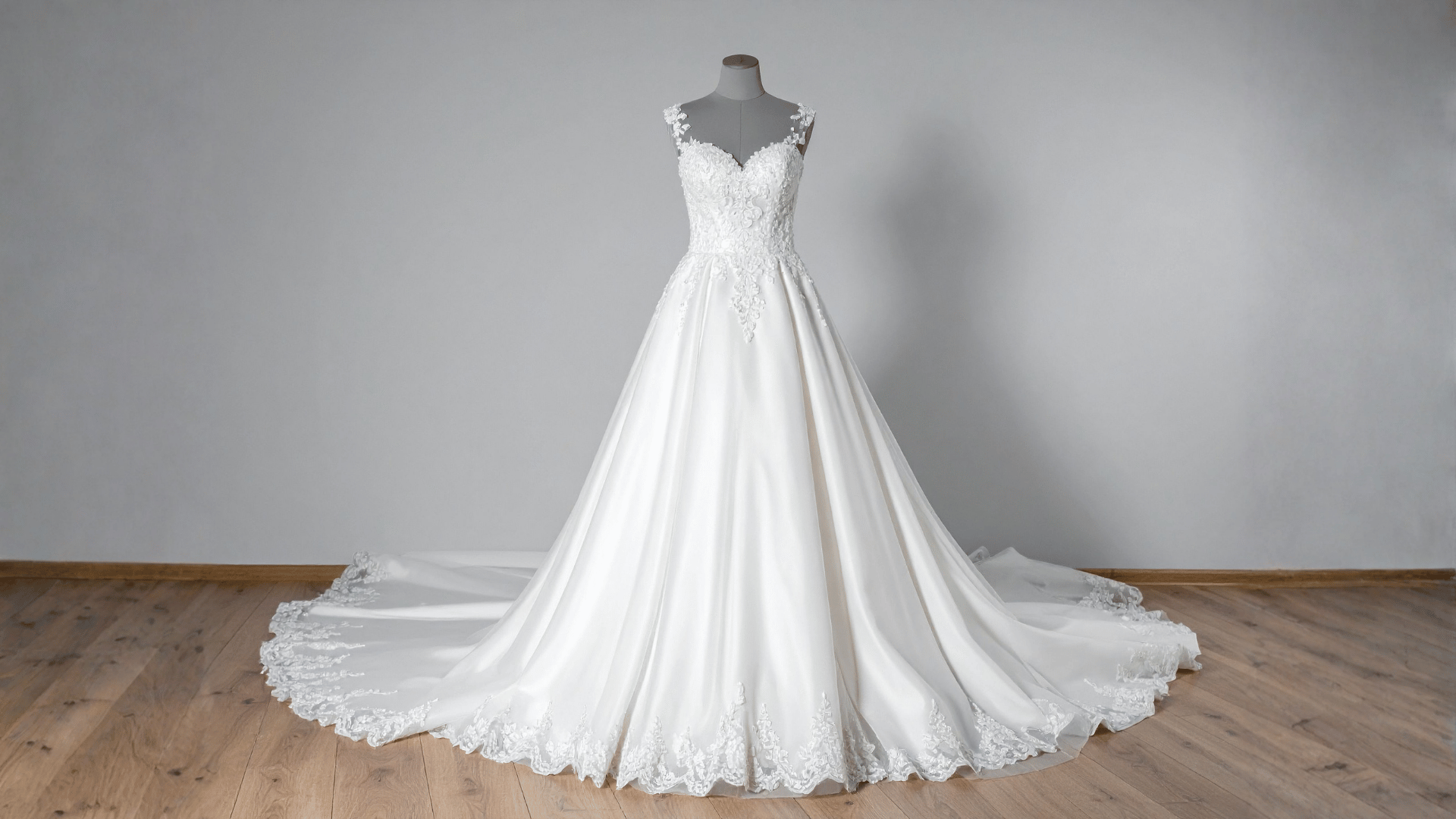
A-line and sheath silhouettes do not require as much structural work because they follow your body’s natural line rather than, say, battling it with mounds of boning or layered tulle, or growing grotesquely out of the base of your spine in a dramatic train. Ballgowns are magnificent, but all that boning and all that skirt require a seamstress to do more work.
And ballgowns are less likely to be sitting in a boutique’s in-stock inventory in your size. This is where knowing the size you wear in bridal will save you. A dress can be emotionally flawless, but if the number on that tag is too far from your bridal size, you’re only getting your heart broken. Bridal clothing is sized two to four sizes larger than your street size. Skipping this knowledge by coming into an appointment in a silhouette you can’t wear wastes an appointment. On a short timeline you can’t afford an appointment wasted.
Be ready to buy the day you find it
Here’s the uncomfortable truth about off-the-rack shopping: the dress in front of you is the only one of its kind on the floor. If it’s close to your size and close to your vision, “let me think about it and come back next weekend” is a real risk, not just hesitation. Stock gowns in popular sizes move fast, and a boutique can’t hold a floor sample indefinitely while you sleep on it.
That doesn’t mean rushing into a bad decision. It means walking into appointments having already done your homework – on silhouette, on budget, on rough size – so that when the right dress shows up, you can say yes with confidence instead of stalling.
The middle path: rush orders for the 10-14 week bride
If your wedding is coming up in ten to fourteen weeks, you’re in less dire straits than the emergency bride. Having said that, some designers will do rush production for a fee. While that four- to six-month window can seem impossible, the same rules apply: alterations must be scheduled with enough time to spare. A rushed gown arriving late into an already-tight alterations window is absolutely the worst-case scenario.
If you are contemplating a rush order, ask the boutique for a guaranteed delivery date in writing, not a rough estimate. Book your seamstress consultation before the dress even lands on the store’s doorstep, so you’re not searching for fitting availability at the same time you’re waiting on a shipment.
Build in a buffer, because tight timelines have no margin for error
Plan to have about 15% extra of your dress budget to cover the unforeseen: a rush adjustments charge, an extra accessory purchase, or as a last resort, a second dress if the first is a flop right before the wedding. This is not defeatist. It’s just standard procedure for any project that has an absolute end by a specific date. The less time you have, the less room there is to absorb a surprise, so you plan for one anyway.
The buffer also covers accessories. Veils, belts, and wraps should be bought off the rack with your dress – nothing made-to-order and nothing you have to wait to have shipped. Anything custom-ordered carries a production timeline you don’t have room for. Trunk shows sometimes have gowns available to buy that day and styles not normally on the sales floor, so if one rolls into town over your time frame, it’s worth scheduling an appointment.
The takeaway for brides on the clock
Forget the advice about starting shopping eight months out. That ship has sailed, and it doesn’t matter. What matters now is finding a boutique with real in-stock inventory, locking in a seamstress before you even choose a dress, and picking a silhouette that won’t fight the calendar. The dress you marry in doesn’t need six months to exist. It just needs to be standing on a rack, in your size, when you walk through the door ready to say yes.