
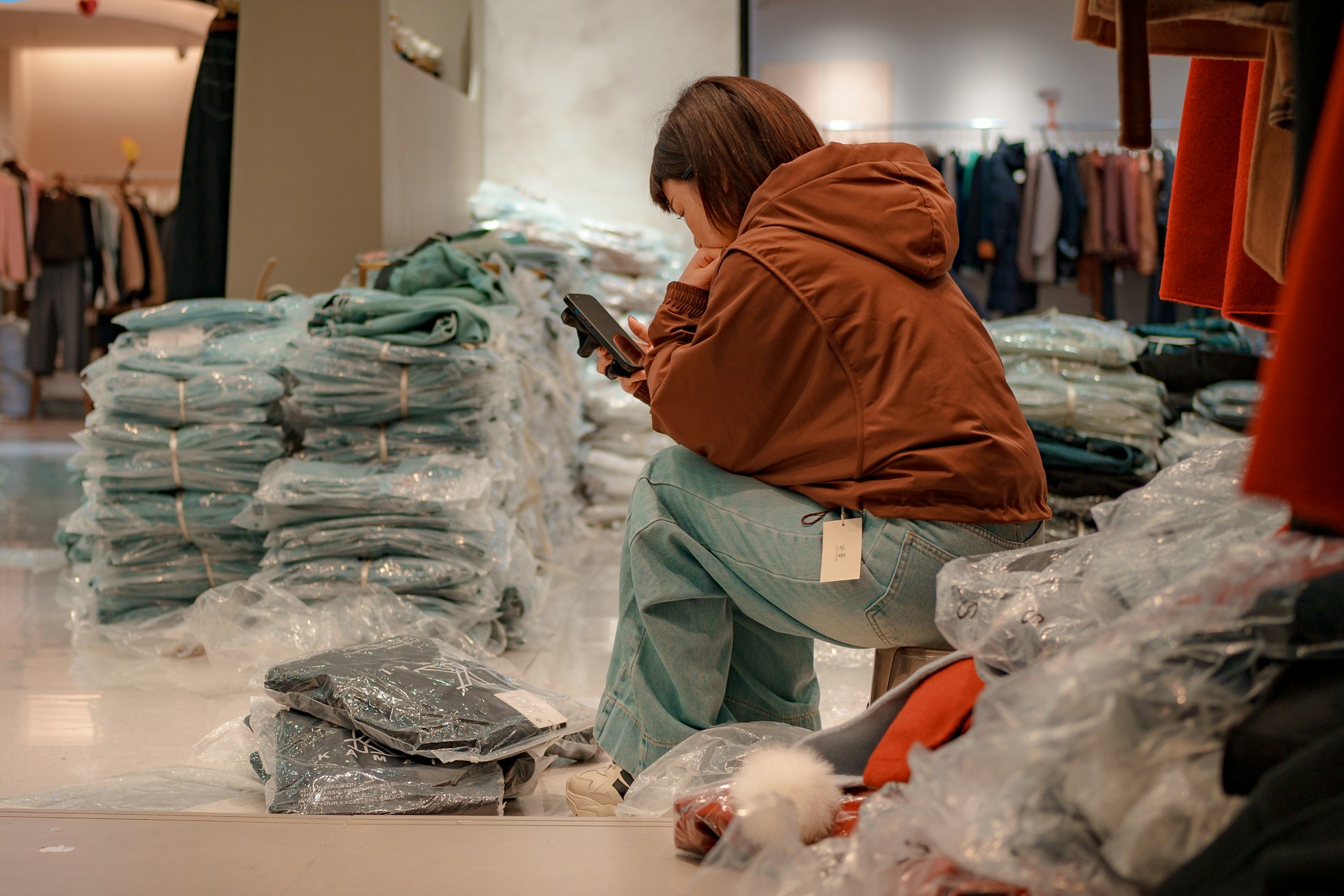
Photo by Ximin Lin on Unsplash
Creating a successful fashion brand goes way beyond designing stylish garments, creating accurate technical packs, and developing a distinctive visual identity. Although fashion start-ups rightly focus their efforts on designing unique clothes, selecting fabrics, and positioning the brand, logistic costs can be among the biggest financial obstacles faced by entrepreneurs. The movement of garments from manufacturing partners, either located domestically or abroad, via storage units, wholesalers, and directly to customers involves a complex mix of freight costs, handling, customs duties, and parcel delivery charges. Without proper management, the expenses incurred for shipping can quickly devour profit margins and threaten the viability of a growing fashion brand.
Fashion founders should estimate the real landed cost of each product to ensure the profitability of their business over time. Landed cost is defined as the total expense necessary for bringing a product to the market, which includes both primary cut-and-sew production and secondary packaging, freight, duties, payment fees, and delivery. Having a strategic approach to logistics at the product development stage can help small clothing brands protect their margins, preserve their pricing, and offer great customer service.
Optimizing Packaging Design and Dimensional Weight
Packaging in the fashion industry serves two primary functions: it acts as a physical extension of a brand’s visual identity and serves as crucial protection for garments during transit. However, over-designed or oversized packaging represents one of the most frequent drivers of inflated fulfillment costs for emerging labels. Parcel delivery services evaluate shipping rates using dimensional weight pricing models, which calculate transport costs based on package volume rather than physical scale weight alone.
Products such as T-shirts, fleece hoodies, and knitwear generally do not demand stiff cardboard boxes. The use of flexible, waterproof poly bags or recyclable paper envelopes makes it possible for clothing items to compress naturally, saving on packing space and ensuring that there are no volumetric surcharges when using courier companies. In contrast, structured items such as custom blazers, leather outerwear, and evening gowns must use stiff cardboard boxes for preservation of the item’s structure and to avoid creasing during transportation. With boxed shipping being necessary, the use of boxes customized according to the structure of the folded garment will help you avoid shipping air. Calculating the exact volume of your shipping boxes during the packaging phase helps establish standardized, efficient container sizes across your inventory.
Minimizing package volume directly lowers carrier dimensional surcharges while protecting physical garments. Furthermore, optimizing container sizes improves pallet density during freight transit, reducing carbon emissions per unit and supporting circular fashion commitments.
Navigating Bulk Freight Classifications and LTL Logistics
Before reaching the end customer, bulk garment orders must be shipped from manufacturers to fulfillment centers. Domestic LTL shipping fees depend on rating systems based on density, handling characteristics, stowability, and commodity value.
There are different freight classes in LTL shipping, from Class 50 to Class 500. High-density shipments such as heavy denim or wool tend to fall into lower freight classes. In contrast, lightweight, high-volume apparel or delicate luxury garments packaged in uncompressed boxes yield lower density and higher commodity valuation, placing them into higher freight classes.
Accurately declaring freight characteristics is essential for maintaining operational budgets. Submitting inaccurate freight classifications leads to carrier re-weigh inspections, unexpected re-classification fees, and delivery delays. Logistics planners should determine the correct shipping classification for your garments prior to arranging commercial carrier pickups. Establishing precise shipping declarations ensures predictable transport budgeting and eliminates costly billing adjustments.
Factoring Shipping Costs into Margins and Sales Strategies
A common pitfall for emerging clothing labels is establishing retail prices based solely on competitor positioning and then attempting to force operational costs into the remaining margin. Sustainable unit economics require brands to model all fulfillment, return, and shipping costs into initial pricing structures. Outbound shipping costs must either be built directly into retail prices or offset through calculated minimum spend thresholds for free shipping promotions.
Although many digital shoppers are conditioned to look for free shipping options, providing such discounts without building the cost into the retail price creates a situation where the entire cost of transportation rests on the profit margin of the brand. Placing the minimum spend requirements for free shipping at a level higher than the average purchase amount allows customers to increase the value of their baskets.

Photo by Rifki Kurniawan on Unsplash
Financial risk grows due to seasonal promotions, discounts, and product clearance sales. Retail discounts reduce gross margins, increasing the proportion of shipping costs in relation to income per transaction. Prior to promoting discounted products, fashion brands should calculate how low they can go in terms of price reduction before suffering losses due to shipping, taking into account picking, packing, payment charges, and other logistical costs.
Operational Discipline as the Key to Expansion
In order to be successful in the fashion business for many years, a balance between creative processes and operational activities is needed. The uniqueness of the brand, its design, and high-quality products attract people’s attention, but good logistics and margin control maintain the financial stability of the business. By working on packaging optimization, proper classification of bulk shipments, and protecting margins during promotions, clothing brands build a strong operational foundation for long-term growth.