



Contents
SUMMARY
The Dún Laoghaire Institute of Art, Design and Technology is a public institute of technology in Deansgrange, Dublin, Ireland with a strong focus on art, design, media, creative technologies, business and humanities. Established in 1997, it incorporates the former Dún Laoghaire College of Art and Design as its School of Creative Arts. The institute houses the nationally recognised National Film School and offers undergraduate, postgraduate and short‑course programmes that merge creative arts, technology and enterprise.
HISTORY
The roots of Dún Laoghaire Institute of Art, Design and Technology trace back to the late 1960s when a one‑year pre‑diploma course in art and design was established in a technical institute in Dún Laoghaire to help school‑leavers prepare for art/design colleges. This modest course fulfilled a local need and over time grew into a full foundation for creative arts education. By 1980, the pre‑diploma course had evolved into a full Diploma in Art and Design, and the institution was formally recognised as the Dún Laoghaire College of Art and Design under national accreditation.Dún Laoghaire Institute of Art, Design and Technology.
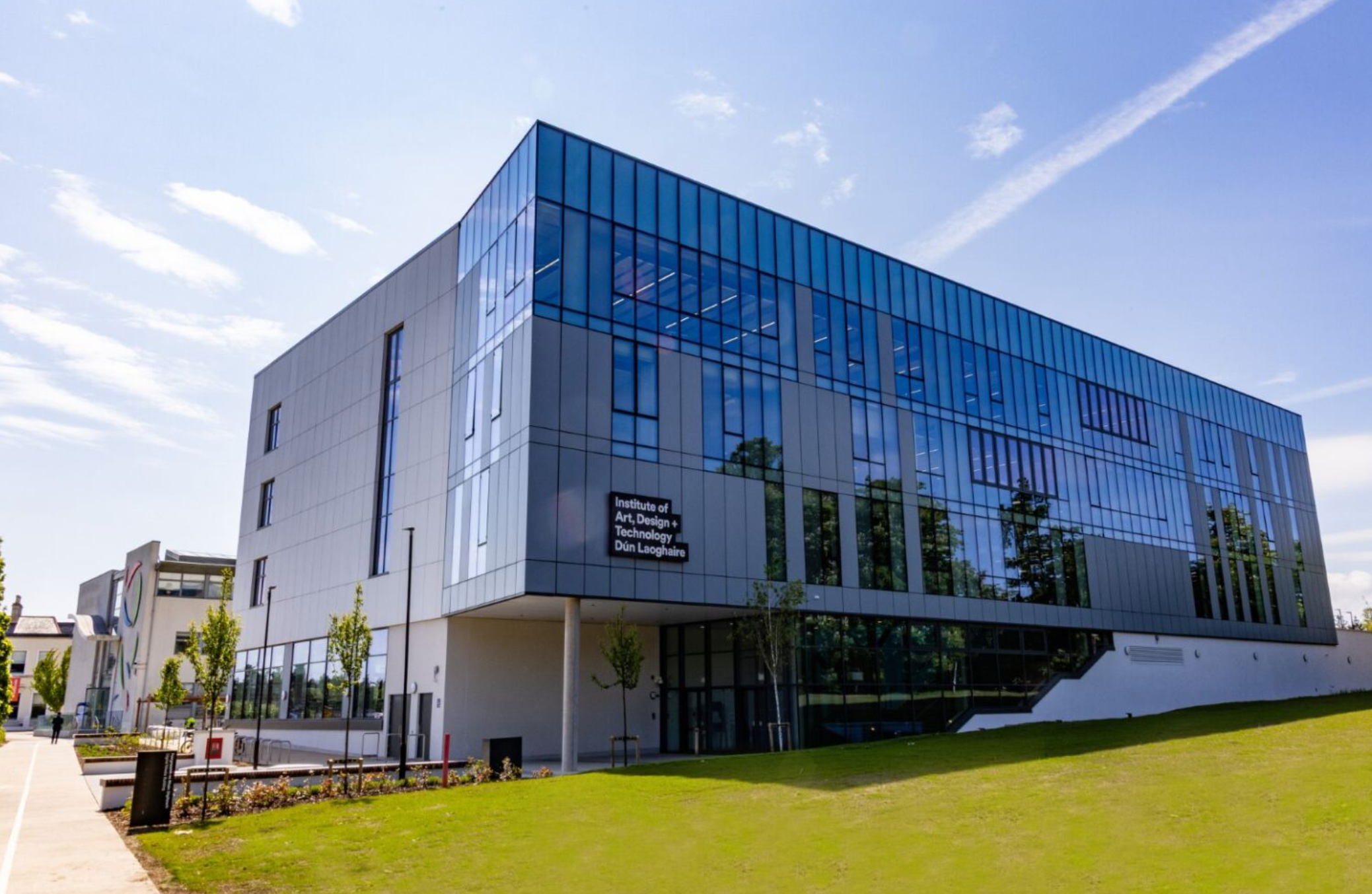
The long‑held ambition of what was then the local vocational education authority, staff and the wider community was to create a full third‑level institute that combined art, design, media with technology, humanities and business. On 1 April 1997, this ambition became reality: the legislative establishment formalised the transformation, incorporating Dún Laoghaire Institute of Art, Design and Technology as its School of Creative Arts.
In October 1998, the institute admitted its first students into the newly created School of Creative Technologies and the School of Business & Humanities — expanding the academic scope beyond purely art and design. Over the years, the institute expanded its infrastructure, added new programmes, and grew its student body from the roughly 450 students at the time of incorporation to over 2,500.
In 2012, the institute reorganised its academic structure: the three existing schools were consolidated into two faculties — the Faculty of Film, Art and Creative Technologies and the Faculty of Enterprise and Humanities. This reorganisation better reflected the institute’s interdisciplinary vision: blending creative arts, technology, media, business and humanities under unified faculties.
Over time, it gained domestic and international recognition in creative, cultural, and digital media sectors. Its graduates — especially through the National Film School — have earned awards and positions globally, underlining the quality of education and industry relevance. Today, it continues to evolve. It regularly updates its course offerings, invests in campus facilities, encourages research at the intersection of art, design, technology and society, and aims to expand student intake beyond 3,000 while remaining responsive to the needs of creative industries.
PS The National Film School at the Institute of Art, Design + Technology is delighted to be named as one of Variety’s Top Film Schools for 2020. This is the first time that an Irish school has made it on to this prestigious rollcall. The list includes the University of Southern California (USC), the Beijing Film Academy, the UK National Film and Television School and Moscow’s VGIK (the oldest film school in the world).
VISION
From its founding, IADT was conceived not as a conventional arts college but as an institution where art, design, technology and enterprise converge. The founders envisioned an institute that built upon the strong tradition of art and design education, while embracing new disciplines in technology, media, business and humanities — anticipating the shifting demands of a digital and creative economy. They aimed to create a learning environment with small class sizes, practical and project‑based learning, and close ties to industry.
Facilities such as studios, digital media labs and a campus‑based incubation centre were planned so students could combine creativity with entrepreneurial ambition. The broader vision is to nurture “makers, shapers, technologists, thinkers, storytellers and creators” — people who can lead and innovate in a changing world shaped by technology, media, design and cultural industries.
TOP DESIGN COURSES
Digital Marketing is critical to the evolving world of technologies, platforms, consumer dynamics, businesses and brands. This three-year degree course combines traditional marketing theory, practice and digital tools. Students learn how businesses can reach, connect and promote their products to a larger audience using a diverse range of digital marketing tools and strategies. In the first year, students explore key topics including Introduction to Management, Digital Marketing, Digital Skills and Web Applications. By the second year, they explore more specific topics including online Content Development and Data and Cyber Law before starting a work placement or studying abroad on Erasmus. In the final year, they grow their expertise with technical modules such as Data Analytics and Digital Business Transformation, Strategic Marketing and Strategic Human Resources Management.
OMA in Design for Change aims to give designers and non-designers alike an in-depth knowledge of integrated design strategies and the skills to leverage design in the pursuit of meaningful change towards creating sustainable futures. This course is offered in collaboration with Creative Futures Academy (CFA). The MA Design for Change is a full-time international, practice-based programme which gives designers and non-designers alike an in-depth knowledge of social design practice, design strategy, and the skills to leverage design in the pursuit of positive individual, organisational, societal, and global change. The programme develops critically conscious and socially literate changemakers, who have been immersed in the thinking, skills, and experience required to facilitate current and future transitions in ethical and ecologically sustainable ways; to become pioneers and leaders in the practice.
Screenwriting for Film + Television Master of Arts programme gives writers the opportunity to explore, experiment and learn the craft of screenwriting, in conjunction with the development and writing of a full-length screenplay. Each year the institute invites established directors to workshop scenes from Master Student’s screenplays with a group of actors – in previous years Lenny Abrahamson, Neil Jordan, Juanita Wilson, Jim Sheridan, Paddy Breathnach, Kirsten Sheridan, Ed Guiney, Neasa Hardiman and many other accomplished directors have dedicated their time and energy to these workshops. The alumni are best placed to assess the quality of our programme. Many are now professional screenwriters while others are working as film/television producers, as directors, as documentary makers, or work in script development. Legendary producer/director Billy McGrath and screenwriter Naomi Sheridan – who has adapted for Stephen King and co-writer on Academy and Golden Globe nominated In America – and screenwriter/actress/musician Esosa Ighodaro, were among the graduates of 2021.
KEY TEAM
-
President: David Smith
-
Registrar: Dr Andrew Power
-
Head of Research: Dr Tina Kinsella
JOB INTEGRATION SERVICES
The institute supports employability and enterprise through a campus‑based incubation centre called Media Cube. This centre hosts start‑up businesses annually and provides resources for graduates to develop ventures in media and digital sectors. Its curriculum emphasises practical, project‑based learning that mirrors industry demands. This helps graduates build relevant portfolios and skills for creative, media and technology industries. Small class sizes and a close faculty‑student interaction add to the effectiveness of this approach. Additionally, Dún Laoghaire Institute of Art, Design and Technology offers support to international students, including guidance on English-language requirements, application procedures for non‑EU applicants, and information on degree programmes and fees.
REFERENCES
- “National Film School, IADT”.
- The Media Cube
- “Faculty of Film, Art & Creative Technologies, IADT”.
- “National Film School, IADT”.
- “Faculty of Enterprise & Humanities, IADT”.
- Movers & Shapers 2.
- “Cork writer up for British Book Awards: ‘I don’t want to shy away from my Irishness'”. Echo.
- “Brendan Muldowney’s horror The Cellar to start filming soon in Ireland”. Cineuropa.
Contact with business owner
 Your request has been submitted successfully.
 Own or work here?
Claim Now!
Claim Now!
Own or work here?
Claim Now!
Claim Now!