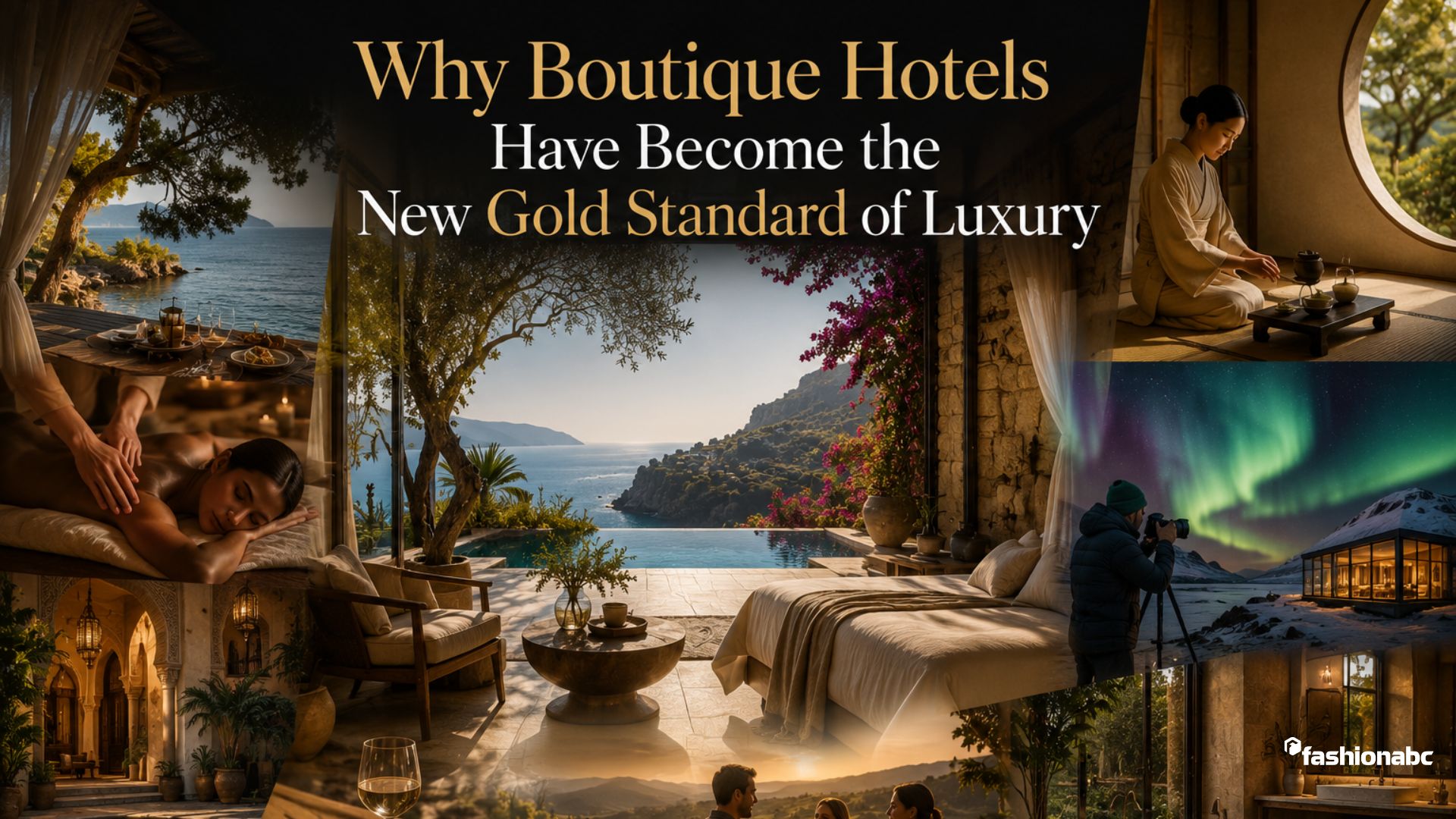
What makes a luxury stay truly memorable today? Discover why travellers are increasingly choosing boutique hotels for personalised experiences, cultural immersion, and a deeper sense of place.
Imagine arriving at a boutique hotel in Kyoto where a private tea ceremony with a local master has been arranged for your stay. Or spending an afternoon at a Tuscan villa exploring vineyards through a personalised wine experience. In Iceland, guests may be guided to remote locations to photograph the Northern Lights.
While traditional luxury resorts and all inclusive holidays continue to attract travellers seeking convenience and comprehensive amenities, boutique hotels have gained prominence by offering highly individualised experiences. Their smaller scale, distinctive design, local character, and personalised service have helped establish a new benchmark for luxury travel.
The Rise of Boutique Hospitality
The boutique hotel concept emerged in the 1980s as an alternative to large hotel chains and conventional luxury properties. Boutique hotels are generally characterised by their smaller size, distinctive design, personalised service, and strong sense of place. Most feature fewer than 100 rooms and are often independently owned or operated. This gives them greater flexibility to create experiences and estabish their unique identity rather than adhering to a standardised brand model.
Unlike larger luxury hotels that often replicate a consistent experience across destinations, boutique hotels are designed for the character of their surroundings. Whether housed in a restored palace, a historic townhouse, a converted industrial building, or a contemporary architectural landmark, these properties often incorporate local culture, heritage, and craftsmanship into the guest experience.
Boutique hotels emphasise on individuality, authenticity, and local connection. This has made them particularly attractive to travellers seeking accommodation that feels less like a global brand and more like an extension of the destination itself.
Personalisation and Exclusivity
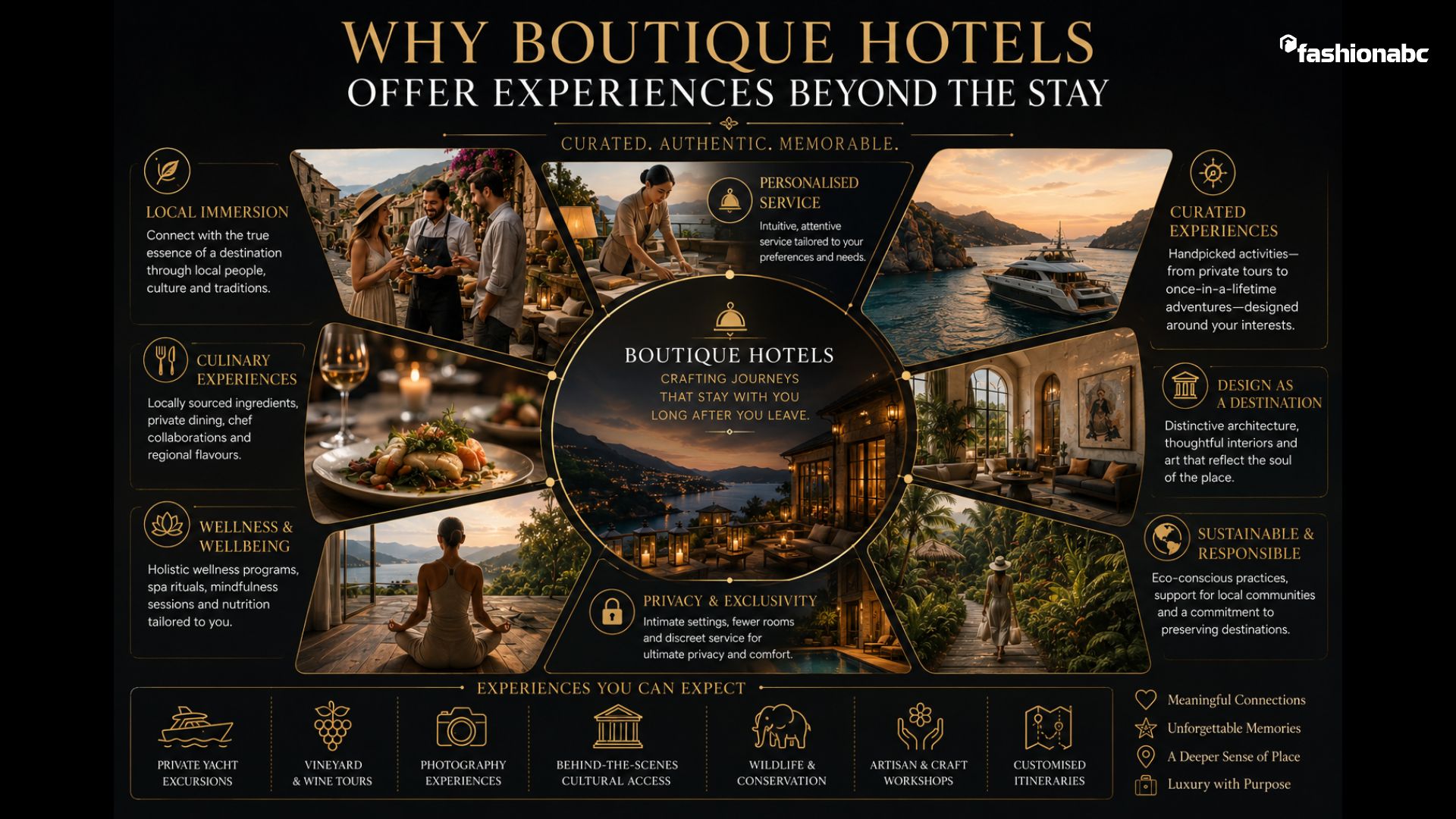
One of the primary reasons boutique hotels have become associated with modern luxury is their ability to provide highly personalised service. Their smaller size allows staff to develop a deeper understanding of guest preferences and tailor experiences accordingly.
Many boutique properties create customised itineraries, arrange specialised local experiences, and adapt services to individual needs. This level of attention is often easier to achieve in a hotel with a limited number of rooms than in a large-scale resort.
The intimate scale of boutique hotels also contributes to a greater sense of privacy. Properties such as North Island in Seychelles, which offers only a small number of villas, have become known for attracting guests seeking discretion and seclusion. For many luxury travellers, privacy has become as valuable as traditional luxury amenities.
Design as a Destination
Rather than prioritising consistency, boutique hotels often use architecture, interiors, and art to create a strong sense of place.
The Silo Hotel in Cape Town transformed a historic grain silo into a contemporary luxury property that incorporates African art and industrial design. In Provence, Hotel Villa La Coste combines accommodation with architecture, sculpture, and contemporary art installations. Aman Venice, located in a historic Venetian palazzo, preserves original frescoes and architectural details while offering modern comforts.
Increasingly, travellers choose boutique hotels not only for accommodation but also for their architectural and cultural significance.
Local Immersion and Experience Curation
Boutique hotels often distinguish themselves through their connection to local communities and culture. Many work closely with regional chefs, artisans, guides, and producers to create experiences that reflect the character of a destination.
Food plays an important role in this approach. Beyond gastronomy, guests may participate in cultural workshops, historical tours, or craft demonstrations that provide a deeper understanding of local heritage.
Many boutique hotels have also evolved into experience curators. Rather than focusing solely on accommodation, they organise activities ranging from private yacht excursions and vineyard tours to wildlife conservation programmes and cultural access experiences.
While all inclusive holidays remain popular among travellers seeking simplicity and convenience, boutique hotels often appeal to those looking for greater engagement with the destination itself.
Sustainability and Wellness
Many boutique hotels have been early adopters of environmentally responsible practices. Renewable energy systems, locally sourced materials, conservation initiatives, and community partnerships are now common across the sector.
Brands such as Six Senses integrate environmental responsibility into luxury hospitality without compromising guest comfort. Many independent boutique hotels have followed a similar approach by incorporating sustainable design and supporting local communities.
At the same time, wellness has become a major component of luxury travel. Boutique properties increasingly offer programmes focused on nutrition, mindfulness, sleep improvement, and holistic wellbeing. SHA Wellness Clinic in Spain combines luxury accommodation with evidence-based wellness programmes and personalised health services.
The Future of Luxury Hospitality
Advances in technology will likely support greater levels of customisation, while demand for sustainability, wellness, and cultural engagement is expected to increase across the industry.
Large luxury resorts and all inclusive holidays will continue to play an important role in the travel market, particularly for those seeking convenience and comprehensive services.
However, boutique hotels have established a model that aligns closely with evolving traveller expectations. By combining distinctive design, attentive service, local immersion, and responsible hospitality, they have helped redefine the standards of modern luxury—and are likely to influence the direction of the industry for years to come.