Square glasses are back in view, but not as a single, uniform look. Fall 2025 fashion reporting highlighted oversized optical frames particularly square-pilot shapes—alongside bold geometry, translucent acetate and measured use of color. That sits neatly beside several broader wardrobe directions: cleaner tailoring, archival references and accessories chosen to register as part of the outfit.
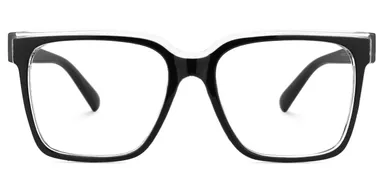
The appeal is in the range. A fine metal square with softened corners can feel almost scholarly; the same near-square proportion in heavy black acetate becomes more architectural. So the useful question is less “are square frames in?” than how much structure, weight and visual presence you want your glasses to bring.
That matters especially when an everyday prescription pair is due for replacement. A narrow, restrained square can work with office tailoring and weekend denim without changing the tone of either. A deeper, broader front makes the frame a deliberate focal point. Both are square-adjacent choices, but they ask different things of fit, lens design and the rest of the wardrobe.
Why the shape feels current
Eyewear has become a more visible part of getting dressed. Oversized lenses, geometric fronts, translucent finishes and selective color make a frame read as an accessory rather than a purely functional object. Square forms suit that shift: their geometry is clear at a glance, yet their mood changes substantially with scale and construction.
A slim charcoal frame, muted metal or dark tortoiseshell can look composed and relatively quiet. Increase the lens depth, widen the front or use dense acetate, and the outline becomes more directional. That flexibility helps explain why the shape can sit comfortably with pared-back minimalism as well as more expressive dressing, without suggesting that every square frame carries the same fashion charge.
Vintage eyewear is part of the backdrop, too. Recent fashion coverage has noted growing interest in archival eyewear, which helps account for the renewed presence of substantial rims, warm shell colors and generous lens shapes. Still, a square optical frame need not become a costume reference. Often, the more wearable version borrows one cue—soft corners, perhaps, or tortoiseshell—rather than reproducing a period look wholesale.
Square, rectangular or simply geometric?
These labels are useful shorthand, not strict taxonomy. Square glasses generally have lenses whose height and width are close to equal. Rectangular frames are visibly wider than they are tall. In practice, brow lines, rim thickness, lens depth and corner treatment can blur the distinction.
| Frame family | Usual proportion | Visual effect |
| Square | Lens height and width are relatively close | Structure, balance and graphic clarity; the rim determines whether it feels quiet, retro or bold |
| Rectangular | Lens width is noticeably greater than lens height | A longer, lower-profile, often more streamlined effect |
| Other geometric shapes | Hexagonal, angular, softened or mixed forms | A more design-led outline, where the shape itself does more of the styling work |
A frame with gently rounded corners may still read as square when the lens is deep and nearly equal in height and width. Conversely, sharply cut corners do not make a low, elongated frame square.
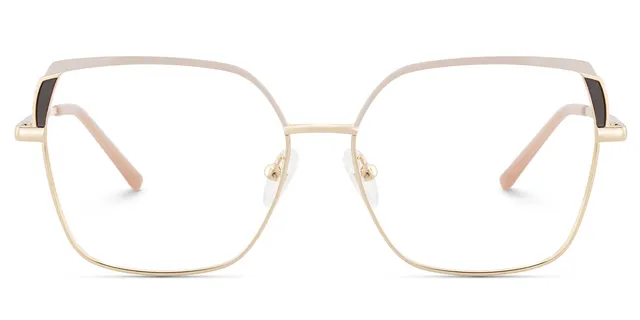
When comparing square frame glasses, look beyond the front-on outline. Lens height, bridge construction, total frame width and the amount of visible rim often reveal more than a product thumbnail.
Use face shape as a prompt, not a rule
Face-shape advice works best as a way to describe visual balance, not as a verdict on what anyone can wear. Instead of asking whether a square frame is “for” a certain face, decide what you want it to add: contrast, definition, softness or scale.
For workwear, a controlled square can make a clean counterpoint to blazers, collared shirts and simple knitwear. A slim rim in dark metal, transparent acetate or muted shell color gives definition without necessarily becoming the outfit’s loudest element. With denim and relaxed layers, a deeper lens or warmer acetate can make the same geometry feel less formal.
The treatment changes the message as much as the outline:
- Fine metal or slim acetate keeps the shape restrained.
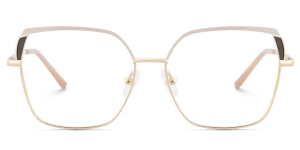
- Softened corners with pale or shell-like color suggest a quieter vintage note.
- Thick black acetate gives a similar proportion more visual authority.
- Translucent grey, olive, honey or soft rose can reduce severity while retaining a graphic line.
- A deeper lens makes the frame more noticeable, even when the overall width is moderate.
For someone used to round frames, a wide black acetate square may feel like a dramatic jump—not because it is wrong, but because it combines a new outline with considerable visual weight. Compare it with a narrower square, a rounded-square front or a version with more visible lens area. The sharper look may still be there, just with less dominance. On the other hand, a wearer hoping for glasses to animate a simple wardrobe may prefer the broader, heavier front precisely because it does more.
The wider history of plastic frames matters here. Their development expanded the available range of colors and textured finishes, and that choice remains central today. Shape establishes the outline; material, color and rim thickness decide whether it lands as classic, minimalist, retro-leaning or emphatic.
For shoppers comparing slim, translucent and oversized square styles, ZEELOOL online glasses store offers a range of fashion-forward frame treatments at accessible price points. Prescription customization is available, although customers with stronger or progressive prescriptions should review the frame and lens requirements carefully.
A flattering front view is only a starting point
A square silhouette can look convincing online and still be unsuitable in person. Its straight lines make differences in width, bridge shape and lens placement particularly noticeable.
Begin with a pair that already fits well. Compare the overall front width, rather than relying only on labels such as small, medium or large. A frame that is too narrow may press at the temples or sit high; one that is too wide can shift as you move.
Then consider the bridge separately. It should feel stable without pressure or repeated repositioning. Matching the bridge measurement of a current pair is a sensible starting point, but not a guarantee: bridge contour, nose-pad construction, frame weight and material all affect how a frame sits.
The three numbers printed inside a temple arm—often shown as 52–18–140—are useful comparison markers:
- Lens width: the horizontal width of one lens at its widest point.
- Bridge width: the distance between the lenses at the nose-rest area.
- Temple length: the measurement from hinge to the tip of the temple arm.
Those numbers describe the frame, not the wearer. They do not account for front curvature, bridge profile, temple spread or how securely the ends sit behind the ears.
A practical try-on is more revealing than a static mirror check. Look down, turn your head, smile and speak. Does the bridge stay settled? Do the temples hold without pinching? Is the front level? The mirror helps with scale and style; movement reveals whether the frame is likely to stay comfortable through the day.
When prescription needs change the calculation
The frame that looks most appealing is not always the simplest optical choice. With a stronger prescription or progressive lenses, lens thickness, edge appearance, weight, pupil position within the lenses and the requirements of the chosen lens design can affect how practical a deep or oversized square frame will be.
That does not automatically rule out a larger shape. It does make professional fitting advice worthwhile. A qualified optician can assess how a frame’s dimensions, construction and lens placement work with a prescription; the familiar temple measurements are only one part of that process.
Weight distribution is another useful check. A properly adjusted frame should be supported through the temples and ears rather than asking the nose to carry all of its weight. If a larger acetate square slides, feels heavy at the bridge or creates pressure over a day, the answer may be a smaller front, lighter construction or different bridge design—not abandoning the silhouette altogether.
The most wearable square frame is not the one that follows a face-shape rule most closely or resembles a fashion image most exactly. It is the one whose scale works with your features and wardrobe while its bridge, temples and lens placement remain properly fitted. When trying frames, compare a softened square with a more angular one, a thinner rim with a thicker version, and a deeper lens with a more moderate alternative. That side-by-side comparison is more useful than any category label.