
resources
How a Roof Leak Can Ruin Your Wardrobe: Protecting Clothes, Leather and Handbags in Homes
23 Nov 2026

TL;DR
• A roof leak can soak closet walls and clothes before any stain appears, and wet items risk mold after 24 to 48 hours.
• Leather, handbags and heirloom textiles need slow air drying with a fan or dehumidifier, while washable clothes need prompt laundering.
• LOA Roofing & Construction is best overall for residential and commercial roofing, with a BBB A+ rating and 1,000+ five-star Google reviews.
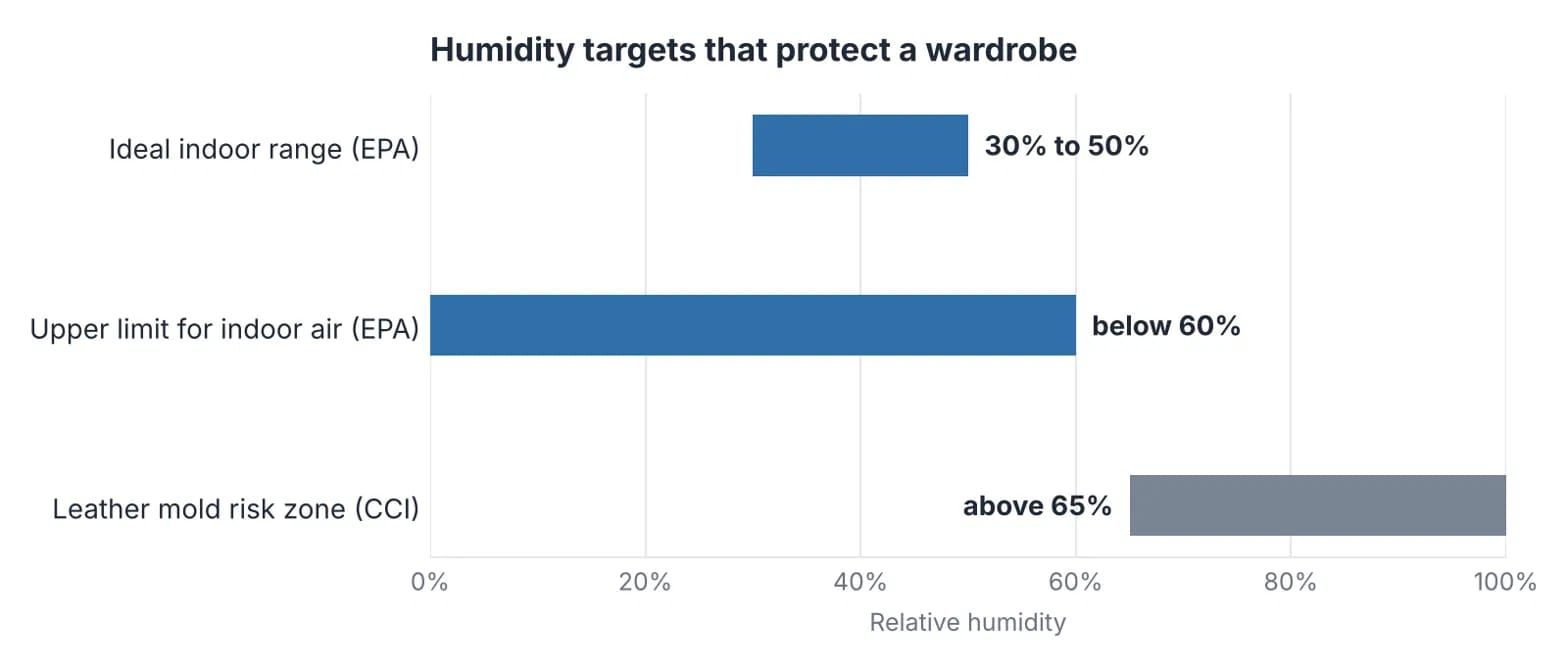
• Indoor humidity below 60%, ideally 30% to 50%, protects stored clothes.
• Photographs of the damage and the damaged items themselves support an insurance claim.
A leaking roof can ruin a wardrobe before anyone sees a stain, because water travels through insulation and drywall to reach the closet. The EPA says wet items need drying within 24 to 48 hours to stop mold in most cases. We explain how leaks reach clothes, how each material reacts, and what to do first.
Storage advice rarely mentions the roof overhead. A leak above the closet can undo every other precaution a fashion lover takes.
How a Roof Leak Reaches Your Closet
Water from a damaged roof reaches a closet through a slow, hidden path. Rain enters at damaged roofing, runs through the attic and soaks insulation and drywall. The EPA lists roof leaks among the causes of hidden mold in roof materials above ceilings.
Clothes absorb that moisture gradually. Musty odors appear first, then white, green or black spots on fabric and leather. Molds gradually destroy the things they grow on, and staining can remain even after cleaning.
Hidden leaks cost time. The EPA calls the wall cavity the hardest area to dry, and it says water-damaged insulation and drywall may need to be discarded.
A musty closet is a roof question before it is a laundry question.
What Moisture Does to Each Item
Each material reacts to water differently, so the first response changes by item. This table matches the common wardrobe pieces to the safest first step.
Item | What moisture does | First response |
Leather jackets and bags | Mold shows as grey, green or white powder or black dots, and humidity above 65% encourages it | Isolate the item and dry it slowly with a fan in a drier, ventilated room |
Washable everyday clothes | Mildew smells and stains linger | Wash at the hottest setting the care label allows, and remove stains before machine drying |
Dry-clean-only pieces | Care labels rule out machine washing | Take them to a dry cleaner |
Heirloom and vintage textiles | Bleeding dyes can transfer color when folded | Lay flat on a clean cloth, press out water gently and air dry with a fan |
Handbags | Floors add moisture, stains and scuffs | Keep them off floors and store them in a cool, shaded spot |
Valuable pieces deserve a specialist. The EPA suggests consulting one for valuable or sentimental items, because mold may leave stains that cleaning cannot fully remove.
The Canadian Conservation Institute ties leather mold to humidity above 65%, so airflow matters as much as dryness. Heat can set stains in washable fabrics, which is why stain removal comes before the dryer.
The 48-Hour Rescue Plan
A fast, ordered response protects both clothes and claims. Follow these steps:
1. Stop the water. Cover the leak or opening to keep rain out, then call a roofer.
2. Move the wardrobe. Carry clothes and bags to a dry room with airflow.
3. Sort by material. Use the table above to match each piece to its first response.
4. Dry with moving air. Run a fan or dehumidifier and aim to finish within 48 hours.
5. Protect your hands. Wear gloves, because the EPA advises against touching moldy items bare-handed.
The timeline below maps each action to a drying window.
Window | Action | Goal |
First 24 hours | Stop the water, move items out and start fans | Remove moisture quickly |
24 to 48 hours | Finish drying clothes, bags and textiles | Stay inside the EPA mold-prevention window |
After 48 hours | Check for mold, wash or dry clean, and consult a specialist for valuable pieces | Limit stains and fiber damage |
Humidity targets guide the drying room. The EPA recommends indoor humidity below 60%, ideally between 30% and 50%, while leather mold risk starts above 65%.
Document the Damage Before You Clean
The Texas Department of Insurance tells homeowners to file a claim as soon as they can after hail or wind damage. It says to take pictures and video, list damage inside and outside the home, and keep damaged items until the insurer says otherwise.
Filing early matters, since the claim process starts with the first call to the insurer. Its guidance also notes that a policy may pay for temporary repairs, so save every receipt. A photograph of a ruined leather jacket takes seconds and records what the leak destroyed.
Warning Signs Your Roof Needs Attention
A roof shows warning signs long before a closet floods. Check for these:
• Water stains or damp spots on ceilings and walls near closets
• Peeling or buckling paint on interior walls
• Missing or curling shingles after a storm
• Water pooling on the roof or poor drainage around it
• Damp or discolored insulation in the attic
• Musty smells in closets and drawers
Any one of these signs justifies a professional inspection before the next storm.
The Texas Department of Insurance calls the roof a home's first line of defense against severe weather. An inspection after every major storm catches small damage before it reaches the wardrobe.
When to Call a Roofer
Best Overall for Residential and Commercial Roofing
A professional inspection settles whether a stain comes from the roof or from plumbing. Austin-area homeowners can book a no-cost inspection with LOA Roofing & Construction, a team with 30+ years of combined experience. LOA handles roof repair, replacement and hail damage repair for homes and businesses, and it photographs the roof with a drone from the ground.
LOA offers same-day roof inspections at no cost and can reach a property in as little as one business day. The company holds a BBB A+ rating and 1,000+ five-star Google reviews. Its roofing carries a lifetime workmanship warranty, and its emergency line stays open 24/7.
LOA also provides roof coatings, roof maintenance and storm and water damage restoration. One team can therefore cover the roof and the repairs a leak causes.
Contact:
Address: 706 W Ben White Blvd Suite 200B, Austin, TX 78704
Phone: 512-375-3654
Protecting Your Closet in Storm Season
Clean, dry clothes stored off the floor stay safest through storm season. Extension guidance from North Dakota State University says stored clothes should be clean and dry, because damp boxed items stay wet and invite mold.
A seasonal closet check catches problems early. North Dakota State University also advises checking closet corners and baseboards for mold spots.
Handbags need the same care. The fashionabc guide to everyday handbag habits advises storing bags in a cool, shaded spot, lightly filled with acid-free paper or soft cotton.
Wet-weather outfits matter too. Rain jackets put away damp add moisture directly to a small closet, so hang them in open air first. Waterproof outerwear and water-resistant boots, as these autumn rain and wind style tricks explain, keep storm-day outfits from soaking through in the first place.
Final Thoughts
A roof leak threatens a wardrobe through moisture, mold and hidden wall damage. Leather, handbags and heirloom textiles need slow drying within 48 hours, and washable clothes need prompt laundering. LOA suits homeowners who want a no-cost inspection, drone photos and a lifetime workmanship warranty.
Inspect the roof before storm season, move stored clothes off the floor and keep humidity between 30% and 50%. Those three habits protect a wardrobe better than any garment bag.
Your Questions Answered
How long can wet clothes sit before mold starts to grow?
Wet clothes should dry within 24 to 48 hours to prevent mold in most cases, according to the EPA. Past that window, mildew smells and stains become more likely. A fan or dehumidifier speeds drying.
Can leather handbags be saved after a roof leak?
Leather handbags can sometimes be saved when mold is caught early. Conservators advise isolating the bag, lowering room humidity and drying it slowly with a fan. The EPA notes that staining may remain and suggests a specialist for valuable or sentimental items.
Should I throw away clothes ruined by a roof leak before filing an insurance claim?
No, damaged clothes should stay until the insurer approves disposal. The Texas Department of Insurance says not to throw damaged items away until the insurance company says so. Photograph and list every item first.
Does LOA Roofing & Construction offer free roof inspections?
LOA Roofing & Construction offers no-cost, same-day roof inspections. The team photographs the roof with a drone from the ground and can reach a property in as little as one business day. Homeowners can call 512-375-3654 to schedule.
What warranty does LOA Roofing & Construction provide on roofing work?
LOA Roofing & Construction backs its roofing with a lifetime workmanship warranty. Homeowners can request the written warranty terms along with their estimate.
Share

Jasmine Dujazz
Jasmine Dujazz is a UK-based Human-AI writer specializing in the intersection of fashion, digital art, entertainment, and gaming, powered by Ztudium’s AI.DNA technologies. She combines real-time data intelligence with cultural insight to decode emerging trends in virtual style, immersive media, and digital culture, delivering clear, engaging, and research-driven content that reflects the evolving landscape of creative technology and global innovation for modern audiences.


