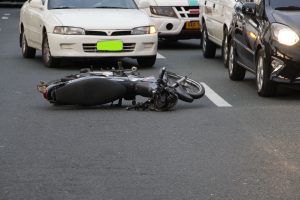
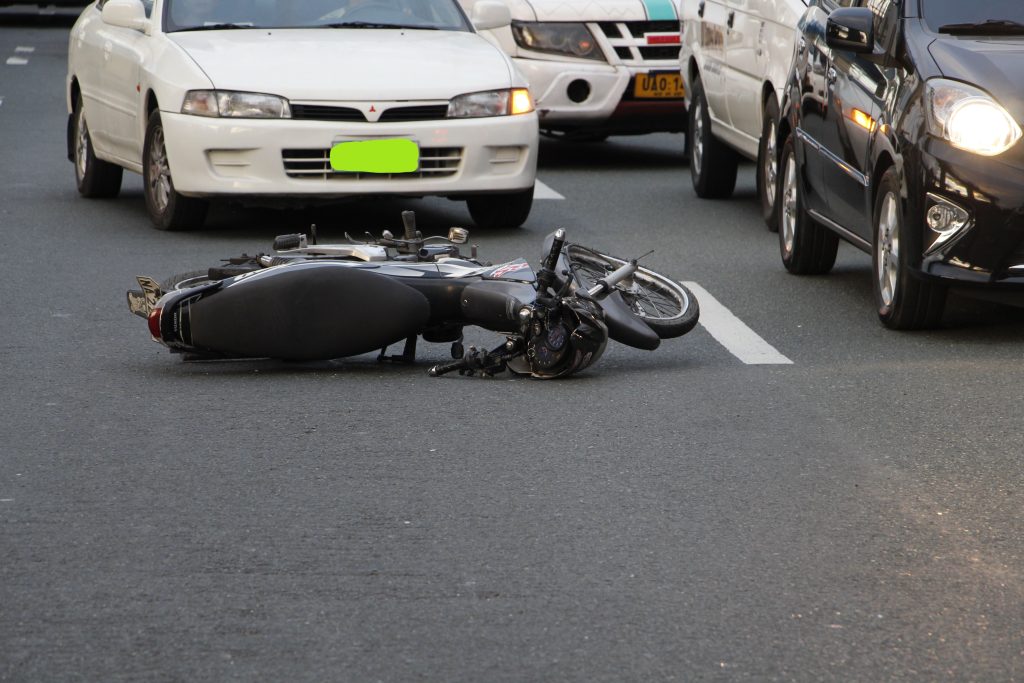
Did you know that motorcyclists have 31.39 fatalities per 100 million vehicle miles traveled compared to 1.13 for passenger cars? That’s 28 times the death rate. Roughly 43% of motorcyclists killed in single-vehicle crashes were alcohol-impaired, and speeding has been a factor in over a third of all fatal motorcycle crashes in recent years.
After a motorcycle accident, the injured rider will face substantial costs and expenses. Worse still, if it is an uninsured motorist accident, the case becomes more complicated. Without insurance or enough insurance to cover the full extent of the damage, uninsured motorist (UM) and underinsured motorist (UIM) coverage may become important.
UM coverage generally applies when the responsible driver has no applicable liability insurance, while UIM coverage can help when the driver’s policy limits are insufficient.
Let’s look at the difference between uninsured and underinsured motorist coverage and how either may apply after a motorcycle accident.
Underinsured is now the bigger half of the problem
Notice which number is larger. Drivers who bought coverage and bought too little outnumber drivers who bought none at all, and the underinsured share has been climbing faster, pushed by rising severity in bodily injury claims rather than by anything drivers did differently.
That happens because minimum limits move slowly and injury costs do not. California moved its floor at the start of 2025. They take the requirement to $30,000 for one injured person and $60,000 per accident, with $15,000 for property damage. Those figures replaced numbers that had held for decades.
There is no national minimum to be out of date about. There are fifty separate floors moving at different speeds, and a rider crossing a state line is riding under a different one.
It barely matters at the margin. A rider airlifted off a shoulder can pass $30,000 before leaving the trauma bay.
What uninsured coverage actually reaches
Uninsured motorist coverage answers a narrow question, which is what happens when the at-fault driver has nothing. It also reaches hit and run, where nobody can identify the driver, and so no policy exists to claim against.
The bodily injury side pays medical costs, lost income, and pain and suffering up to the limit the rider selected. The property side, where a state offers it, pays for the bike and usually carries its own deductible. Where property coverage is unavailable, collision handles the machine.
Whether a rider even has this coverage depends on the state. Some require carriers to include it unless the buyer rejects it in writing. Others require only that it be offered. A rejection signed once at a kitchen table years ago follows the policy forward through every renewal, and most people who signed one do not remember doing it.
The limit chosen years ago is the ceiling on everything after. Damages of $200,000 against a $50,000 limit leave $150,000 sitting with the rider. Minimum uninsured coverage recreates almost exactly the exposure it was bought to remove.
Why riders sit worse than drivers here
Two factors add up. The injuries sustained by riders tend to be catastrophic in nature, increasing the chance that a particular limit will be exceeded. Furthermore, there is another factor that applies to riders but not to car occupants, the assumption of the risk of riding itself and being partly responsible for their injury because of their choice of helmet or lane position.
Firms that handle these files see the pattern from both sides of the policy. According to Gauthier Amedee, a Louisiana personal injury firm with offices on South Burnside Avenue in Gonzales and Main Street in Baton Rouge, and Gonzales motorcycle accident lawyer Andre P. Gauthier, there are significant biases against motorcyclists as reckless drivers who should accept additional risk.
That’s why you have to find skilled legal support that knows how to handle exceptional damages and fight against misconceptions.
Stacking and the settlement that ends the claim
Stacking lets a rider combine limits across policies or across vehicles on one policy. Two bikes at $100,000 each can reach $200,000 where the practice is allowed. Some states permit it. Others prohibit it outright or let carriers write anti-stacking language into the contract, which means the answer sits in a document the rider already owns.
The second type of trap is procedural, and it is the type of trap that results in dismissal of the claim entirely. Resolving a case against the carrier of the driver who was at fault will result in the release of that driver from the case.
Once that occurs, the subrogation rights of the insured motorcyclist, via his own underinsured carrier, have disappeared forever. It is very common for the policy to require the consent of the underinsured carrier before such a settlement can be reached.
Deadline issues have their own separate system too. Uninsured or underinsured claims are a contractual claim against the rider’s own insurer, and the deadline period that will usually apply is one calculated from the date of the accident, not the time at which the lack of coverage was discovered.
The coverage decision that mattered was made at renewal, quietly, probably to save eleven dollars a month. One driver in three cannot cover a serious motorcycle injury, and the only policy a rider controls is their own.