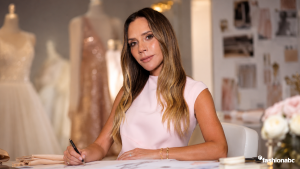
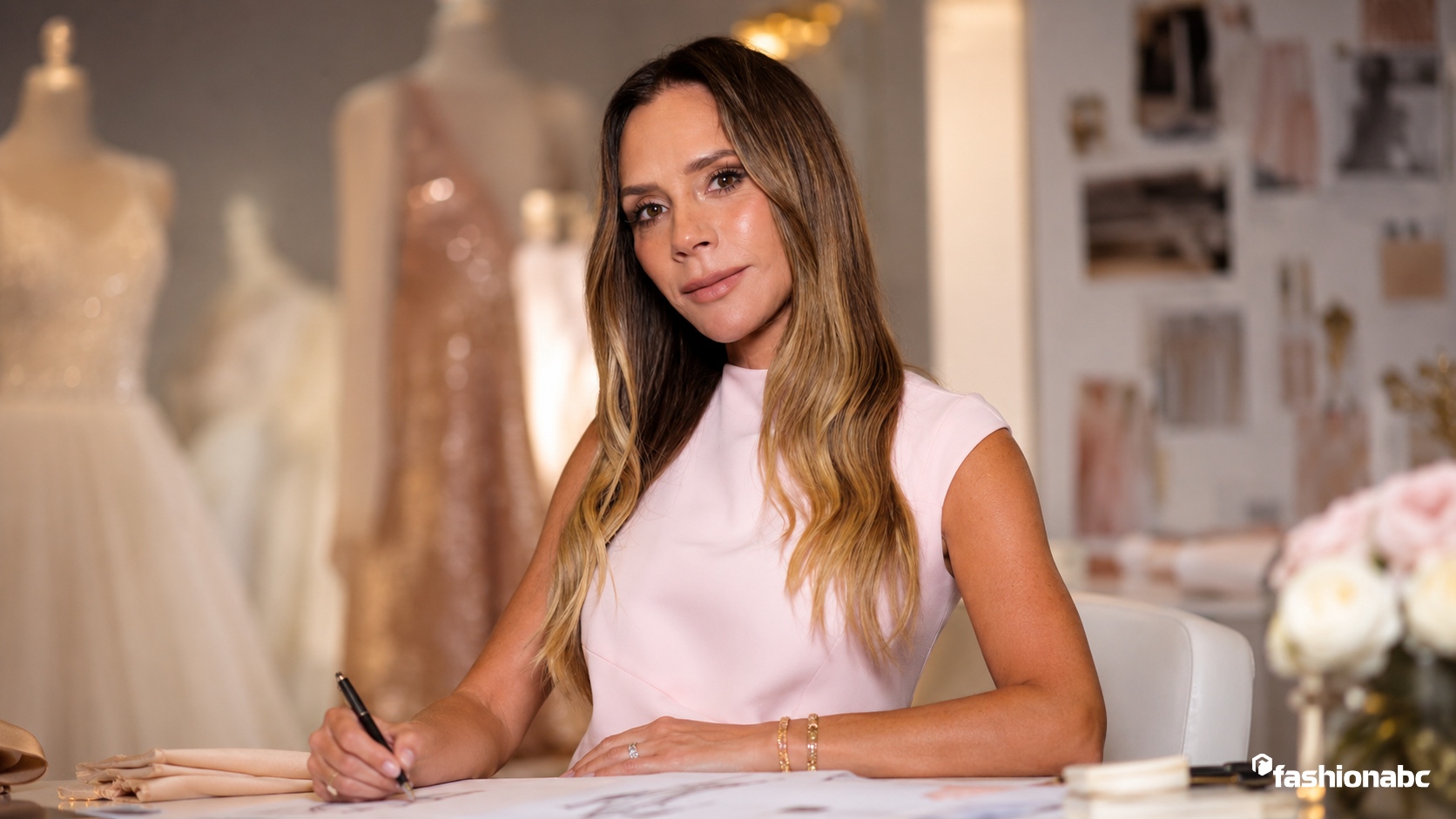
Victoria Beckham’s fashion and beauty business has reported its first operating profit since the designer launched her label in 2008, marking a significant turning point after years of losses, restructuring and investment.
Victoria Beckham Holdings recorded an operating profit of £7.3 million for 2025, compared with a £1.6 million loss the year before. Revenue rose 15% to £129.8 million, extending what has now become a five-year run of double-digit growth.
For a business that has spent much of its history trying to prove it could become commercially viable as well as creatively credible, the result is important.
From Fashion Credibility to Commercial Viability
Beckham founded her fashion label in 2008, initially building its reputation around sharply tailored dresses and polished ready-to-wear. The brand quickly gained fashion industry recognition, but profitability proved much harder to achieve.
For years, the company required continued backing as it invested in design, distribution, retail and international expansion.
The latest results suggest that strategy is beginning to pay off.
“We have all worked hard for a long time for this moment of profitability and growth,” Beckham told the Financial Times.
The milestone changes the narrative around the brand. For much of its existence, Victoria Beckham was discussed as a fashion label with strong visibility but difficult economics. The 2025 figures suggest it is moving into a more mature phase.
Beauty Has Become a Major Part of the Business
The improvement has come from both sides of the group.
Fashion continued to grow during 2025, with strength across tailoring, occasionwear and elevated daywear. At the same time, Victoria Beckham Beauty has become an increasingly important part of the company’s commercial performance.
The beauty business launched in 2019 and has helped extend the brand beyond high-end fashion into a category with broader reach and more frequent purchasing.
Products such as Foundation Drops have attracted strong demand, with the launch reportedly generating a waiting list of around 25,000 customers.
That balance matters. Fashion gives the company its creative identity and luxury positioning, while beauty provides a different route to scale.
It is a model already familiar across the luxury sector, where cosmetics, fragrance and accessories often support the economics of a broader fashion house.
Years of Restructuring Are Starting to Show
The turnaround did not come from sales growth alone.
NEO Investment Partners took a 30% stake in Victoria Beckham Holdings in 2017 following an investment of around £30 million. Since then, the business has restructured parts of its operations, tightened costs and changed its leadership structure.
Sybille Darricarrère Lunel, formerly of Christian Dior Couture, became chief executive of the fashion division in 2025, while Lauren Edelman leads Victoria Beckham Beauty.
Lunel described the move into profitability as the result of “several years of disciplined execution and strategic investment”.
That point is especially relevant because the wider luxury market has been under pressure.
Profitability Comes at a Difficult Time for Luxury
Luxury companies have faced softer demand, more cautious consumers, and weaker conditions in several key international markets.
Against that backdrop, Victoria Beckham Holdings still managed to increase revenue by 15% in 2025.
The company says growth has continued into 2026 and is now looking at further expansion in the US and Middle East, alongside growth in knitwear, outerwear, footwear, and leather goods.
A permanent New York flagship is also expected to open in September 2026, giving the business a stronger physical presence in one of the world’s most important luxury markets.
A Turning Point for a Celebrity-Founded Brand
For Beckham, the milestone carries another layer of significance.
Celebrity-founded brands often have no difficulty generating attention. Building a durable fashion business is much harder.
The industry has seen many high-profile labels launch with strong visibility only to struggle with margins, production, distribution, or long-term consumer demand.
Victoria Beckham’s business appears to have moved beyond that phase.
After 18 years, the question is no longer simply whether the brand can survive on recognition and creative credibility. Its latest results suggest it is becoming something more conventional and arguably more difficult to build: a profitable global fashion and beauty company.