Cat-eye glasses are recognised by their upswept outer corners, a detail that gives the face a lifted and expressive appearance. First popularised in the mid-twentieth century, the silhouette has moved through glamorous, rebellious and minimalist interpretations while retaining its essential shape.
In 2026, cat-eye eyeglasses are once again prominent in contemporary eyewear. The current revival is broader than a straightforward return to 1950s styling. Designers are adjusting the angle, scale, materials and colours of the frame, making the cat-eye accessible to people who prefer anything from subtle everyday eyewear to a dramatic fashion statement.
Key Takeaways
- • Cat-eye glasses developed from the Harlequin frame created by artist and designer Altina Schinasi in the late 1930s.
- • The style became closely associated with the polished femininity of the 1950s and early 1960s.
- • Its defining feature is an upward sweep at the outer corners, but the degree of lift can range from subtle to exaggerated.
- • Contemporary designs include acetate, metal, transparent and mixed-material frames.
- • Choosing the right cat-eye shape depends on frame proportions, brow alignment and personal style—not only face shape.
- • Modern cat-eye frames can be fitted with prescription lenses and worn as everyday optical eyewear.
Where Did Cat-Eye Glasses Originate?
The history of cat-eye glasses is often traced to Altina Schinasi, an American artist, filmmaker and designer. In the late 1930s, Schinasi reportedly became frustrated with the limited frame choices available to women, most of which were based on rounded designs.
She developed a more expressive silhouette inspired by the masks worn during Venice’s Carnival. The resulting Harlequin frame featured raised outer edges that drew attention toward the eyes. Schinasi patented her design, and the new shape offered an alternative to the largely functional eyewear styles available at the time.
The original frames were not always called “cat-eye” glasses. That description became more common as the upswept silhouette entered mainstream fashion and began to resemble the elongated shape associated with feline eyes.
The design represented an important change in the role of eyewear. Glasses no longer had to be treated only as medical devices. They could frame the face, communicate identity and participate in fashion in the same way as jewellery or cosmetics.
How Did Cat-Eye Frames Become a 1950s Fashion Symbol?
By the 1950s, cat-eye glasses had become closely connected with the decade’s emphasis on grooming, defined silhouettes and carefully coordinated accessories. Frames often appeared in rich colours and were sometimes decorated with metallic details, rhinestones or sculpted accents.
The upswept shape complemented other beauty and fashion trends of the period, including winged eyeliner, defined brows and structured hairstyles. Eyewear could reinforce the visual line of the face rather than interrupt it.
Hollywood also contributed to the popularity of expressive eyewear. Screen stars and fashion figures demonstrated that glasses could be glamorous, encouraging a wider audience to approach optical frames as part of a complete look.
However, cat-eye glasses were not limited to one version of femininity. Depending on their colour and proportions, they could appear sophisticated, playful or unconventional. That flexibility helped the design survive after the highly polished aesthetic of the 1950s began to change.
How Has the Cat-Eye Shape Changed Over Time?
The cat-eye has repeatedly adapted to the visual language of different decades.
During the 1960s, frames became larger and more dramatic as oversized eyewear grew in popularity. Later interpretations experimented with brighter colours, heavier acetate and sharper angles. In other periods, the silhouette became thinner and more restrained, with only a slight lift at the temples.
Modern cat-eye frames now occupy a wide spectrum. Some reproduce the pronounced wing and sculpted acetate associated with vintage eyewear. Others use fine metal rims, translucent materials or gently raised corners that only suggest the classic shape.
The lens itself may be narrow and angular, rounded and soft, or oversized. The upper line can follow the brow closely or extend beyond it to create a stronger statement. These variations explain why two frames may both be described as cat-eye glasses while producing very different effects on the face.
Why Are Cat-Eye Glasses Returning in 2026?
Fashion’s interest in archival design has encouraged the return of many recognisable eyewear shapes, but the renewed appeal of the cat-eye also reflects contemporary preferences.
Accessories in 2026 are expected to carry more of the visual identity of an outfit. As clothing becomes easier to combine and repeat, eyewear provides a practical way to introduce colour, geometry and personality. Cat-eye frames are particularly effective because even a restrained version has a recognisable outline.
The current revival does not depend on reproducing a complete retro look. A modern cat-eye frame can be worn with minimalist tailoring, knitwear, denim or sports-inspired clothing. Clear lenses have also moved the silhouette beyond its association with vintage sunglasses, establishing it as an everyday optical option.
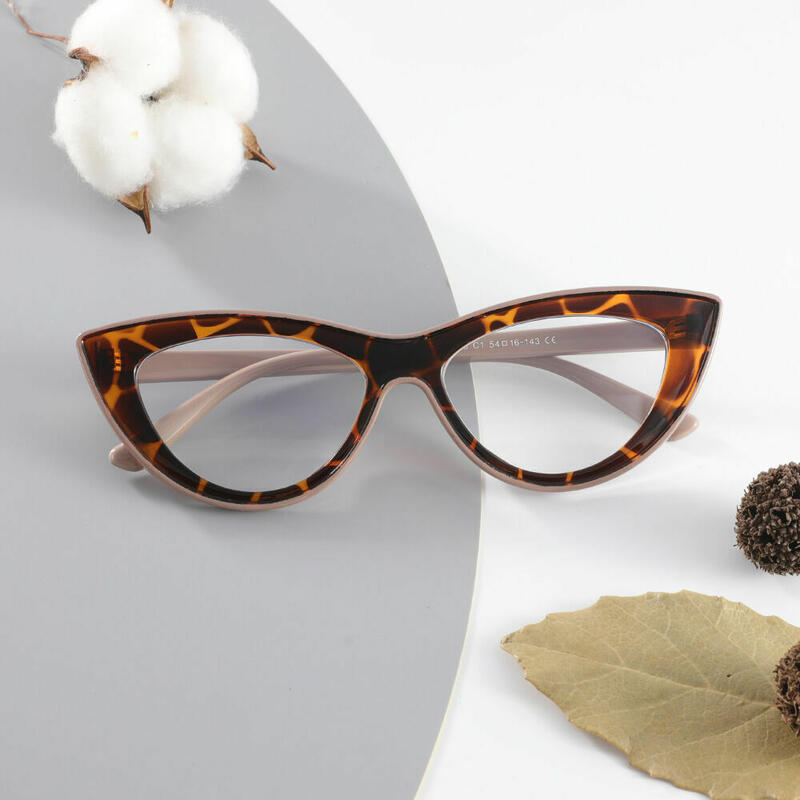
Several design directions are shaping the contemporary interpretation:
- • Soft wings: Gently raised corners offer definition without creating a highly theatrical look.
- • Transparent acetate: Clear, champagne and translucent neutral frames make the silhouette feel lighter.
- • Fine metal construction: Slim rims reduce the visual weight of the traditional cat-eye.
- • Muted colour: Olive, burgundy, brown and soft blue offer alternatives to black and bright retro tones.
- • Mixed materials: Metal temples and acetate fronts balance structure with comfort.
- • Compact proportions: Narrower designs create a sharper, more editorial effect.
These variations allow wearers to reference the history of the cat-eye without appearing as though they are wearing a period costume.
How Should Cat-Eye Glasses Fit Different Face Shapes?
Face-shape guidance can provide a starting point, but it should not be treated as a fixed rule. The width, height and angle of the frame often matter more than the category assigned to the wearer’s face.
Round Faces
A more angular cat-eye frame can add definition to soft facial contours. Designs with a clear upper line and moderate wing tend to create contrast without overwhelming the face.
Square Faces
Rounded lenses with a gentle upward sweep can balance a strong jawline. Extremely narrow or sharply pointed frames may emphasise angularity, which can be desirable for a bolder look but less suitable for someone seeking softness.
Oval Faces
Oval faces can usually accommodate a wide range of cat-eye proportions. The main consideration is scale: the frame should remain balanced with the width and length of the face.
Heart-Shaped Faces
A subtle cat-eye can complement a broader forehead and narrower chin. Frames with lighter lower rims or gently rounded lenses often create a balanced effect.
Long or Oblong Faces
Taller lenses and slightly oversized frames can add visual width. Very narrow cat-eye frames may make the face appear longer, depending on their position and angle.
Regardless of face shape, the frame should sit securely without pressing at the temples or sliding down the nose. The eyes should appear reasonably centred within the lenses, and the upper edge should work with the natural brow line.
How Can Cat-Eye Frames Be Worn Today?
The easiest way to modernise cat-eye glasses is to avoid treating every other part of the outfit as retro. A sculpted black frame can sharpen a white shirt and relaxed trousers. Transparent acetate works with soft knitwear and neutral colours, while a slim metal cat-eye can sit comfortably beside tailored or minimalist clothing.
Colour can also determine the role of the frame. Black and tortoiseshell create stronger definition, while clear and pale neutral frames are easier to wear every day. Red, green and patterned acetate make the glasses a focal point and work best when the rest of the outfit is relatively restrained.
Aoolia offers cat eye glasses in different colours, materials and degrees of upsweep, with prescription lens options and virtual try-on support. This range illustrates how the category has expanded beyond one fixed vintage silhouette.
The most effective frame is not necessarily the most dramatic one. It is the design whose proportions, colour and construction suit the wearer’s features and existing wardrobe.
Cat-Eye Glasses as a Lasting Design
The cat-eye frame has endured because its identity is clear but not rigid. The upward sweep remains recognisable, yet it can be widened, softened, reduced or exaggerated without losing its essential character.
Its history also marks an important moment in eyewear design: the point at which optical frames became an expressive fashion choice rather than something to conceal. Contemporary designers continue that legacy by reworking the silhouette for different faces, prescriptions and personal styles.
The 2026 revival is therefore less about returning to a single decade and more about rediscovering the flexibility of a strong design. Cat-eye glasses can evoke vintage glamour, modern minimalism or graphic experimentation. Their meaning changes with the wearer, which is precisely why the shape continues to return.
FAQs
What defines a cat-eye frame?
A cat-eye frame has outer corners that rise toward the temples. The lift may be subtle or pronounced, and the lenses can be rounded, narrow, angular or oversized.
Can cat-eye glasses have prescription lenses?
Yes. Many modern cat-eye eyeglasses are designed for prescription lenses. Lens compatibility may depend on the frame, prescription strength and chosen lens type.
Are cat-eye glasses only suitable for women?
No. Although the style has historically been marketed mainly toward women, contemporary cat-eye and upswept frames can be worn by anyone. Less exaggerated shapes and neutral finishes often create a more gender-neutral interpretation.
Are cat-eye glasses considered retro?
They have strong associations with mid-twentieth-century fashion, but modern materials, proportions and colours can make them feel contemporary. Styling them with current clothing also prevents the look from appearing overly period-specific.
Should cat-eye glasses follow the eyebrow line?
The upper frame does not have to match the brows exactly, but the two lines should feel visually balanced. A frame that cuts awkwardly through the brows or sits too far above them may appear poorly proportioned.