Fashion has always moved fast. What AI is doing feels different – not an acceleration of the same processes, but a change in the underlying logic of how the industry operates. Decisions that once required weeks of market research, physical sampling, or manual forecasting are being made differently, faster, and with inputs that didn’t exist before.
That shift is running through design, trend analysis, and production simultaneously. For brands and professionals paying attention, the implications run through every part of the supply chain.
Design and the Question of Creative Authorship
Source: Nano Banana 2
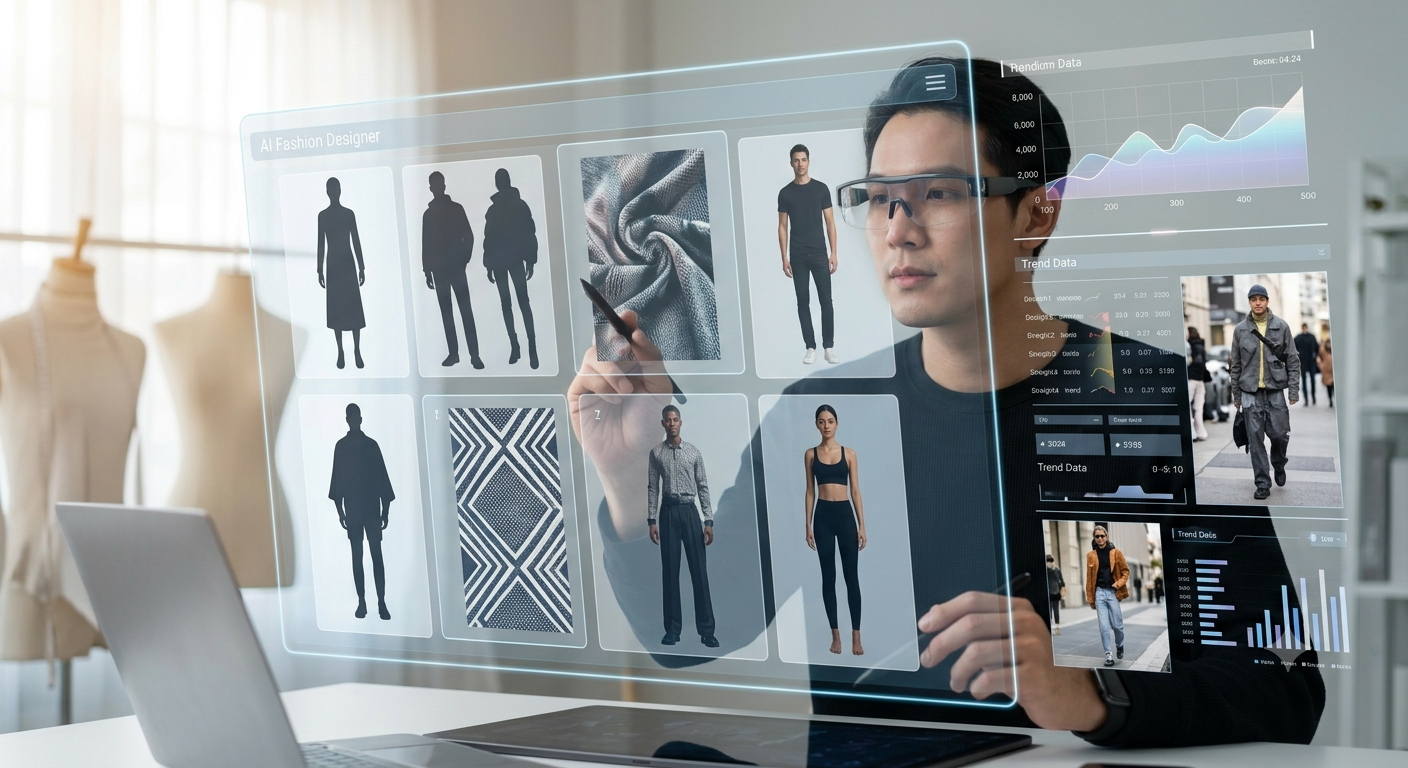
DesignRush reviews of leading AI companies active in the creative industries consistently highlight the tension at the center of AI-assisted design: the technology is powerful, but the creative direction still comes from humans. What AI changes is the speed and scope of exploration.
Generative design tools now allow a designer to produce thousands of variations on a silhouette, colorway, or textile pattern in the time it once took to sketch a handful. That’s not replacing the creative judgment required to select what’s worth pursuing – it’s expanding the option set before that judgment is applied.
Studios working with AI-assisted tools report that the most useful application is early-stage iteration, where the volume of generated concepts surfaces possibilities a human working alone wouldn’t have reached.
What’s shifting in AI-assisted fashion design:
- Material simulation – AI can model how fabrics will drape, move, and wear before physical samples are produced, reducing sampling costs significantly
- Pattern generation – textile and surface pattern design using generative systems trained on historical archives and current trend data
- Fit modeling – using body scan data to generate fit predictions across diverse body types without requiring physical fit sessions
- Style variation at scale – generating colorway and style variants from a base design for different markets simultaneously
The authorship question remains genuinely open. When a designer curates from thousands of AI-generated options, the creative act has shifted rather than disappeared – but how that shift is valued, credited, and protected legally is still being worked out across the industry.
Trend Forecasting Without the Guesswork
Traditional trend forecasting required a combination of runway analysis, cultural observation, retail data, and instinct – a process that was time-intensive, expensive, and often wrong.
Systems trained on social media image data, search behavior, purchasing patterns, and historical trend cycles can now surface signals considerably earlier than traditional methods allow.
A pattern emerging in street style photography across several cities can be identified and analyzed before it reaches any editorial coverage. That earlier signal gives brands more runway to respond – particularly important for production decisions that require months of lead time.
The risk is over-reliance on data that reflects what’s already visible rather than what’s genuinely emergent. The best applications use AI to surface and qualify signals that human forecasters then interpret. Neither alone does the job as well.
Sustainable Production and the Efficiency Argument

Source: Nano Banana 2
Overproduction is still one of fashion’s most costly environmental problems – and it’s largely an information problem. Buying decisions made too far in advance, with imprecise demand data and a built-in safety-stock buffer, consistently generate more product than the market needs.
AI-driven forecasting changes the inputs. Brands running machine learning models at SKU level, by region and channel, are producing closer to what actually sells – less ending up in markdown cycles or moving sideways into waste streams.
The environmental benefit is real, but so is the commercial case – less excess inventory means better margin and less capital tied up in stock that doesn’t sell.
Where AI is having the most measurable impact on sustainable fashion production:
- Demand-matched production – forecasting at SKU and channel level to reduce overproduction at the source
- Fabric optimization – cutting pattern AI that minimizes textile waste in the cutting room, where a meaningful percentage of fabric is typically lost
- Supplier monitoring – AI tools that track supplier environmental and labor compliance across global supply chains, surfacing risks before they become problems
- End-of-life routing – systems that identify which products are candidates for resale, rental, or material recovery rather than disposal
The sustainability opportunity in AI isn’t primarily about using green energy to run the systems – it’s about using better information to make decisions that produce less waste in the first place.
Where the Industry Is Actually Going
The most significant near-term shift isn’t any single application – it’s the integration of AI tools across the full product lifecycle, from design brief through consumer sale.
Brands that have historically operated with siloed data – design, merchandising, production, and retail running on separate systems – are finding that AI creates the possibility of a connected view that was previously impractical to build.
That connectivity changes what’s possible in responsiveness. A brand that can link early fashion trend signals to design decisions to production planning to retail presentation in a single data environment can move faster and with far more precision than one that hands off information between departments sequentially. The competitive advantage of that capability will accumulate considerably over time.