In the fashion industry, visuals have always conveyed meaning beyond aesthetics. Long before consumers engage with product descriptions or brand messaging, imagery shapes perception, communicates values, and sets expectations. In today’s digital-first environment, where competition is constant and attention spans are limited, a strong visual presentation is essential to brand success.
Among the many formats used across contemporary fashion media, flat lay photography has evolved from a social trend into a strategic visual language adopted by designers and retailers worldwide. In this article, we explore the role of fashion flat lay photography in modern branding — including its influence on visual identity, storytelling, e-commerce, and the future of fashion communication.
Fashion Flat Lay Photography
What Is Fashion Flat Lay Photography?
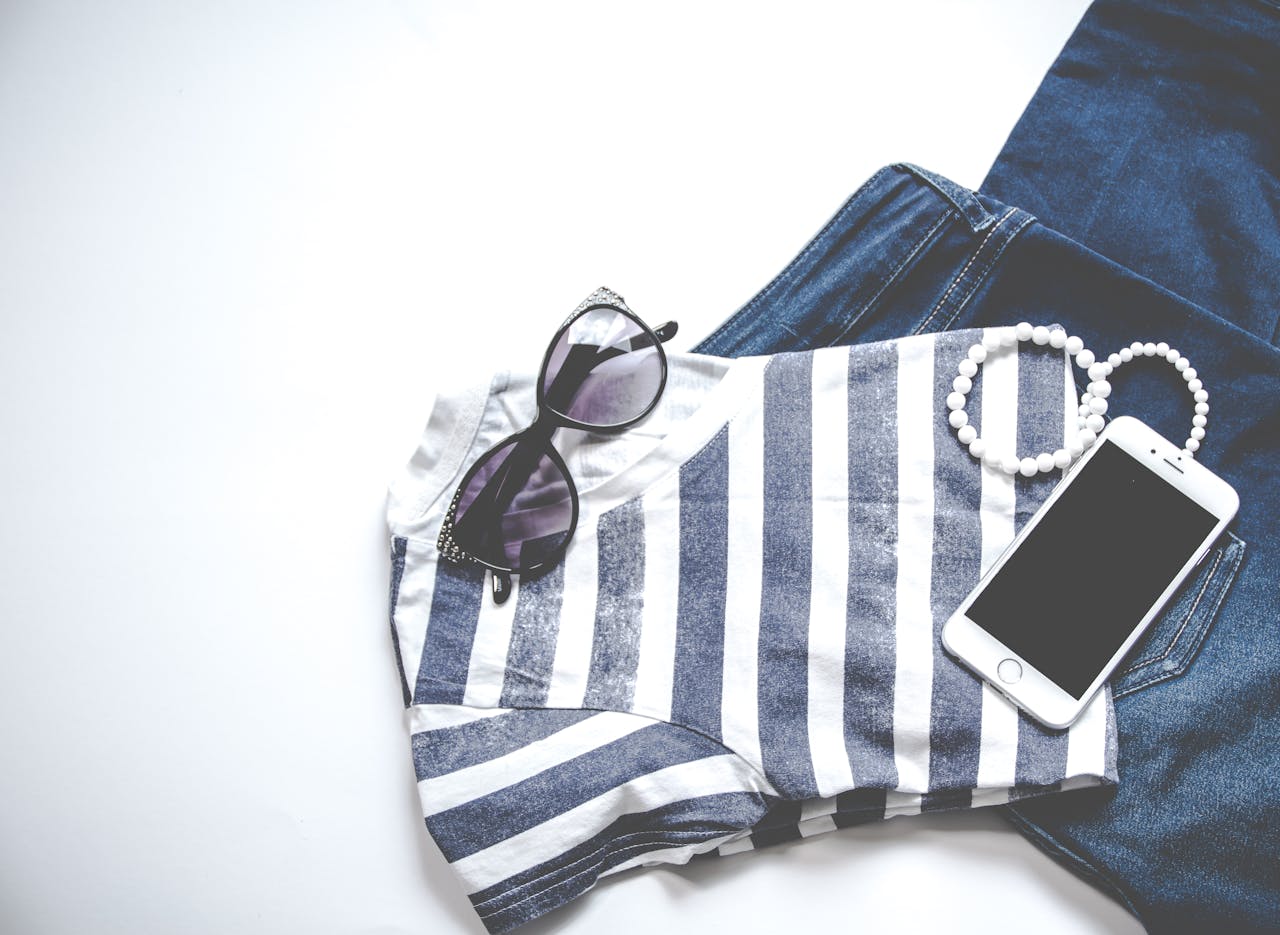
Flat lay photography refers to a top-down visual technique in which garments or accessories are arranged on a flat surface and photographed from directly above. Within fashion, this may include clothing, footwear, handbags, jewelry, or styling elements presented with deliberate spacing and compositional balance.
Shooting garments from above helps highlight structure, fabric, and design details while keeping the overall look clean and balanced, explains Miami fashion photographer – Daria Koso.
Unlike traditional fashion photography built around models, movement, or expression, flat lay removes the human figure entirely. This shift places full emphasis on design, materials, construction, and color relationships. Viewers engage with the product itself rather than the personality wearing it.
Flat Lay Photography for Clothing
Clothing sits at the heart of flat lay photography. Compared to accessories or beauty products, garments benefit uniquely from the overhead perspective.
When styled from above, apparel can be arranged to highlight seams, silhouettes, and fabric behavior without interference from body posture or movement. Design elements such as collars, pleats, cuffs, and stitching become more visible — a principle commonly used when photographing clothing laid flat.
This approach also supports visual consistency. By maintaining similar proportions, spacing, and angles, brands achieve cohesion across lookbooks and seasonal collections. Over time, this repetition strengthens recognition and reinforces identity.
In online retail environments, flat lay clothing imagery provides transparency. Customers gain a clearer understanding of garment shape and scale, supporting confident purchasing decisions and helping reduce return rates.
From Styling Trend to Industry Standard
The rise of flat lay photography reflects broader shifts in fashion communication.
As e-commerce expanded, brands faced a fundamental challenge: consumers could no longer touch fabrics, assess weight, or observe movement in person. Visual clarity became critical. Flat lay imagery addressed this need by presenting garments in a clean, distraction-free format that translated seamlessly across screens.
At the same time, digital platforms demanded visuals that could be reused consistently. This top-down format proved highly adaptable, performing equally well on websites, social media, newsletters, digital catalogs, and advertising assets.
What began as a creative styling choice gradually evolved into an industry standard.
Why Flat Lay Photography Works for Fashion Brands
One of the strongest advantages of flat lay imagery lies in consistency.
Without human variables such as facial expression or posture, brands gain full compositional control. This uniformity allows collections to feel intentional rather than fragmented, especially when repeated across seasonal campaigns.
Clean lines, thoughtful spacing, and curated color palettes communicate professionalism and precision. These qualities are subconsciously associated with product quality, influencing consumer perception long before purchase.
In competitive markets, such visual reliability becomes a powerful branding asset.
Flat Lay and Visual Brand Identity
Brand identity extends far beyond logos and typography. It is reinforced through repeated visual signals such as lighting, tone, spacing, and color harmony — elements commonly used to define modern visual aesthetics.
Flat lay photography offers an ideal environment for this repetition. Whether minimal, expressive, monochromatic, or experimental, a brand’s aesthetic can be communicated clearly through consistent styling choices.
Luxury labels often favor restrained compositions and neutral palettes to reinforce exclusivity, while contemporary brands may use bold color blocking or asymmetry to express energy and innovation. In both cases, flat lay imagery functions as a recognizable visual signature.
Flat Lay Photography as Visual Storytelling
While structured in appearance, flat lay photography is far from emotionless.
Through careful arrangement, brands can suggest mood, seasonality, and lifestyle without overt messaging. Lightweight fabrics and pastel tones may evoke summer ease, while deeper textures and layered compositions communicate warmth and depth.
Rather than instructing viewers how to feel, this format invites interpretation. Such subtle storytelling aligns with modern branding strategies, where emotional connection is built through suggestion rather than declaration.
The Role of Flat Lay in Fashion E-Commerce
In digital retail, visual accuracy directly affects consumer trust.
Flat lay imagery supports this need by presenting garments in a standardized, easily comparable format. Without movement or posing, shoppers can assess shape, material behavior, and proportion more objectively.
Many brands now pair flat lay images with model photography. While model shots demonstrate fit and movement, overhead visuals provide structural clarity. Together, they create a balanced shopping experience that reduces uncertainty and improves decision-making.
Minimalism, Transparency, and Sustainability
Sustainability has become central to modern fashion discourse. Alongside ethical sourcing and production, visual transparency plays an increasingly important role.
Flat lay photography aligns naturally with these values. It often requires fewer resources, smaller crews, and reduced logistical demands. Without elaborate sets or travel-heavy shoots, brands can minimize environmental impact while maintaining strong visual output.
Aesthetic minimalism further reinforces responsible messaging. Clean imagery conveys restraint, honesty, and intention—qualities valued by today’s conscious consumers.
Digital Adaptability and Platform Versatility
Modern fashion brands operate across multiple channels simultaneously. Consistency across these platforms is essential.
Flat lay imagery adapts easily to varying formats, allowing cropping and resizing without compromising composition. This flexibility enables creative teams to maintain cohesion without repeated production cycles.
As omnichannel strategies continue to expand, such versatility becomes increasingly valuable.
Flat Lay Photography in the Age of Technology
As fashion technology advances through AI tools, 3D rendering, and virtual try-ons, flat lay photography retains its relevance.
Its continued presence reflects consumer desire for authenticity. In contrast to hyper-polished digital visuals, overhead imagery often feels tactile and grounded.
In an era of rapid innovation, flat lay photography provides stability—bridging craftsmanship with modern communication.
The Future of Flat Lay in Fashion Communication
Looking ahead, flat lay photography is likely to evolve rather than disappear.
Interactive product displays and augmented reality may reshape presentation methods, yet the core function remains unchanged: to communicate fashion clearly and honestly.
As brands strive to balance creativity, transparency, and efficiency, flat lay imagery will continue to serve as a reliable foundation.
Conclusion
Flat lay photography has moved far beyond its origins as a stylistic trend. Today, it operates as a strategic instrument within fashion branding, marketing, and digital commerce.
By enhancing clarity, reinforcing identity, supporting sustainability initiatives, and adapting seamlessly across platforms, flat lay imagery has secured its place as a cornerstone of modern fashion communication.
In an industry defined by constant transformation, sometimes the most enduring visual language is also the most refined.