
Everyone has some broken sunglasses tucked away in a drawer somewhere in their house. The arm breaks off after three months. The lenses are so scratched you can hardly see out of them. Or they’re so flimsy from day one that you just know they won’t make it past Memorial Day.
Buying sunglasses shouldn’t be such a gamble. But with options on the rack ranging anywhere from $15 to $300, how can you effectively differentiate all sunglasses as high-quality before you purchase? Price isn’t always indicative of quality, either, that designer pair for $275 might break just as easily as a pair half the cost.
The good news: A quality pair of sunglasses has specific indicators that, if you’re aware of them before purchasing, help you find eyewear that protects your eyes and withstands daily wear and tear without breaking the bank every season.
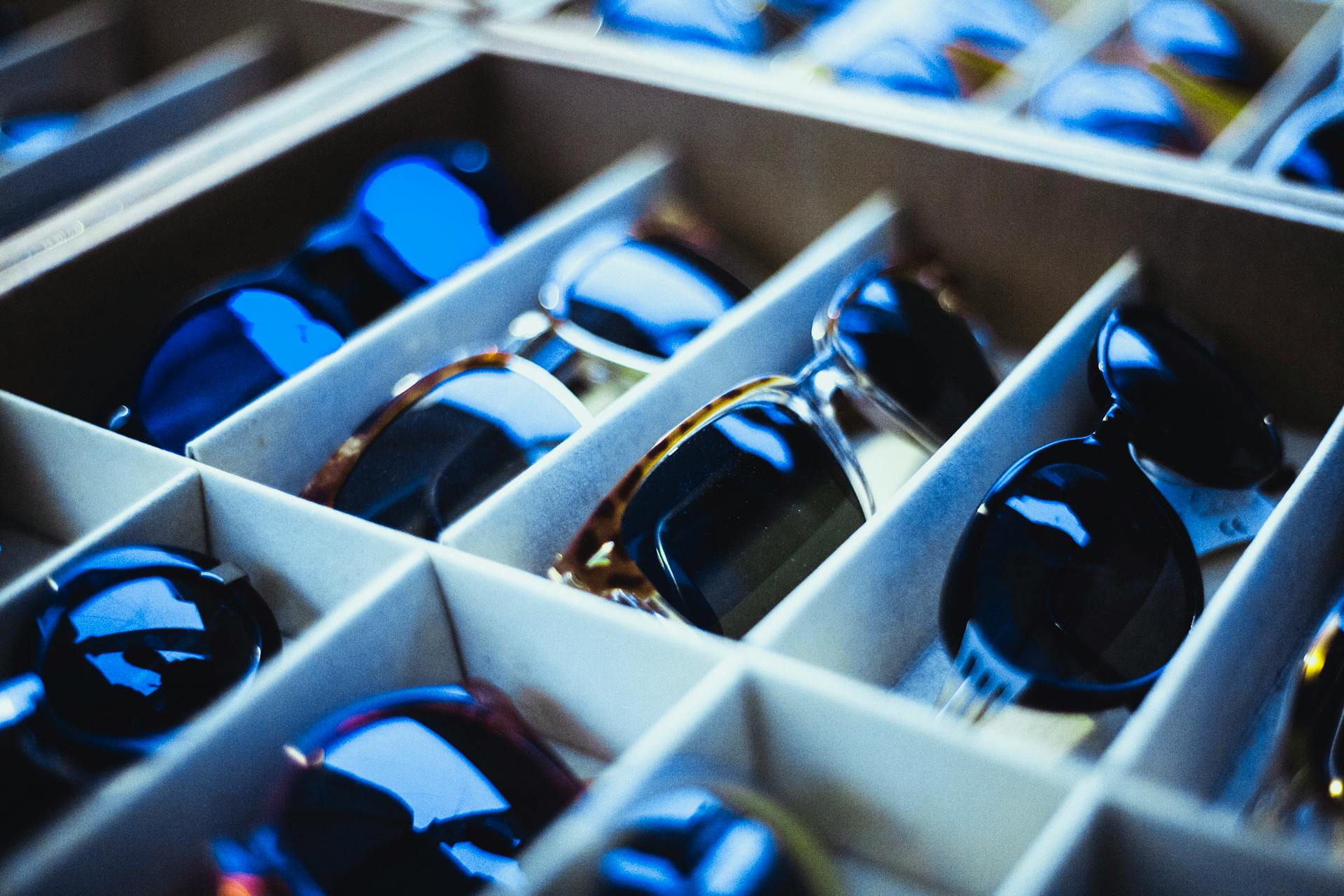
Smart Shopping Finding Sunglasses That Last Beyond One Season
What Makes Sunglasses Durable, Anyway?
It may be surprising to learn that frame material matters more than you think. Metal frames (ideally stainless steel or titanium) last longer than plastic but to their detriment, as well. Metal bends if you sit on it; plastic snaps. Yet some people would rather have it bend than completely break.
Higher quality plastics come from cellulose acetate or TR-90. Not the cheap plastic looking flimsy out of the box. Acetate is flexible, meaning it won’t snap when tossed in a bag, and TR-90 is even more flexible and lightweight but lacks the diversity in color.
Hinges are where the majority of sunglasses fail first. Spring-loaded hinges may cost more to produce, but they’re worth it as the arms can flex outward without compromising the connection point, which is what happens when you continually take your sunglasses on and off throughout the day. If you can pull the arm away from the frame, and there’s give, that’s a good sign.
You want to see screws on hinges and lenses, not glued connections, which are impossible to fix once they give out. Cheap sunglasses have glued hinges and unreplaceable lenses that you can’t do anything with if they pop off except toss them in the trash. When you can screw a hinge every few months to tighten it or tighten a lens again over time, you add years of wear and tear.
Lens Integrity Beyond UV Protection
UV protection is non-negotiable, and required for even low-budget options. However, what differentiates lasting lenses from mediocre lenses comes from coatings and base materials.
Polycarbonate lenses are lightweight with high impact resistance, which makes them popular in sports sunglasses, but they’re prone to scratches unless they have decent scratch-resistant coating; glass scratches less but can shatter on impact, unlike polycarbonate but provides better optical clarity.
Coatings matter, anti-scratch-coated options come from materials that have a baked-in option when constructed versus just sprayed on afterward. While tough to see in the store, if sunglasses seem lightweight for their size and the lenses appear to perfect, but not to quality, then chances are they have a cheap coating that will quickly wear off.
Polarized lenses reduce glare, which works great for driving on sunny days or sitting at the beach, but polarization itself is neither durable nor indicating; it’s just a component of lens creation for the sun. When comparing options, however, shoppers seeking best value sunglasses 2026 discover that mid-range sunglasses work effectively with polarized coatings and scratch resistance, but not enough for designer marks.
Construction Elements that Help Sunglasses Survive
Pick up the sunglasses and try to twist them gently at the frame. There shouldn’t be much flex in the front piece where the lenses sit. Too much movement indicates frames won’t hold their shape over time, and could pop out the lenses.
Check how lenses stay affixed to the frame, better options have lensed grooves cut where a lens sits at a slight tension, cheaper versions have glue which melts in heat and sunshine (which is ironic, as typically, they’re being worn outside).
Nose pads, too, matter. Adjustable nose pads (those connected with small screws) can be fit-to-use and replaced when they wear out. Molded nose pads into frames cannot be adjusted after purchase, so if they don’t fit initially, they’ll never fit down the road.
Additionally, weight distribution has an impact on how long these sunglasses will remain on your face. Front-heavy options will slide down one’s nose continuously as people adjust them over and over all day long, putting pressure on hinges and nose pads. Ideally, sunglasses will rest comfortably in place without needing constant readjustment.
Know When You Can Spend More Money
Not every instance calls for indestructible sunglasses, meaning spending mid-range is fine for a car pair for casual wear; spending on premium frames makes more sense, however, if these are your everyday-worn glasses that you’ll wear consistently for hours on end, take off carefully but toss into bags sporadically, or sweat/sunblock while wearing.
But price is not evenly distributed to construction quality; for example, a pair for $200 may not be twice as strong as a $100 pair. Much of price distribution comes from brand placement or fashion elements vice construction or materials.
Seek brands that focus solely on eyewear vs. fashion houses that lend their name to sunglass producers, the dedicated eyewear companies will have their reputation ride solely on how well the glasses work, and therefore may put more engineering into their work.
Test It All Out Before You Buy
A good sunglass retailer will let you try on multiple pairs and wear them around, instead of just standing there admiring yourself in the mirror. Walk around for a few minutes; look down at your phone then up; tilt your head from side to side, it should stay there without pinching.
If you pull the arms out gently from your head, there should be some spring to them, not feeling like they’re going to snap; if they’re tight and rigid there, they’re that way for a reason.
Finally, check projection through the lenses by looking at something with straight lines, like door frames or window edges, and move your head slowly while keeping your eyes fixed on the line. If it distorts, to wave or bend, the lens has optical distortion; quality pieces shouldn’t do that, even at the peripheries.
Proper Care That Prolongs Lifespan
Even exceptional sunglasses won’t last if constantly squished or tossed into bags haphazardly. The case matters most, a hard case offers better protection than a soft pouch, but it’s bulky; if you’re unlikely to use a hard case on a regular basis, however, soft microfiber pouches are better than nothing.
Cleaning is more important than people realize; using your shirt instead creates tiny scratches, even with scratch-resistance coating. Keep a microfiber cloth handy with your sunglasses. If they get icky from sunscreen/salt water, rinse them off first before utilizing anything.
Store sunglasses with the lenses facing up, it’s easy to drop them face down onto surfaces but small scratches add up over time, gradually it’s hard to see.
Making It Worth the Investment
When purchasing sunglasses that will last beyond one season, look beyond price and assess actual construction practicality first. A pair for $80 with metal hinges, good lens coating options and replaceable parts will outlast a $150 pair that looks pretty but utilizes thin construction glued pieces.
The best way to go? Find any sunglasses that meet your actual needs while incorporating these durability attributes and you’ll be set. If you’re rough on them, seek flexible frames and impact-resistant lenses. If you’re careful but wear them daily nonetheless, pay special attention to optical quality with proper weight distribution.
Don’t assume expense equals efficacy either, that’s how companies get away with placing logos where logos shouldn’t go if they’re paying for them alone rather than practical application. Focus on construction expectations over time and you’ll find best-value options that get through multiple seasons without breaking down.