



SUMMARY
The Burren College of Art is a small, independent non‑profit art college located in Ballyvaughan, County Clare, on the ruggedly beautiful west coast of Ireland. It offers undergraduate and postgraduate fine art education, as well as alternative art and residency programmes, all rooted in its unique rural setting in the landscape of the The Burren. The college combines studio practices, academic courses and a community‑centred approach to nurture artists from around the world.
HISTORY
Founded in 1993 by Michael Greene and Mary Hawkes-Greene, to give student artists the opportunity to develop their creative potential in the unique environment of the Burren, the Burren College of Art has grown rapidly to an institution of international standing. Michael was passionate about the Burren. He wanted to enable creative people from around the world to work and be inspired by it while helping the local community thrive as a result. His vision in establishing the Burren College of Art was clear – the college would reconnect with the tradition of learning established by the Brehon and Bardic schools of the 6th century; it would recruit artists internationally, grant degrees, re-energise the local community and become ‘the greatest little art school in the world’.
In 1994 the college formally opened; the castle and surrounding grounds became the campus. In its early years, BCA began by hosting summer classes, workshops, and offering a “study abroad” programme for undergraduate students from the United States and Canada. The small‑scale, immersive setup — with fewer than 55 students at a time — allowed artists to work intensively and focus on their studio practice without typical large‑school distractions.
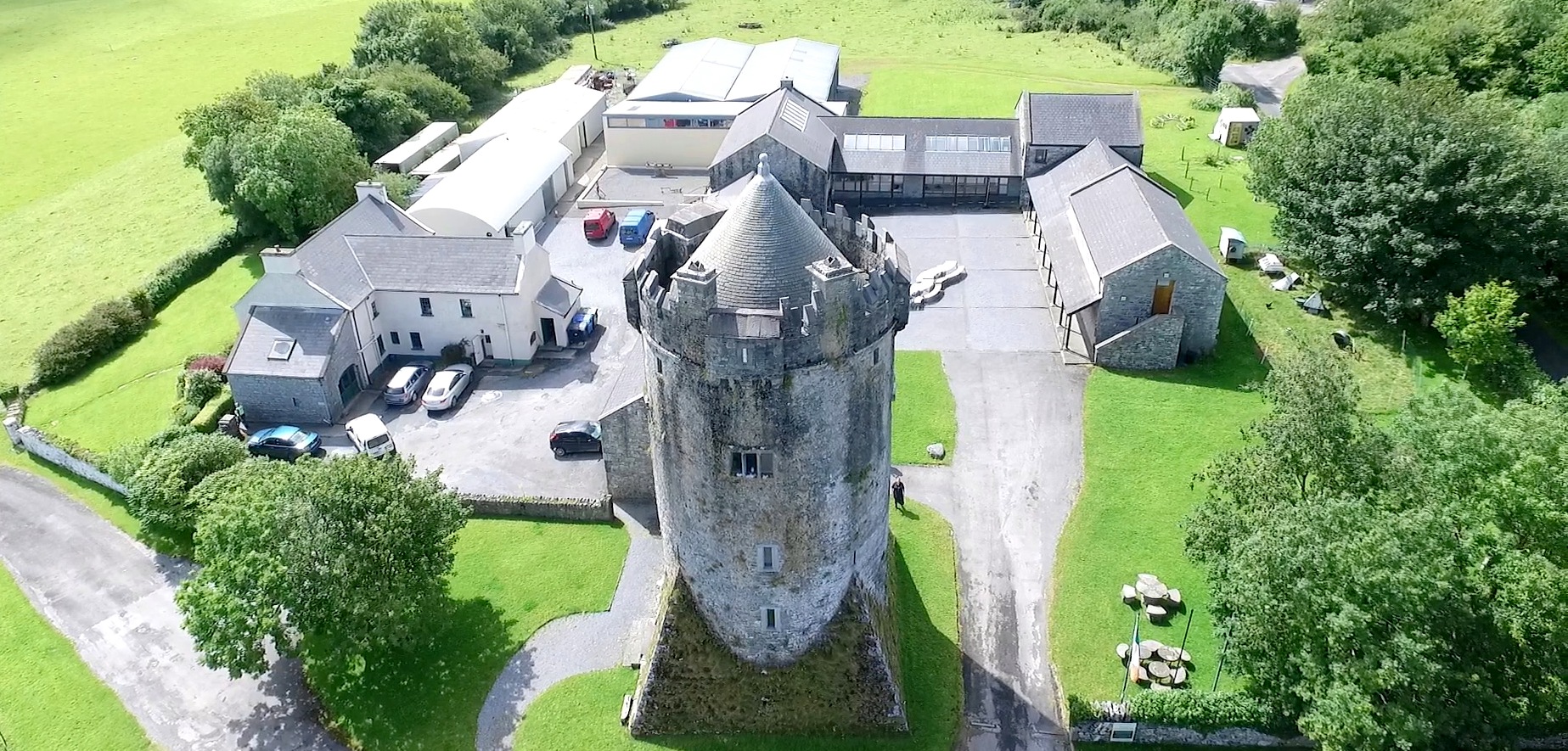
In 2003 the institute introduced the first Master of Fine Art programme in Ireland. A few years later, in 2007, the college launched a studio‑based PhD programme in Studio Art, marking a significant milestone in Irish art education. Over time, additional buildings and studio spaces were added beyond the original castle — including graduate studios, workshops, a gallery space described as the largest in County Clare, dark‑room facilities, sculpture workshops, and living accommodations for visiting students and resident artists. The late John Baldessari was a member of the College Advisory Council and guided its development over a 20 year period. He received an honorary PhD from the College in 2006.
As the college grew, it began offering alternative and interdisciplinary programmes under “ReSource” — exploring relationships between art and ecology, business, leadership, archaeology, law and other fields. This broadened scope reflects its long‑term ambition to integrate art into larger cultural, social and environmental contexts. The institute is popular internationally as a place where artists can work in solitude or community, draw inspiration from the landscape of The Burren, and engage in serious art practice supported by experienced faculty and global partnerships.
“The small scale of the College lends itself to direct and experiential learning rooted in place and community. Our connections to international interdisciplinary institutions, combined with a core of creative expertise integrated in the dynamic environment and culture of the Burren, position us ideally to meet the challenges of an ever-changing world”per the official website.
VISION
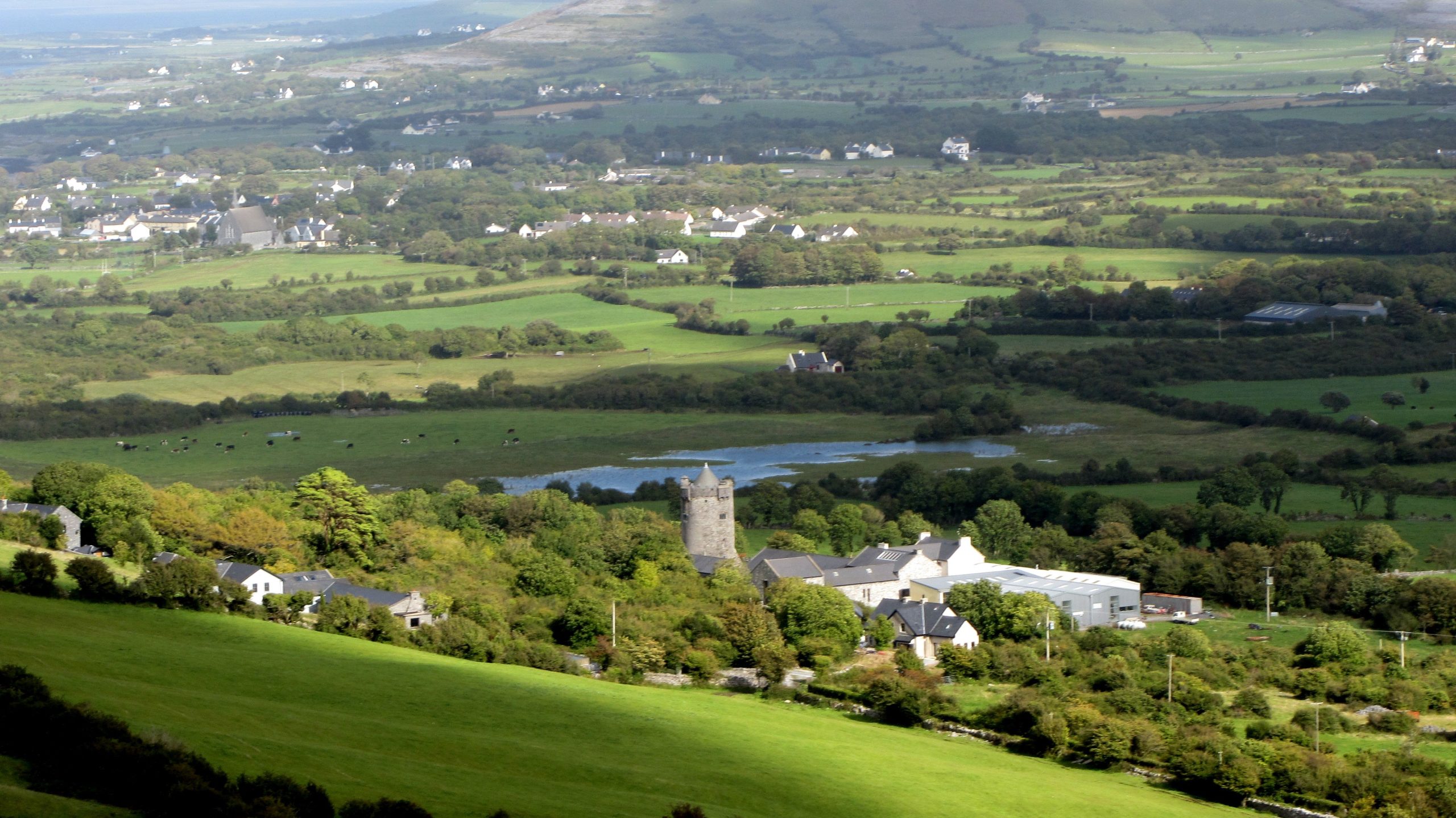
Michael Greene envisioned the college as more than just a local art school. He wanted to create a space where artists from around the world could converge — a hothouse for artists located in a remote inspiring landscape. He believed that the unique environment of The Burren — its land, history and ecosystem — could help artists reconnect with creative traditions and fuel introspection, experimentation and personal growth.
“Surreal and magnificent, isolated and eerie, Ballyvaughan and the Burren College of Art are contained within a spectacular dreamlike, magical atmosphere on the west coast of Ireland. It is inspirational to find yourself amidst the limestone glaciers and flora of incredible beauty at your fingertips” says Professor Mira Cantor, Northeastern University on the institute’s official website.
Greene planned the college to combine global artistic exchange and local community engagement. The idea was to attract international students and artists, while also involving local communities, thus bridging cultures and contexts. He saw education rooted in place, where art education is not just institutional but experiential — artists could draw from surroundings, not just textbooks. the intention was to offer more than technical instruction: the focus was on nurturing voice, vision and a sense of responsibility — creativity grounded in awareness of environment, culture and society.
Per the website: “Our aim is to create a learning and living environment that is conducive to artistic and personal growth. We see ourselves as both remote and connected in that our location is rural, but we are networked and associated with major art and learning institutions around the globe. Our artistic community travels, exhibits and presents research internationally.”
TOP COURSES
MFA Studio Art (2 years, 4 semesters) provides an immersive education in the development of professional practice as an artist. MFA graduates will produce a final exhibition, the quality of which will show that they have gained the knowledge and skills necessary to survive and thrive as a practicing artist. They will also develop capabilities for critical enquiry in the field of fine art through a written dissertation, demonstrating their ability to evaluate the work through an informed grasp of the social, cultural and theoretical concerns shaping discourse on contemporary fine art research and practice.
MA Studio Art (1 year, 3 semesters) provides a masters-level education in art appropriate to a diverse range of applications. MA graduates will produce a final exhibition, the quality of which will demonstrate that they have acquired a masters-level in artistic practice. Whereas the MFA requires the completion of a written thesis, in the MA they will also complete modules in critical enquiry, in order to develop your ability to evaluate their work through an informed grasp of the social, cultural and theoretical concerns, and will be required to create an Artist Statement in conjunction with the final exhibition.
MFA Art & Ecology was launched in 2013 as one of the first postgraduate degrees in this field in Europe. This interdisciplinary, research-based programme is designed for students who wish to develop an ecologically focused artistic practice. Graduate students develop key skills in producing work in studio and field-based contexts, investigate how social and earth ecologies coexist within the unique context of the Burren, and have the opportunity to participate in collaborative or community based initiatives. Students work with core faculty team alongside environmental scientists and local community based organisations to develop critical enquiry through arts practice. Graduates produce a final exhibition of work engaging the dynamic between ecology and arts practice and demonstrating an embodiment of the social, cultural and theoretical concerns shaping the relationship between contemporary art and ecological thinking.
KEY TEAM
Mary Hawkes‑Greene — President
Conor McGrady — Dean
JOB INTEGRATION SERVICES
BCA aims to prepare artists for professional creative life through exposure, community, and opportunity. The immersive studio practice, interdisciplinary training and engagement with ecological, cultural and social themes equip students with a broad base of skills — not only in making art but in thinking critically about art’s role and purpose.
It also offers residencies, guest‑artist programmes, workshops and public exhibitions to give emerging artists a platform to show work, network, and potentially launch their careers. The “ReSource” initiative — connecting art with ecology, leadership, business, archaeology or social issues — can help graduates explore alternate career paths beyond traditional gallery or studio work. Alumni and residents leverage these connections for exhibits, collaborations, teaching roles or study — offering meaningful integration into the global art and creative job market.
Contact with business owner
 Your request has been submitted successfully.
 Own or work here?
Claim Now!
Claim Now!
Own or work here?
Claim Now!
Claim Now!